
The Atlas Journal
Insights & Fine Jewelry Guides
Expert guides, care tutorials, market intelligence, and stories from the world of luxury.
Latest Articles
 Watches
Richard Mille: Marketing Genius or High Horology Masterpiece?
Key Takeaways: The Richard Mille Phenomenon: “A Racing Machine on the Wrist” Disruption of Tradition: Challenging the Patek/Rolex Status Quo When Richard Mille launched his eponymous brand in 2001, the luxury watch industry operated under centuries-old assumptions. Patek Philippe represented heritage and hand-finishing. Rolex symbolized durability and precision. Both championed polished gold, traditional complications, and watchmaking reverence for history. Richard Mille rejected all of it. Instead of gold, he chose carbon composites from Formula 1. Instead of chronographs and perpetual calendars, he engineered shock resistance systems inspired by aerospace engineering. Instead of polished elegance, he celebrated skeletonized movements and sandblasted titanium. The watch world responded with horror, fascination, or both. The Philosophy: Function Over Polish, Performance Over Heritage Richard Mille’s founding philosophy centers on a simple declaration: “A racing machine on the wrist.” Every design decision prioritizes performance metrics—weight reduction, shock resistance, magnetic immunity, thermal stability—over traditional horological aesthetics. The watches look unfinished because they are unfinished by traditional standards. Polishing adds weight. Gold adds unnecessary mass. Heritage complications add fragility. This philosophy manifests in watches that weigh as little as 11.5 grams (RM 27-05) yet withstand forces exceeding 14,000 g’s—accelerations that would pulverize traditional mechanical watches instantly. For context, fighter jet pilots experience approximately 9 g’s during …
 Jewelry
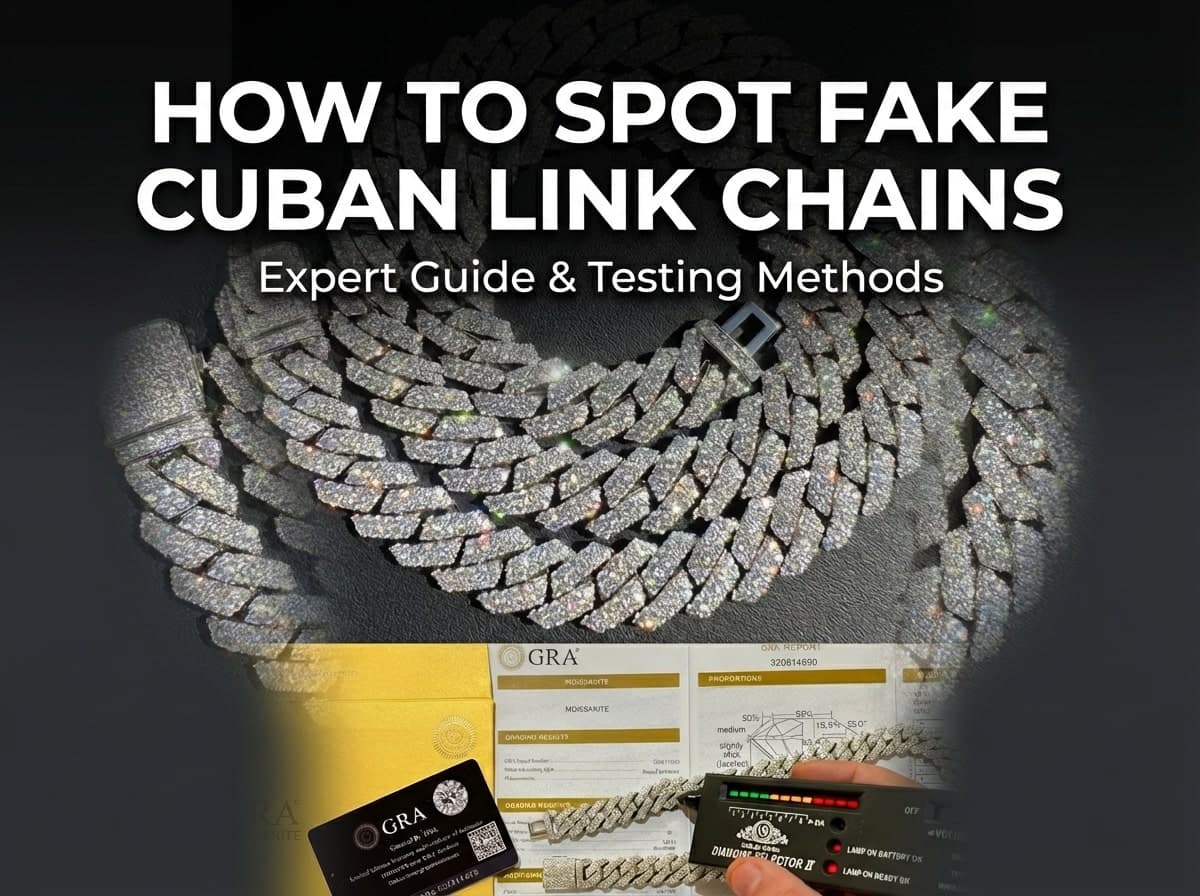
How to Spot Fake Cuban Link Chains: The Complete Authentication Guide
Cuban link chains sit in that sweet spot between street status and real luxury. That also makes them one of the most faked jewelry styles on the market. From flea markets to Instagram “boutiques” and even some sketchy mall kiosks, you’ll see “14K Cuban” pieces that are anything but. The good news: you don’t have to be a jeweler to protect yourself. If you know what to look at, what to feel, and what to question, you can avoid 90% of bad deals before you ever swiped your card. Think of this guide as a systematic approach to authentication. The most successful fake-spotters combine visual inspection, tactile experience, and seller verification into a single decision-making process that takes less than five minutes. Over the past decade, counterfeiting has become remarkably sophisticated—but so has detection when you know where to focus. Visual Inspection – Links, Edges, and Overall Finish Start with the simplest tool you have: your eyes in good light. Put the chain under bright natural light or a strong lamp and really look at it—not just from arm’s length, but up close where you can see individual link details. On a real Cuban link, the links look like they belong together. Each link transitions smoothly …
 Watches
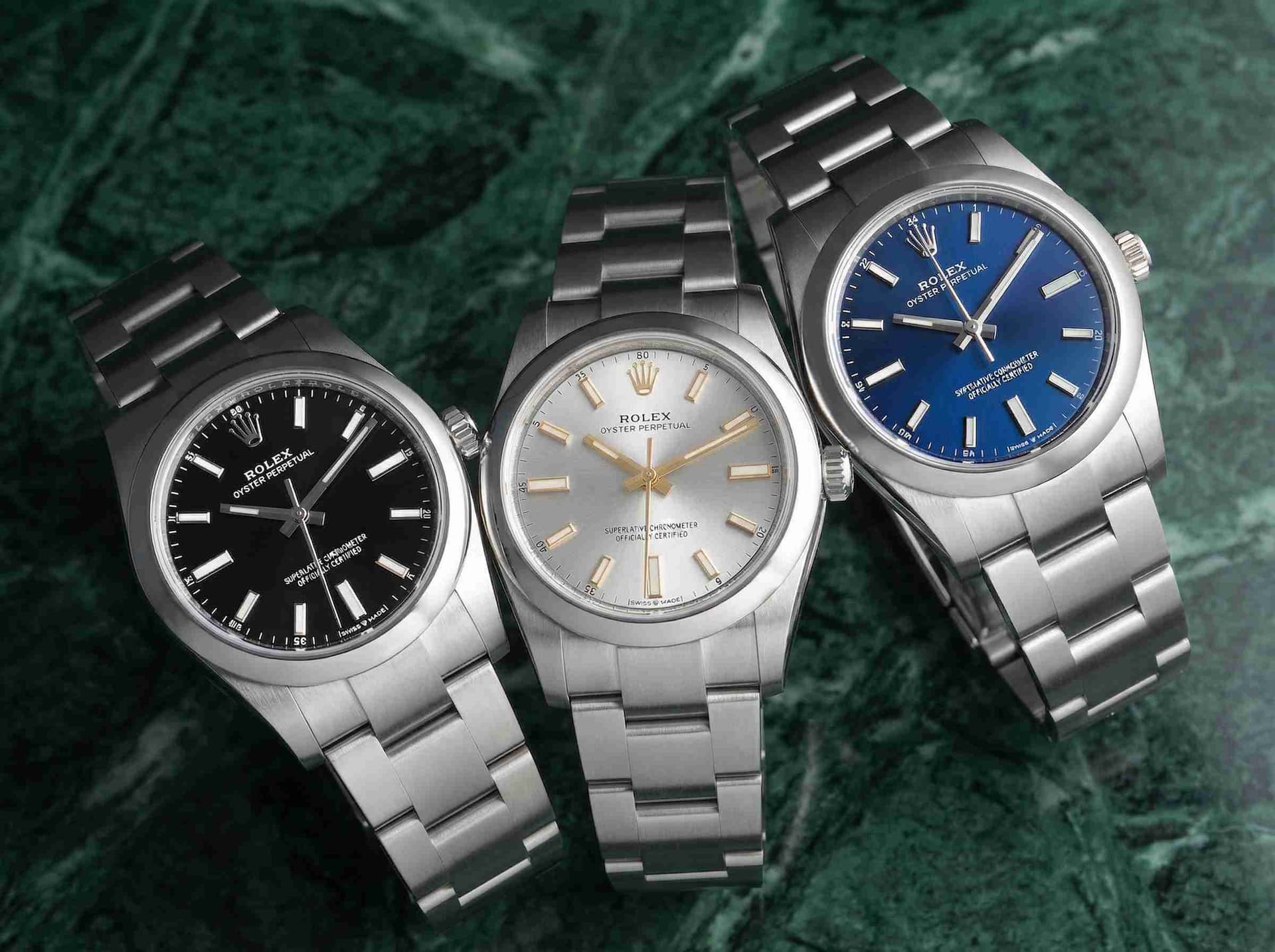
The Rolex Oyster Perpetual Guide: The “Entry-Level” Watch That Costs More Than Ever
The Rolex Oyster Perpetual represents one of horology’s greatest paradoxes—a watch designed as the brand’s most accessible timepiece has become one of the hardest to buy at retail and one of the most absurdly overpriced on secondary markets. Priced at approximately $6,500–$6,800 MSRP, entry-level Oyster Perpetuals routinely sell for $12,000–$20,000+ on the grey market, particularly in the coveted Tiffany turquoise or Celebration multicolor variants. This isn’t just inflation or supply shortage—it’s a manufactured hype bubble built on Instagram aesthetics, social media visibility, and the fundamental truth that Rolex’s brand power transcends rational pricing. Yet here’s what makes this phenomenon genuinely interesting: the Oyster Perpetual is actually an exceptional watch objectively. It’s not the hype that’s irrational—it’s the execution and positioning that’s transcended its modest entry-level positioning. The Philosophy: Pure Rolex, Stripped Bare When Hans Wilsdorf created the first Oyster Perpetual in 1926, he established a watchmaking principle that defined the brand for a century: eliminate everything unnecessary, perfect everything that remains. The modern Oyster Perpetual adheres to this philosophy with religious fervor—there is no date window, no fluted bezel, no complications, no crown guards, no precious metal options, no chronograph subdials. What remains is almost monastic in its simplicity: a smooth stainless steel case, an Oystersteel bracelet, a dial featuring …
 Watches
Vacheron Constantin Overseas: The Underrated Icon
In the world of luxury sports watches, the conversation inevitably gravitates toward Patek Philippe’s Nautilus or Audemars Piguet’s Royal Oak—watches that dominate Instagram feeds, command $80,000–$150,000 secondary market premiums, and maintain multi-year waiting lists at authorized dealers. Yet this obsessive focus on the brand duopoly blinds collectors to a watch that, objectively speaking, might represent superior value: the Vacheron Constantin Overseas. The Overseas exists as the “thinking man’s” alternative to Patek Philippe hype—a watch that delivers cutting-edge horology, distinguished design, and remarkable versatility at substantially more reasonable price points and, paradoxically, with slightly better availability despite lower brand recognition. While the Nautilus trades for 2–3x retail and the Royal Oak regularly exceeds $60,000 grey market, the Overseas 4500V blue dial averages just $26,000–$31,000 grey market against $25,000 MSRP—a mere 4–24% premium. For collectors prioritizing horological excellence over brand status, this pricing disparity represents an extraordinary opportunity. Generation Overview: From 1996 Launch to 2016 Revolution The Vacheron Constantin Overseas traces its lineage to the 1977 Reference 222, a sports watch that predated both the Nautilus (1976) and Royal Oak (1972) by years, yet never achieved comparable cultural significance. Generation 1 (1996–2004): The Foundation When Vacheron Constantin launched the Overseas ref. 42040 in 1996, the brand intended …
 Watches
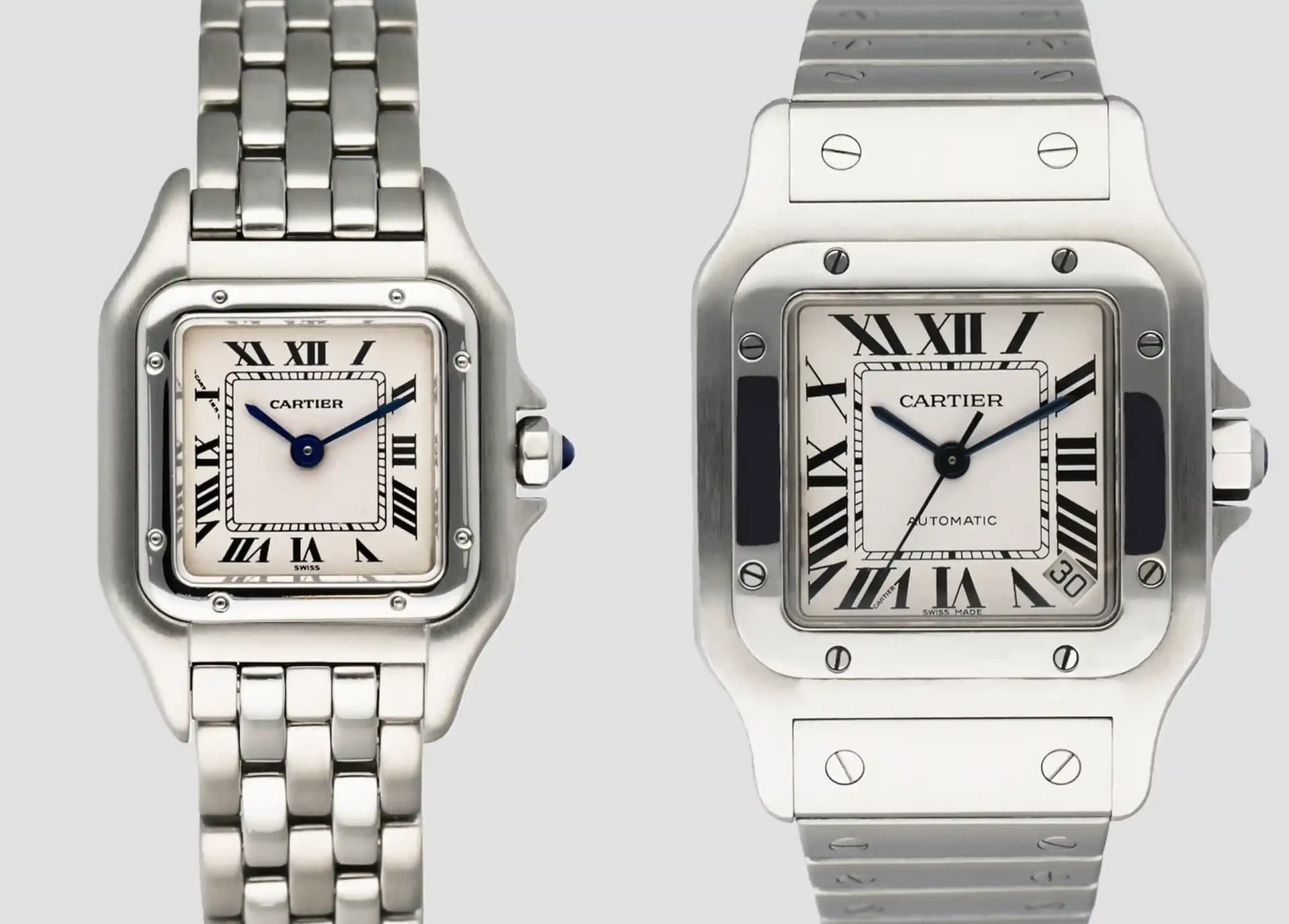
Cartier Santos vs. Cartier Tank: Choosing Your Shape
When Louis Cartier sketched the Santos in 1904 and the Tank in 1917, he established watchmaking principles that remain fundamentally unshaken more than a century later. Yet despite sharing the same visionary designer, the same prestigious Cartier name, and fundamentally similar positioning as luxury watches, the Santos and Tank represent diametrically opposed design philosophies—one celebrating industrial boldness, the other embracing refined elegance. Understanding which shaped watch aligns with your aesthetic, lifestyle, and personality requires more than casual comparison; it demands appreciation for how design shapes daily experience. Origins: A Century of Iconic Design The Santos: The World’s First Pilot’s Watch (1904) The Santos emerges from the cloudless Parisian sky in 1904 when Louis Cartier encountered a practical problem: his friend, Brazilian aviation pioneer Alberto Santos-Dumont, couldn’t read his pocket watch while piloting his biplane without removing his hands from the aircraft controls. Cartier’s solution revolutionized horology itself. In collaboration with Edmond Jaeger, he created the first men’s wristwatch—a square platinum case with exposed hexagonal screws securing the bezel, Roman numerals on the dial, and a leather strap with a folding buckle. This wasn’t jewelry masquerading as practicality; it was genuine tool design for a pioneering age. When Santos-Dumont flew publicly in October 1906 (making history’s first …
 Watches
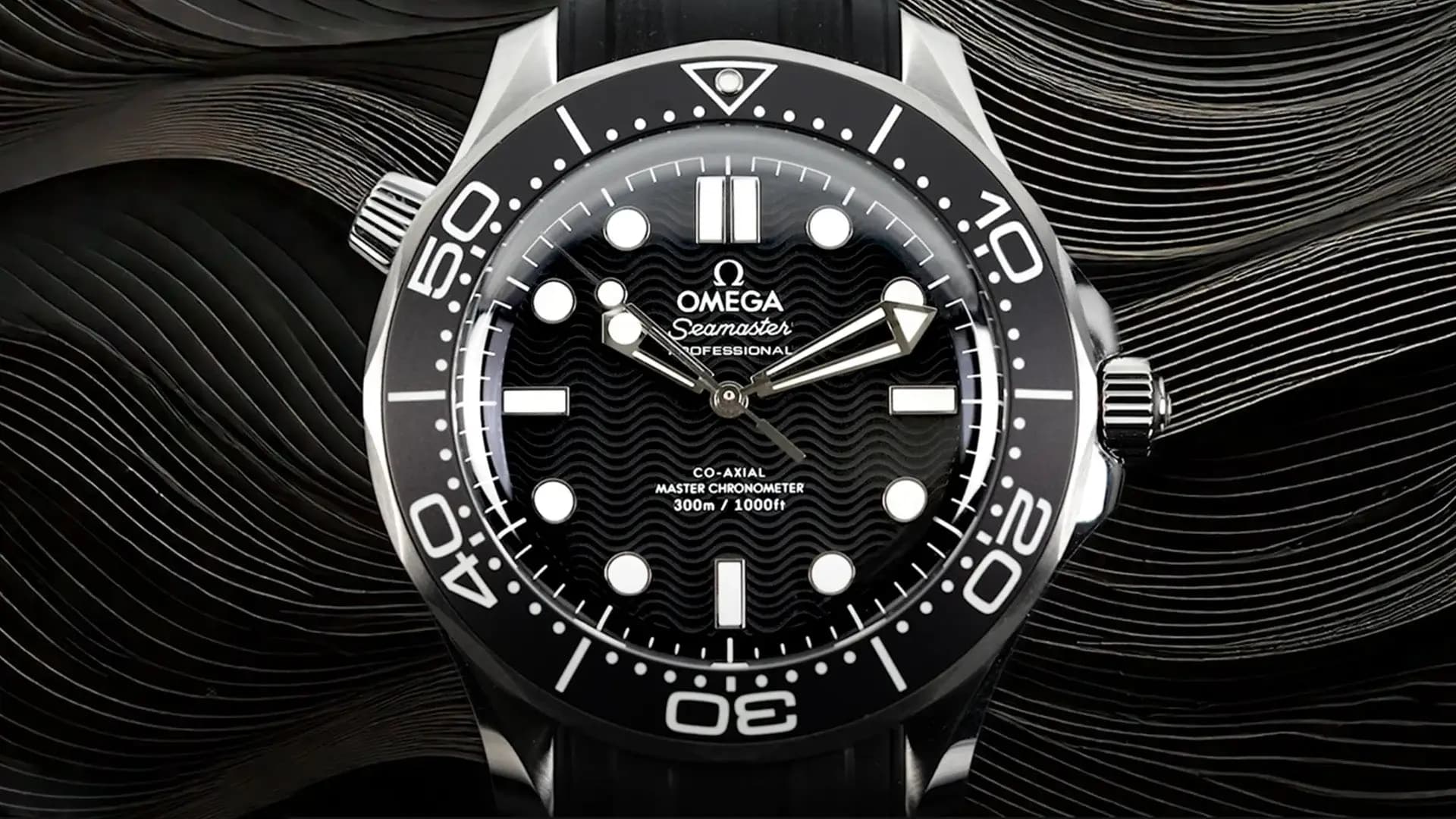
Omega Seamaster Diver 300M: The Superior Value Alternative to Rolex Submariner
In the competitive luxury dive watch market, the Omega Seamaster Diver 300M occupies an exceptional position—objectively superior technical specifications, significantly better pricing, and legitimately superior real-world functionality, yet perpetually overshadowed by Rolex’s marketing dominance and cultural cachet. While the Rolex Submariner commands $10,250–$14,000+ MSRP with 18–36 month waiting lists and 40–80% grey market premiums, the Omega Seamaster Diver 300M retails for $5,900–$6,500, trades on grey market for $5,000–$5,200 (essentially at retail or slight discount), and delivers Master Chronometer certification, superior magnetic resistance, and engineering sophistication that frankly exceeds what Rolex offers at substantially higher price points. The question isn’t whether the Seamaster is “good enough”—it’s why anyone would pay Submariner prices when Omega delivers superior value. 30 Years of Bond Prestige (1995–2025) The Seamaster’s ascent began with costume designer Lindy Hemming’s inspired decision in 1995. Seeking to modernize James Bond’s image for Pierce Brosnan’s era, Hemming rejected Rolex as “rather flash,” instead choosing Omega’s Seamaster Professional 300M. That single choice—the Seamaster Professional 2541.80 appearing in GoldenEye (1995)—transformed Omega’s positioning from respectable watchmaker to cultural icon. For three decades across 10 films, from Pierce Brosnan through Daniel Craig’s final appearance in No Time To Die (2021), the Seamaster has consistently appeared as Bond’s go-to instrument. This …
 Watches
Audemars Piguet Royal Oak: The Jumbo & The Offshore
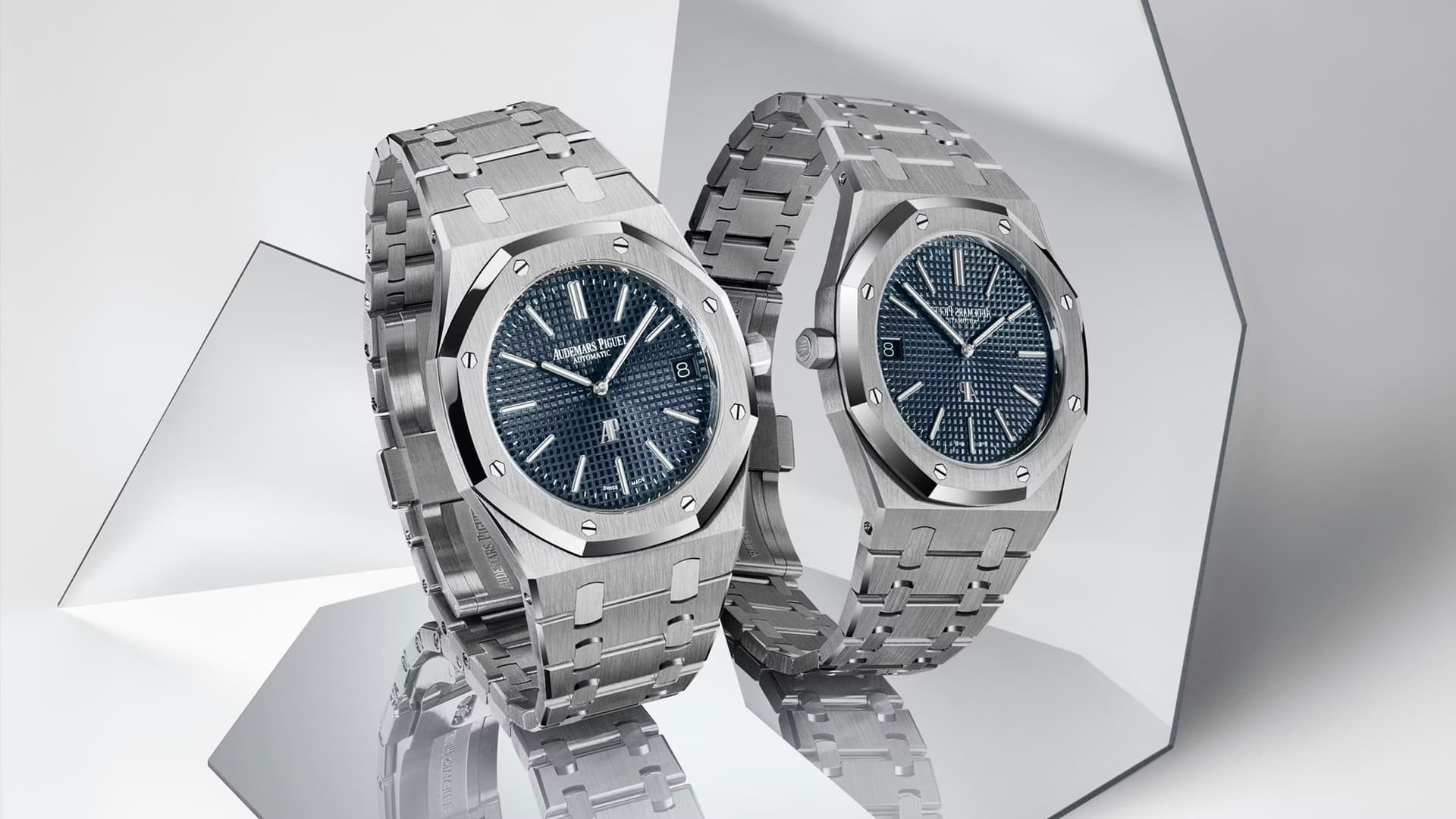
The Audemars Piguet Royal Oak exists in watchmaking as an eternal paradox—simultaneously the most iconic luxury sports watch ever created and a watch that defies conventional categorization. Designed by Gerald Genta in 1972, the Royal Oak revolutionized an entire industry by proving that a stainless steel watch could command luxury positioning and command the respect of elite collectors. Today, nearly 55 years later, the Royal Oak family has evolved into multiple distinct lineages, each serving radically different purposes and price points. Understanding the differences between the ultra-thin Jumbo (15202/16202), the practical Mainline (15500/15510), and the aggressive Offshore family is essential for collectors trying to navigate AP’s complex portfolio and justify the staggering price premiums these watches command on secondary markets. The Genesis: Gerald Genta’s Revolutionary Vision (1972) In 1971, Audemars Piguet faced an existential crisis. The Quartz Crisis was decimating Swiss mechanical watchmaking as Japanese quartz technology offered superior accuracy at a fraction of the cost. Audemars Piguet’s managing director, Georges Golay, needed something radical—a watch that would prove mechanical horsemanship remained valuable despite quartz’s obvious superiority. Genta drew inspiration from the porthole of a naval warship, creating an octagonal bezel with eight visible hexagonal screws—a design element that served both aesthetic and functional purposes (the screws secured …
 Watches
Rolex Day-Date (President) Technical Review: Why $40,000+ is Actually Justified (2025)
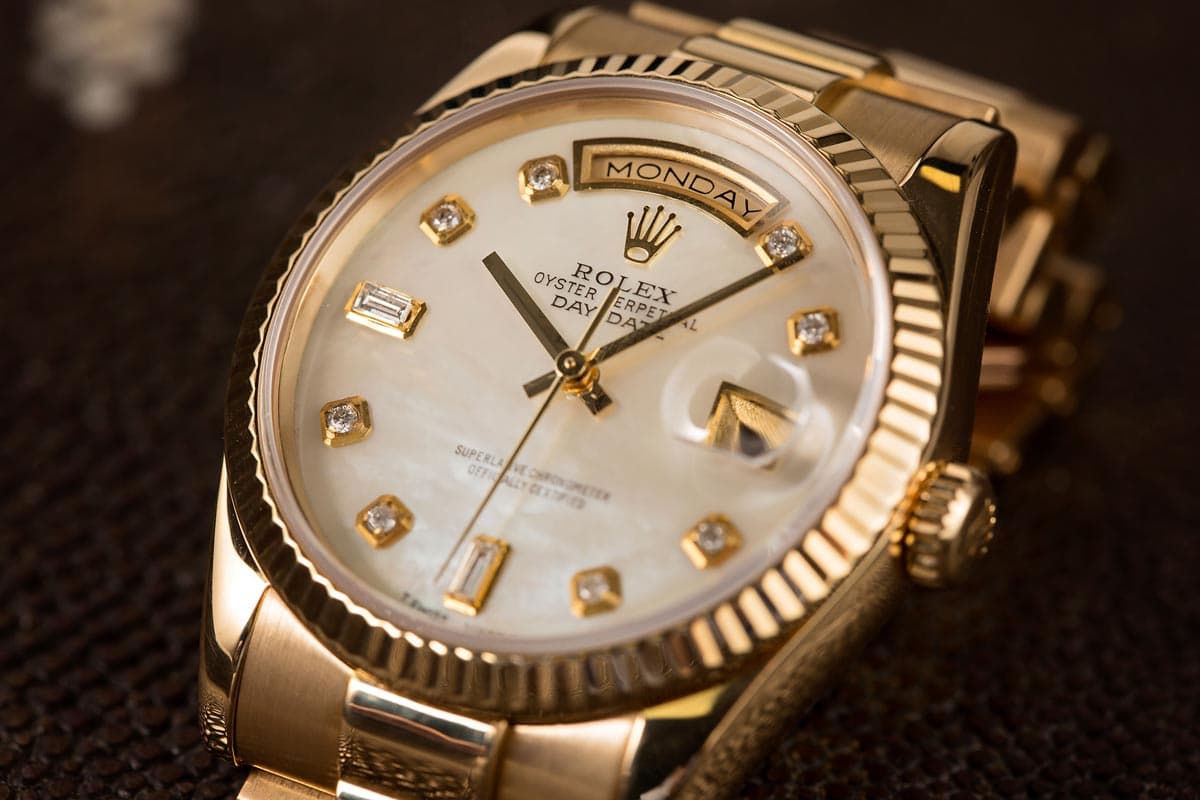
The Rolex Day-Date occupies a unique position in luxury horology—it’s simultaneously the watch that defines prestige itself and the watch that confuses newcomers most profoundly. At $31,350–$80,000+ MSRP (depending on material and dial configuration), the Day-Date costs nearly 5x more than a comparable Submariner despite featuring identical movement architecture and similar water resistance. This isn’t market irrationality or brand premium gone haywire. The Day-Date’s pricing reflects fundamental engineering differences, precious metal exclusivity, historical prestige, and complications that genuinely justify its position as Rolex’s ultimate luxury statement. To understand why, you must first appreciate a single fact that separates the Day-Date from virtually every other modern Rolex: the Day-Date is never—under any circumstances—manufactured in stainless steel. This material exclusivity creates a philosophical and financial chasm between the Day-Date and everything else in the Rolex portfolio. Precious Metals Only: The Foundation of Exclusivity The Day-Date exists exclusively in gold or platinum. There is no stainless steel variant. There has never been a stainless steel variant. There will never be a stainless steel variant. This isn’t marketing gimmick—it’s fundamental positioning. By restricting the Day-Date to precious metals, Rolex accomplishes several critical objectives simultaneously: 1. Creates genuine scarcity: Rolex produces fewer Day-Dates annually than Submariners because gold and platinum material …
 Watches
Rolex GMT-Master II Guide: Pepsi, Batman, and Sprite (2025 Investment Analysis)
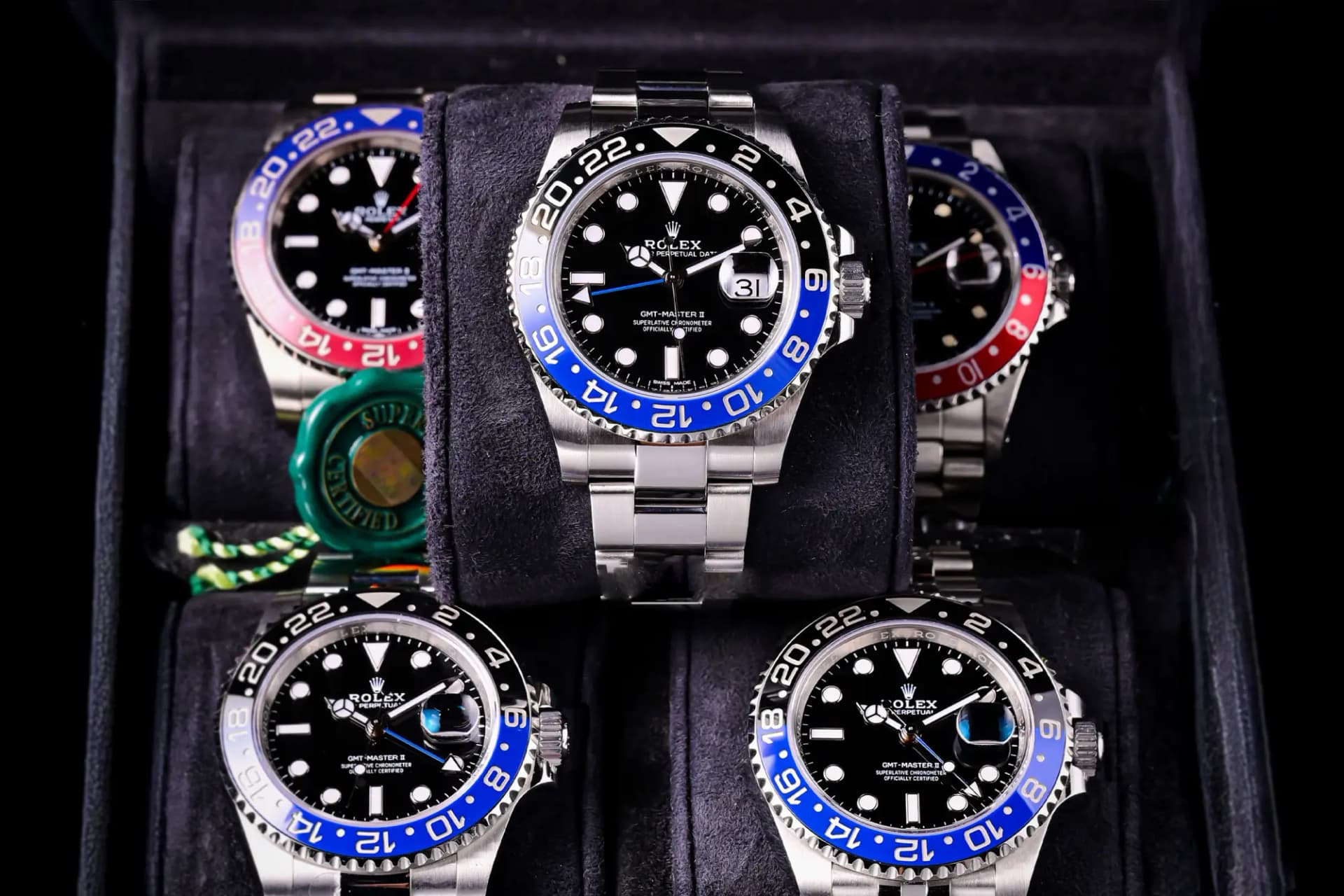
The Rolex GMT-Master II has transcended its original purpose as an aviation tool to become one of the most visually distinctive and investment-worthy watches in modern horology. Unlike the subtle Submariner or understated Datejust, the GMT-Master II declares itself through a remarkable 24-hour dual-colored ceramic bezel that serves both functional and aesthetic purposes. The watch comes in several iconic colorways—each with its own personality, collector following, and investment trajectory. If you’re deciding between a Pepsi, Batman, Sprite, or Root Beer GMT-Master II, you’re making a choice that affects not just your wrist, but your wallet’s long-term prospects. Understanding the GMT Complication: Three Time Zones at Once Before diving into specific models, let’s clarify what makes the GMT-Master II functionally extraordinary. The GMT complication allows simultaneous tracking of multiple time zones through an ingenious three-hand system: The Three Hands Explained: How it works: Most travelers set the GMT hand to their “home” time zone and rotate the 24-hour bezel to match. The regular hour hand displays current local time. The 24-hour bezel, painted in contrasting colors (red for daytime hours, blue for nighttime), helps you instantly distinguish between AM and PM on a second time zone without calculating 12-hour conversions. For a third …