Cuban link chains sit in that sweet spot between street status and real luxury. That also makes them one of the most faked jewelry styles on the market. From flea markets to Instagram “boutiques” and even some sketchy mall kiosks, you’ll see “14K Cuban” pieces that are anything but.
The good news: you don’t have to be a jeweler to protect yourself. If you know what to look at, what to feel, and what to question, you can avoid 90% of bad deals before you ever swiped your card.
Think of this guide as a systematic approach to authentication. The most successful fake-spotters combine visual inspection, tactile experience, and seller verification into a single decision-making process that takes less than five minutes. Over the past decade, counterfeiting has become remarkably sophisticated—but so has detection when you know where to focus.
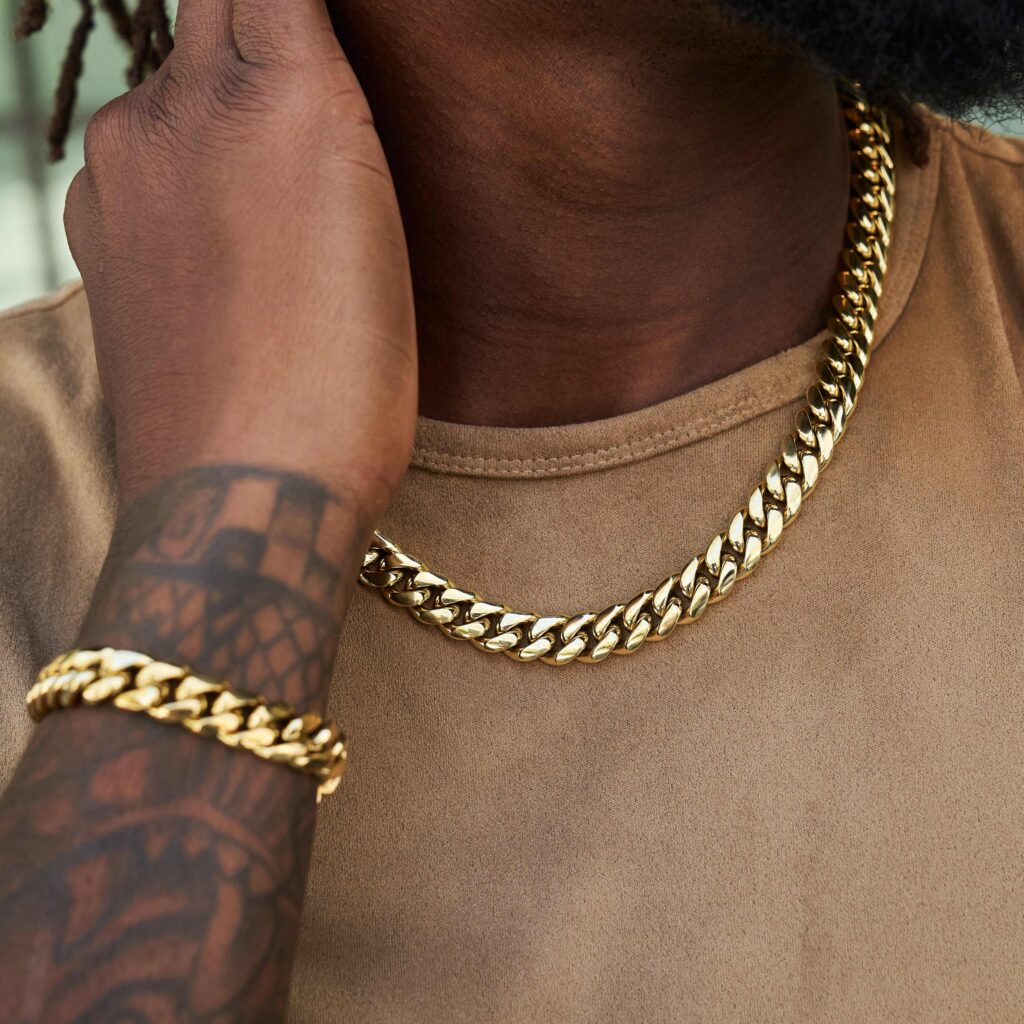
Visual Inspection – Links, Edges, and Overall Finish
Start with the simplest tool you have: your eyes in good light. Put the chain under bright natural light or a strong lamp and really look at it—not just from arm’s length, but up close where you can see individual link details.
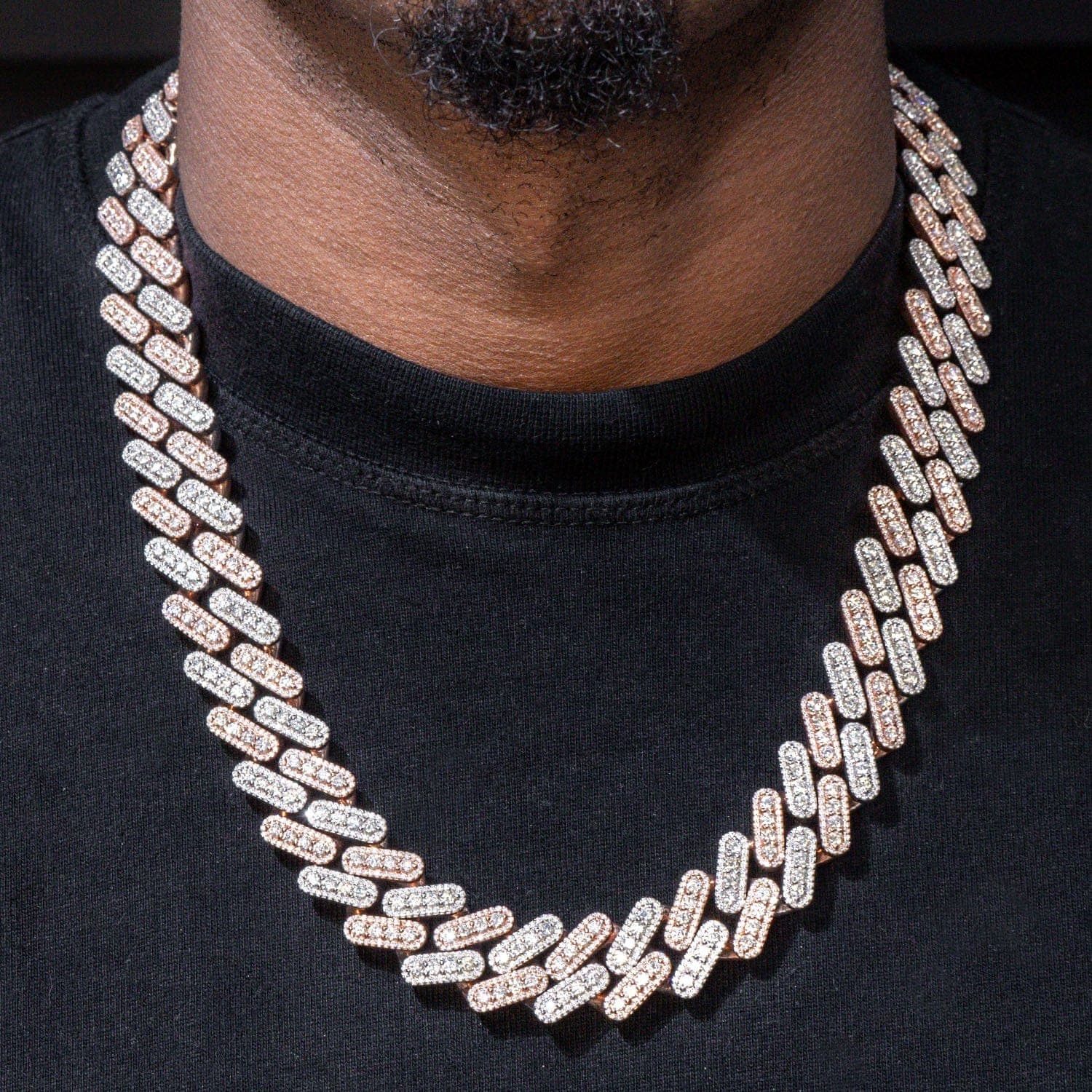
On a real Cuban link, the links look like they belong together. Each link transitions smoothly into the next with almost mathematical precision. The curves are consistent, the spacing is tight, and when you trace your eye along the entire chain, you see an unbroken visual rhythm. The interlocking appears so seamless that it’s hard to tell where one link ends and another begins.
On many fakes, once you look closely, things fall apart. You’ll notice:
- Some links are slightly more oval-shaped while others appear more squashed
- Tiny gaps where you can see daylight between individual links
- The overall pattern looks “wavy” or inconsistent instead of flowing cleanly
Run your fingertip lightly along the edge. Authentic chains are meticulously finished. The edges feel rounded and polished. Nothing catches your skin. A real chain could rest against your neck for hours without irritation.
Cheap fakes reveal themselves immediately. The corners might feel sharp. Where links meet, you sometimes feel tiny burrs—remnants of poor casting. It’s like there’s a microscopic edge on the metal that shouldn’t be there.
Also notice the surface finish. Real gold looks deeply consistent. The color appears even across the entire chain. Under light, the surface reflects with depth and richness.
Fakes show several telltale problems:
- Little bubbles or pits in the plating (air trapped during electroplating)
- Flaky-looking skin where coating separates from base metal
- Slight color variations—one section brighter, another duller
- Discoloration near the clasp or back links
Editor's Insight: The visual inspection is your first line of defense. Most counterfeitors focus on making links look good from a distance. Close inspection under magnification reveals their shortcuts within seconds. Professional jewelers can identify fakes 80% of the time using only visual examination.
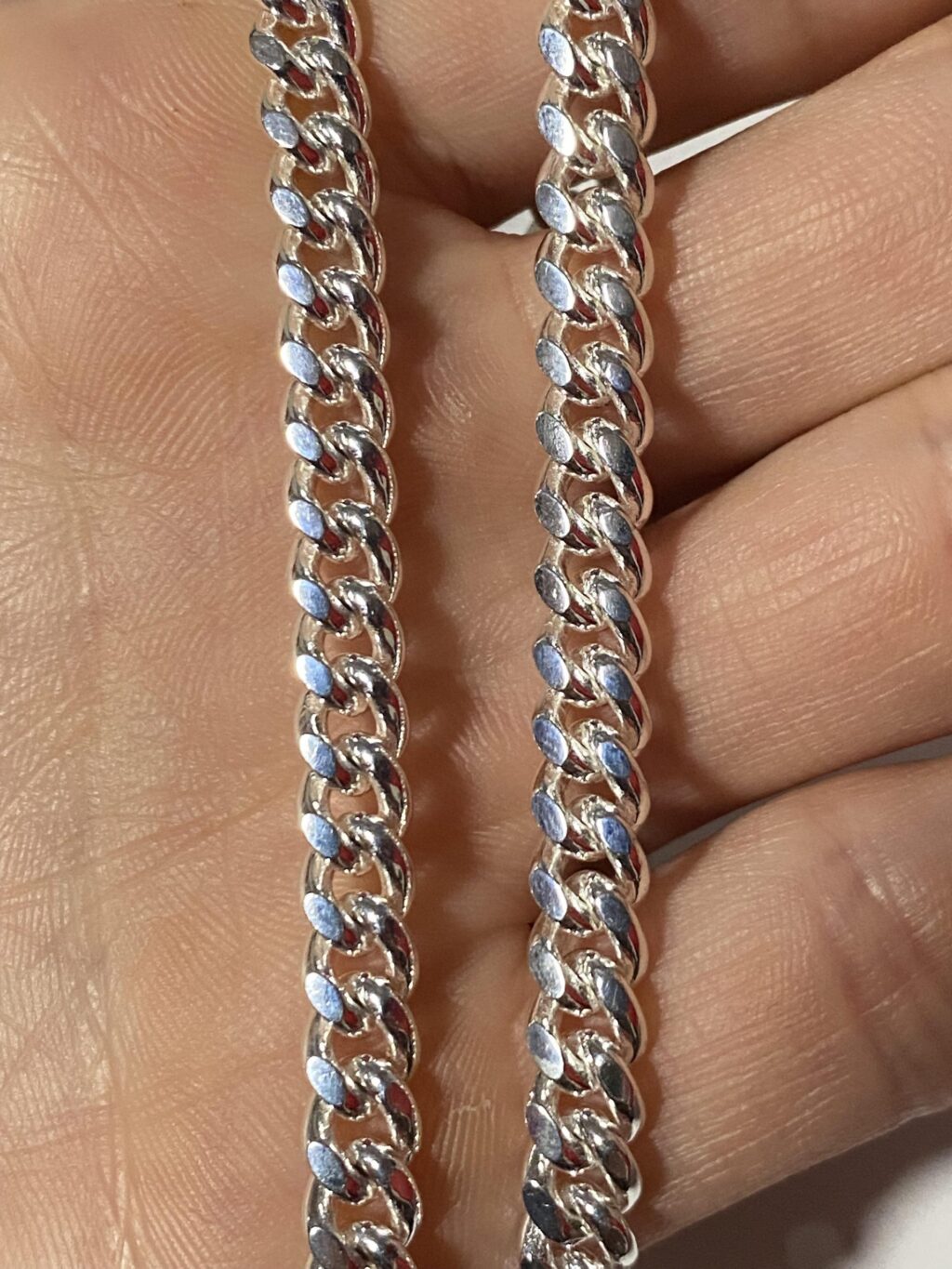
Weight and Feel – The Density Test in Your Hand
Gold and solid silver are exceptionally dense metals. That density becomes your friend when verifying authenticity. Gold weighs nearly 19 times more than water per unit volume—substantially heavier than almost every base metal alternative.
When you pick up a real solid Cuban link, the first thought should be: “Wow, this feels considerably heavier than it looks.” The weight surprises people almost every time. You expect a certain weight based on visual appearance, but it feels like double that. That weight distribution is absolutely consistent throughout the entire length.
Authentic solid chains feel:
- Compact and brick-like
- Balanced along the entire length
- Substantial even in shorter sections
- Like they have genuine “mass”
Fakes dramatically cut costs through construction shortcuts. Manufacturers create links that are completely hollow inside—they look solid but contain empty air. Others use super-lightweight base metals (aluminum alloys or cheap pot metal) that cannot achieve authentic density. The most common approach uses thin walls plated over to look solid without material substance.
In your hand, a fake feels strangely light for its apparent thickness. There’s a disconnect between appearance and reality. It feels almost “toy-like,” similar to costume jewelry—that lightweight quality signaling something isn’t premium.
If you have access to a known authentic chain (even if smaller), try direct comparison. Your brain adapts quickly to “what real should feel like.” After just seconds of holding authentic pieces, anything suspiciously light will trigger your internal alarm bells.
Important consideration: Weight alone isn’t ironclad proof. There are solid but low-karat pieces that feel lighter than expected. Heavy brass plated in gold can achieve surprising weight. However, when the chain feels light AND the finishing looks off AND the price seems too good, multiple signals point in the same direction.
Editor's Perspective: Weight testing is approximately 75% reliable when combined with other factors. The most effective approach uses weight as confirming evidence rather than standalone proof. Professional appraisers use weight as just one component of comprehensive authentication. Never rely exclusively on this test for expensive purchases.
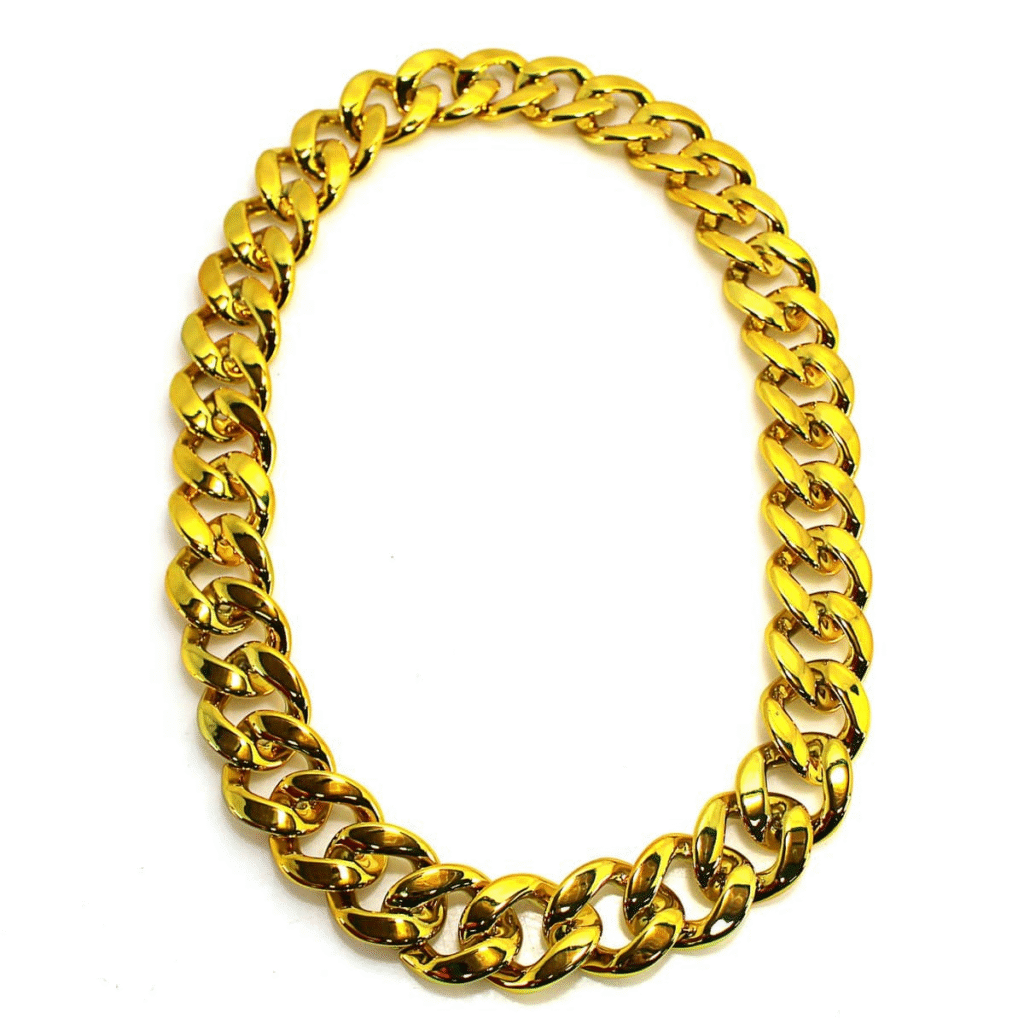
Hallmarks, Stamps, and Markings
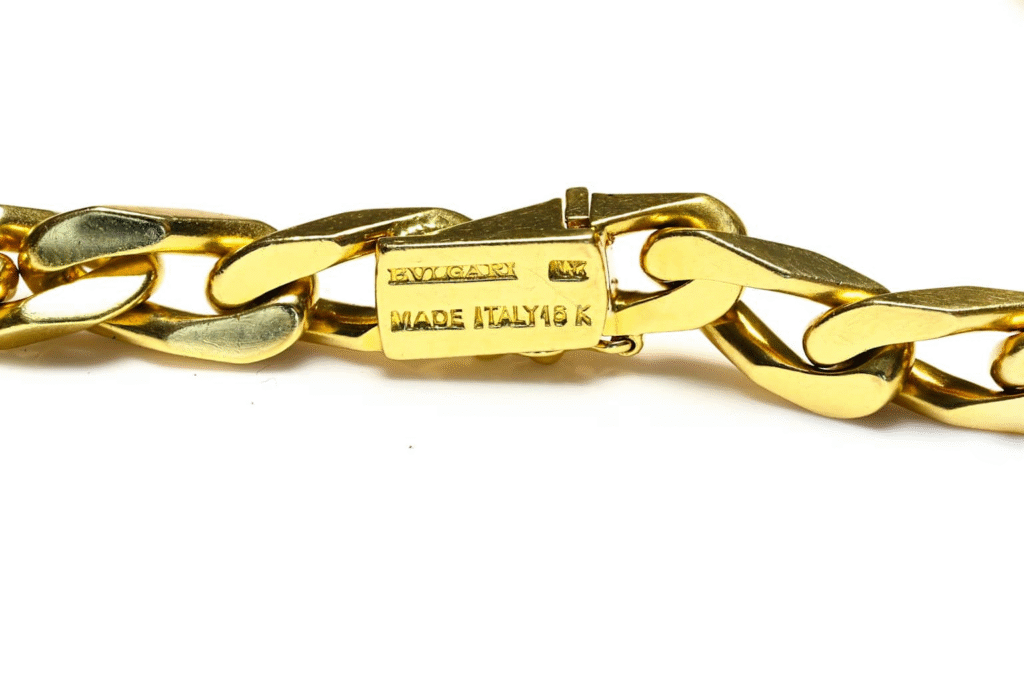
Real precious-metal chains almost always carry hallmarks—small stamps indicating purity and sometimes country of origin. These stamps essentially serve as the jewelry world’s certification.
Common hallmarks on authentic Cuban links:
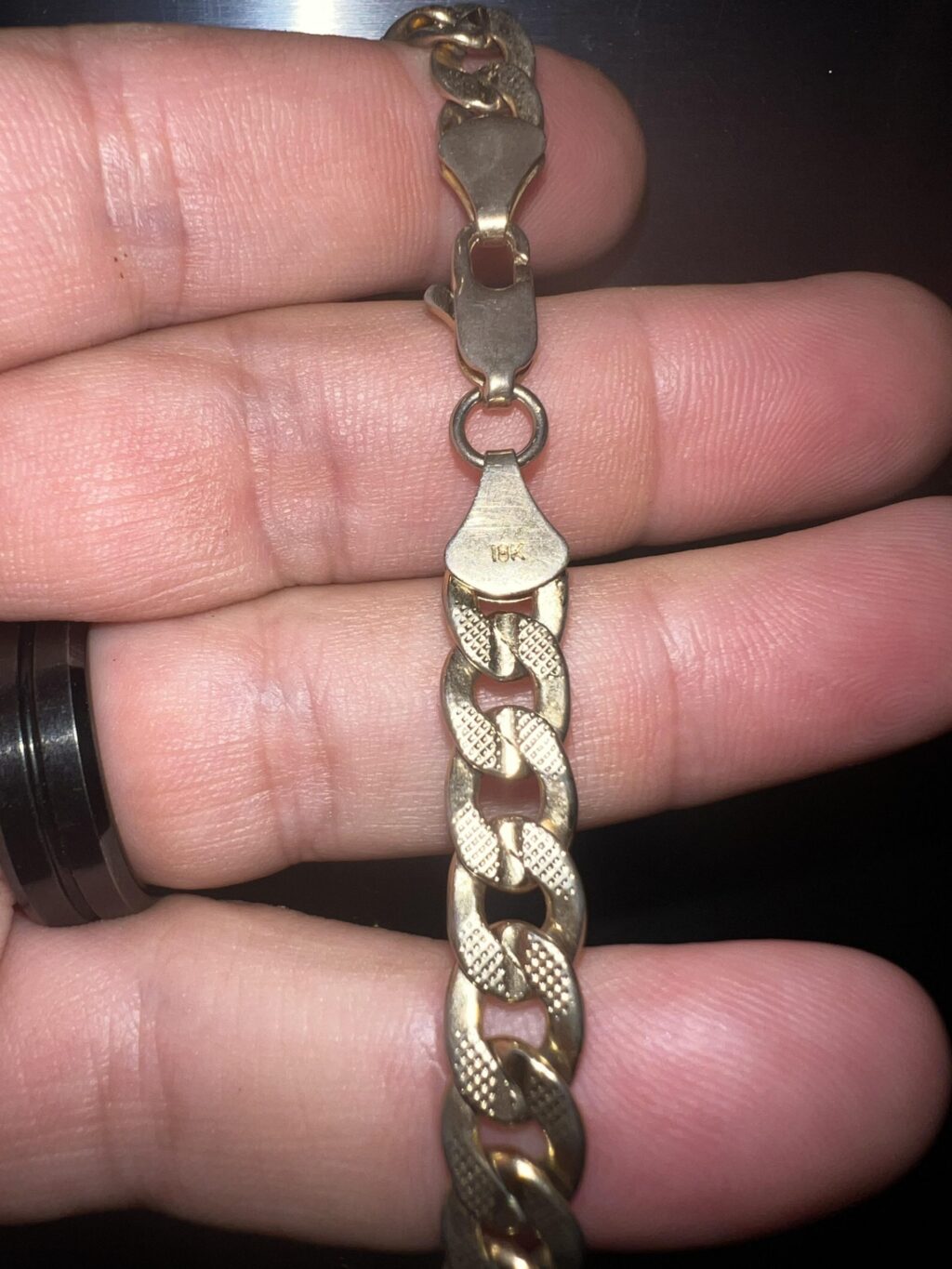
- Karat numbers: 10K, 14K, 18K
- European equivalents: 417, 585, 750
- Silver standards: 925 (sterling)
- Country marks: “ITALY,” “USA”
- Maker’s marks representing the jeweler or seller
These hallmarks typically appear on the clasp mechanism (the thickest, most durable part), on small end caps, or on tiny tags soldered near the clasp.
Authentic markings display distinctive characteristics:
- Crisp, sharp, and perfectly clean
- Fully formed letters and numbers
- Easy to read under magnification
- Intentional, professional appearance
- Never carelessly scratched onto metal
Red flags indicating problems:
- Stamps that are crooked, too shallow, or blurred
- Missing hallmarks entirely on pieces sold as “solid gold”
- Mixed signals: clasp says 18K while tag says 14K
- Random symbols that don’t match any known hallmarking system
Critical Warning: Some high-quality counterfeits also stamp 14K or 18K onto their pieces. Fakers understand that hallmarks are part of the authenticity checklist. This means finding a hallmark proves absolutely nothing by itself. Think of hallmarks as one puzzle piece in a larger picture, not the complete answer.
| What to Look For | Real Hallmarks | Fake/Suspicious |
|---|---|---|
| Clarity | Crystal clear, professional | Blurred, shallow, hand-scratched |
| Placement | Standard locations (clasp, tags) | Random spots, multiple different stamps |
| Consistency | All marks agree on karat | Conflicting information |
| Wear Pattern | Unchanged with age | Worn differently than surrounding metal |
Editor's Take: Hallmarks are essential but insufficient for authentication. They represent approximately 40% of the verification puzzle. Real pieces always have them; many fakes do too. Use hallmarks to eliminate obvious counterfeits, not to confirm authenticity. Professional appraisers verify hallmarks first, then proceed to additional testing.
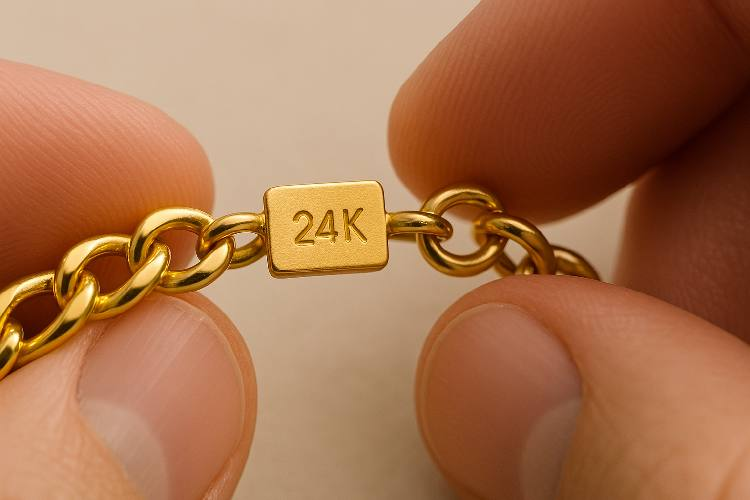
The Clasp Test – Construction, Lock, and Branding
If you only check one single part carefully, make it the clasp mechanism. This is where fakers save money and cut corners, prioritizing visual appeal of links while economizing elsewhere.
What a real, well-made clasp feels like:
- Closes with a clean, confident click
- No sloppy movement when locked
- Hinges feel tight and substantial, never wobbly
- Safety latches (if present) fold smoothly and line up perfectly
- Operates smoothly through repeated open-close cycles
Fake clasps reveal themselves through:
- Wiggling from side to side when supposedly locked
- Metal feels disturbingly thin when pinched
- Doesn’t sit flush with chain; visible gaps appear
- Requires fiddling instead of simple, smooth operation
- Degrades after just a few use cycles
Pay attention to color matching. The clasp and chain should be identical in gold shade. If noticeably more yellow or paler, this indicates either a replacement clasp (legitimate but important to know), a plated clasp on solid chain (suggesting cost-cutting), or components from different manufacturers mixed together.
For branded pieces with logos, verify that spelling is 100% correct, logo shape and font match official specifications, and engraving appears razor-clean rather than squashed or amateur.
Try opening and closing the clasp repeatedly—maybe ten to fifteen times. If by the tenth attempt you’re annoyed, worried about it snapping, or noticing degradation, walk away. Quality clasps operate smoothly for thousands of cycles without issues.
Advice from the Community: Experienced collectors often say the clasp quality directly correlates to overall authenticity. Fakers can approximate link quality with modern casting techniques, but they struggle with clasp engineering. Spending 60 seconds testing clasp operation has caught more counterfeits than any other single test.
Material Reality – Plating vs. Solid Gold vs. Gold-Filled
This addresses where massive percentages of scams actually live: what the seller claims versus what it genuinely is.
Most people understand “solid gold” means gold throughout—best quality, best long-term value. The spectrum creates enormous confusion:
- Solid gold – Gold all the way through, best long-term value
- Gold-filled – Thick layer pressure-bonded over base metal, significantly better than plating
- Gold-plated – Ultra-thin electroplated layer over cheap alloy, looks good new, ages terribly
- Flash-plated – Barely-measurable coating, often disappears within months
Common misrepresentation tricks:
- Calling plated chains “real gold” (technically true, dramatically deceptive)
- Using vague terms like “gold tone,” “gold color,” or “hip hop gold”
- Advertising “solid feel” instead of “solid gold”
- Exploiting the fact that most people won’t notice grammatical differences
Where fakes betray themselves most obviously is through wear patterns over time. Look carefully at zones where repeated wear concentrates. The back of the chain receives constant rubbing against neck skin. Link edges experience friction. The clasp undergoes thousands of open-close cycles.
On cheaply plated chains you may see:
- Silver-colored or copper-colored metal peeking through
- Greenish or dark tarnish in high-friction areas
- Patches that no longer match the rest of the chain’s color
- Actual flaking where coating separates from base metal
Solid gold behaves completely differently. Even when scratched or worn, it’s gold underneath. It might dull slightly with time, but it doesn’t suddenly turn another color.
Important: Don’t carve or deeply scratch expensive pieces yourself. Use visual wear clues, not destructive testing, unless a professional jeweler performs it.
Editor's Recommendation: Material composition matters more for long-term value than people realize. A solid 10K chain maintains value better than a thick-plated 18K imitation. If you're purchasing for investment (not just wearing), always verify solidity over visual appearance. The most common regret comes from people discovering their "solid" chain was plated six months after purchase.
Simple At-Home Tests (With Clear Warnings)
There are a couple of low-risk tests you can try at home. Don’t rely on them alone, and never destroy your jewelry to “make sure.”
Magnet Test: Real gold is not magnetic. Strong steel or cheap alloys usually are. Hold a strong neodymium magnet near the chain. If it snaps hard onto the magnet, it’s not solid gold. But a chain that doesn’t stick could still be fake, made from non-magnetic metals. This test catches obvious lies but doesn’t confirm authenticity.
Skin Reaction (Long-Term Clue): Over time, cheap base metals (especially brass and nickel) can turn skin green or black and cause irritation. Solid gold is usually hypoallergenic. But this is a slow test—you won’t know on day one.
Water Float Test: Real gold is dense and sinks quickly in water. Drop the chain into a glass of water. Real gold sinks immediately; fakes may hesitate or float. However, some counterfeit metals sink too, making this unreliable.
Tests to absolutely skip:
- Scratching the chain on stone and pouring acid
- Filing down a link to “see what’s inside”
- Dropping it in bleach or other chemicals
All of these can damage real jewelry, void return policies, and leave ugly marks even on genuine pieces. For serious money pieces, let professionals handle acid or XRF testing.
Professional Insight: At-home tests serve primarily as red flags rather than confirmations. A failed magnet test definitely indicates problems. A passed magnet test proves nothing conclusively. Think of DIY testing as screening (eliminating obvious fakes) rather than diagnosis (confirming authenticity). Professional testing remains necessary for expensive purchases.
Price and “Too Good to Be True” Deals
Gold has a real-world melt value per gram. That means a 14K solid gold Cuban link weighing 100 grams is worth hundreds or thousands of dollars just as scrap metal, regardless of craftsmanship or brand.
So if someone offers:
- A “100g solid 14K Cuban” for $500
- A thick, heavy-looking chain for costume jewelry prices
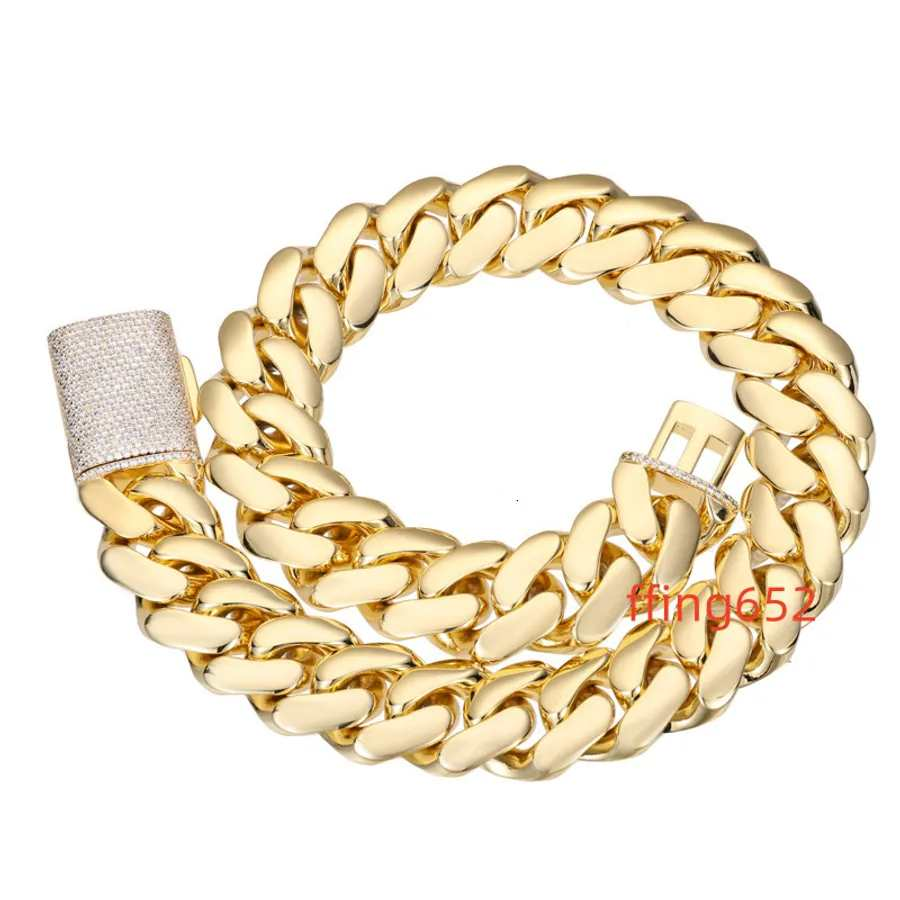
- A “diamond-set” chain priced like plain silver
…you already know the answer. Something is fundamentally off.
Rough calculation method:
- Look up current gold price per gram (typically $60–$70)
- Multiply by the chain’s stated gold percentage (14K ≈ 58.5%)
- Multiply by the stated weight in grams
If the final number is much higher than the asking price, it’s almost certainly not what they claim. Real sellers aren’t in the business of selling $2,000 worth of gold for $300.
Before buying, compare prices across reputable jewelers, a few online stores, and melt value versus asking price. If everyone else is at $2,500–$3,000 and one random seller is at $650 “today only,” you have your answer.
Red Flag Pricing Patterns:
- Retail-quality appearance with pricing matching costume jewelry
- Massive discounts (40%+ below typical market rates)
- “Pressure” tactics: “Only 2 left!”, “Expires today!”
- Refusal to explain the price difference versus competitors
Editor's Opinion: Pricing represents maybe 10% of the verification process, but it's the initial filter. Unrealistic prices should trigger deeper investigation before any financial commitment. The saying "if it seems too good to be true, it is" applies perfectly to luxury chain markets.
Seller Reputation, Documentation, and Return Policy
Even the best visual and physical checks can fail. That’s why who you buy from is equally important as what you’re buying.
Green flags for trustworthy sellers include real business history (years in operation, numerous positive reviews), clear product details (metal type, exact weight, dimensions), written return policies that aren’t traps, and willingness to answer questions and show extra photos especially of hallmarks, clasps, and actual weighing on scales.
Red flags include no physical address (just “DM to buy”), acceptance of only cash/wire/crypto with zero buyer protection, “no returns, all sales final” on high-ticket items, refusal to provide invoices or written descriptions, and evasiveness when asked about metal content or construction.
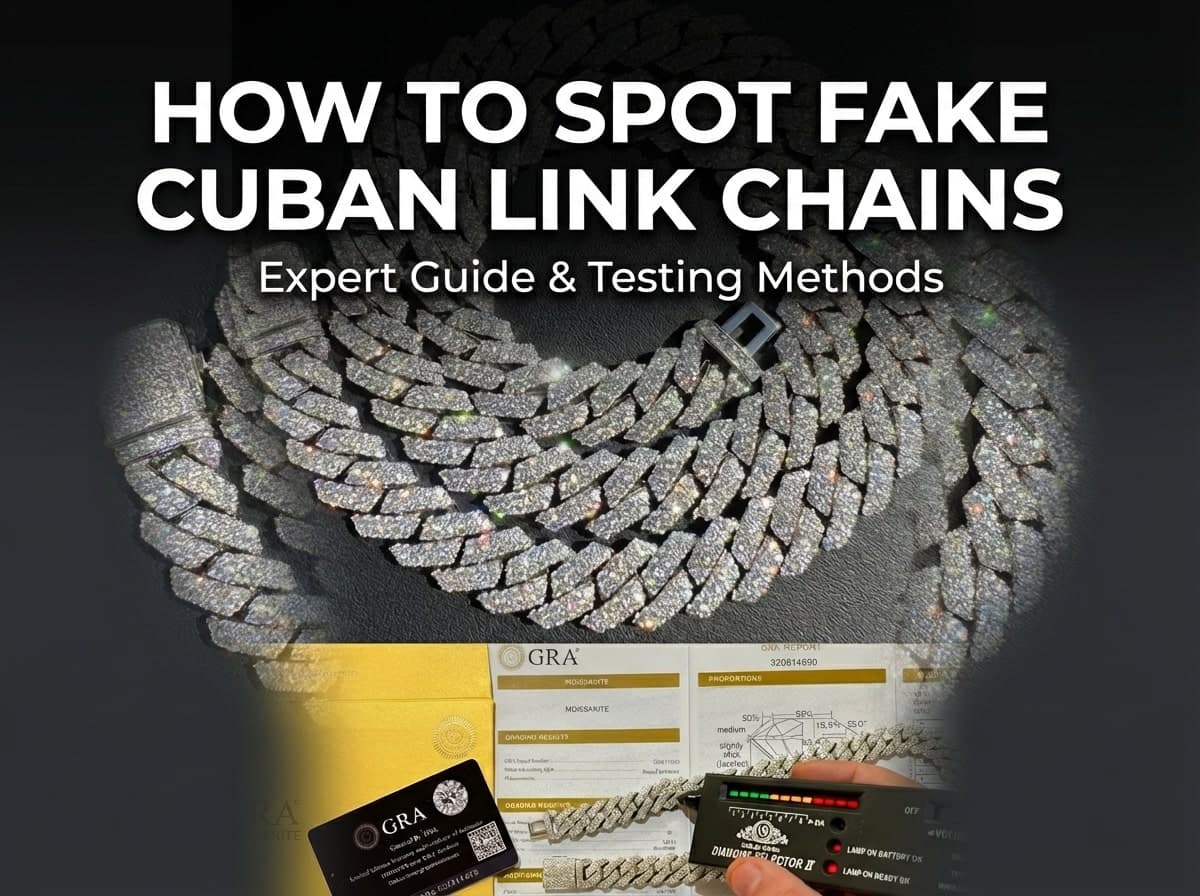
Ask sellers directly for written confirmation of karat, whether it’s solid/filled/plated, any appraisal documents, receipts, or lab reports. A legit seller has nothing to hide and actively provides this information proactively.
What to Request Before Purchasing:
- Written metal content verification
- Chain weight on accurate scale (photos showing)
- Hallmark photos with macro magnification
- Return/exchange policy in writing
- Any available third-party certification or appraisal
- Seller contact information and business registration details
Marketplace Reality: Established jewelers with physical locations maintain reputations built over decades. Online-only sellers with zero history and no buyer protection represent higher risk. Yes, exceptions exist—some excellent online sellers operate legitimately—but they distinguish themselves through transparency and customer service excellence.
Editor's Advice: Take 15 minutes researching the seller before taking 5 minutes inspecting the chain. Bad sellers cause more financial damage than fake chains. Trust your gut—if communication feels evasive or something about the offer seems off, walk away. Better chains exist elsewhere, from better sellers, tomorrow.
Getting a Professional Opinion – Jewelers and Appraisals
For chains exceeding $2,000 or when something feels off, always consult professionals before finalizing purchase. This investment costs $30–$300 but potentially saves thousands.
Who can help:
- Reputable local jewelers – See fakes and real pieces daily, perform acid tests, examine craftsmanship
- Certified gemologists/appraisers – Provide official written appraisals, use advanced equipment (XRF spectroscopy), give replacement value estimates
- Established gold buyers – Test metal content daily for their survival, provide quick honest assessments
What professionals can accomplish:
- Acid testing (confirms karat accurately)
- XRF analysis (non-destructive metal analysis scanning)
- Weight and dimension verification
- Approximate replacement or scrap value calculation
| Professional Service | Cost | Time Required | Reliability |
|---|---|---|---|
| Local Jeweler Assessment | $25–$75 | 24–48 hours | 85% |
| Certified Appraisal | $100–$300 | 3–7 days | 95% |
| XRF Metal Analysis | $50–$150 | 1–2 hours | 90% |
| Acid Testing | $35–$100 | 30 minutes | 98% |
If a chain is expensive and something feels off, don’t let pride or FOMO push you into purchase. Either walk away or get it tested before committing.
Final Professional Insight: The most experienced jewelry experts describe authentication as a probabilistic exercise rather than absolute certainty. Multiple confirmatory signals approaching 100% confidence. Single tests providing 60–75% reliability. The systematic approach combining visual inspection, weight, hallmarks, clasp quality, material reality, seller reputation, and professional verification together creates 98%+ confidence in authenticity decisions.
The Authentication Checklist: Your Quick Reference
Your systematic approach to spotting fakes combines multiple signals:
- Visual inspection (links, edges, finish) – authentic shows seamless precision
- Weight and feel – real gold feels substantially heavier than it looks
- Hallmarks and stamps – legitimate marks appear crisp and consistent
- Clasp quality – real clasps operate smoothly and feel substantial
- Material wear patterns – solid gold shows gold underneath when worn
- At-home tests – magnet and water tests catch obvious issues
- Price reality – verify against melt value and market comparisons
- Seller verification – established businesses with documentation
- Professional consultation – worth the cost for expensive chains
The more checkboxes you tick, the harder it is for a fake to slip past you. Use this approach sequentially rather than randomly. Start with visual inspection (five seconds), move to weight (ten seconds), then examine hallmarks (thirty seconds). Most fakes fail within the first two steps. Save professional consultation for chains that pass initial screening but still feel questionable.
Your money and your neck both deserve something real. The difference between authentic luxury and sophisticated counterfeits often comes down to simple attention to detail and asking the right questions. This guide gives you the tools. Trust your instincts—if something feels off, it probably is.