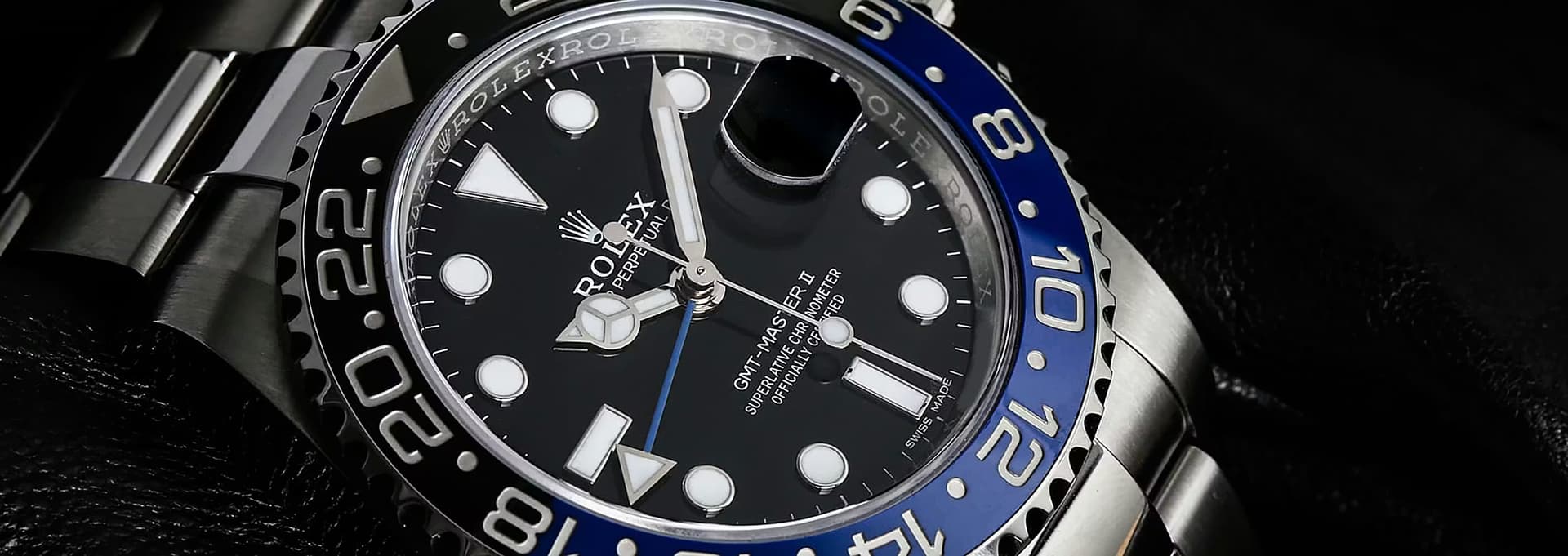
In the competitive luxury dive watch market, the Omega Seamaster Diver 300M occupies an exceptional position—objectively superior technical specifications, significantly better pricing, and legitimately superior real-world functionality, yet perpetually overshadowed by Rolex’s marketing dominance and cultural cachet. While the Rolex Submariner commands $10,250–$14,000+ MSRP with 18–36 month waiting lists and 40–80% grey market premiums, the Omega Seamaster Diver 300M retails for $5,900–$6,500, trades on grey market for $5,000–$5,200 (essentially at retail or slight discount), and delivers Master Chronometer certification, superior magnetic resistance, and engineering sophistication that frankly exceeds what Rolex offers at substantially higher price points.
The question isn’t whether the Seamaster is “good enough”—it’s why anyone would pay Submariner prices when Omega delivers superior value.
30 Years of Bond Prestige (1995–2025)
The Seamaster’s ascent began with costume designer Lindy Hemming’s inspired decision in 1995. Seeking to modernize James Bond’s image for Pierce Brosnan’s era, Hemming rejected Rolex as “rather flash,” instead choosing Omega’s Seamaster Professional 300M.
That single choice—the Seamaster Professional 2541.80 appearing in GoldenEye (1995)—transformed Omega’s positioning from respectable watchmaker to cultural icon. For three decades across 10 films, from Pierce Brosnan through Daniel Craig’s final appearance in No Time To Die (2021), the Seamaster has consistently appeared as Bond’s go-to instrument.
This isn’t coincidental celebrity endorsement. Hemming’s original rationale remains perfectly valid: Bond, as a former Royal Navy man who dives, explores, and requires discreet elegance, would genuinely choose the Seamaster over the Submariner’s showier aesthetics.
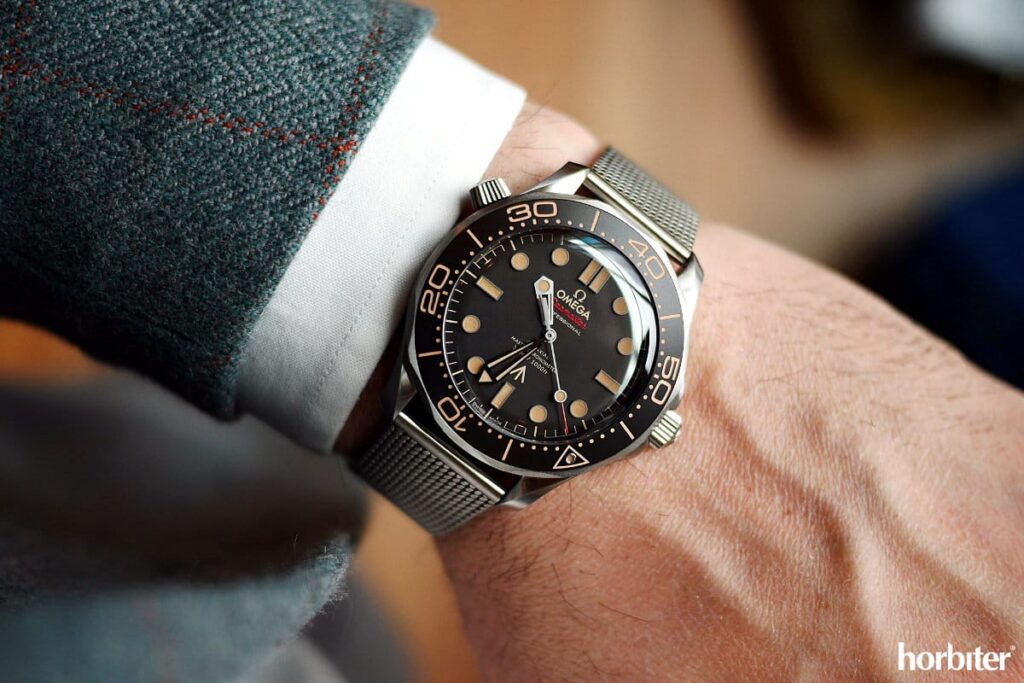
More than three decades later, the Seamaster remains the world’s most famous fictional character’s watch—a distinction no Submariner has ever enjoyed. This cultural positioning, combined with genuine technical superiority, creates a paradox: the Seamaster is demonstrably the better watch at substantially lower cost, yet Submariner demand remains unshaken.
Technical Specifications: Where Omega Genuinely Excels
The Ceramic Bezel & Laser-Ablated Wave Dial
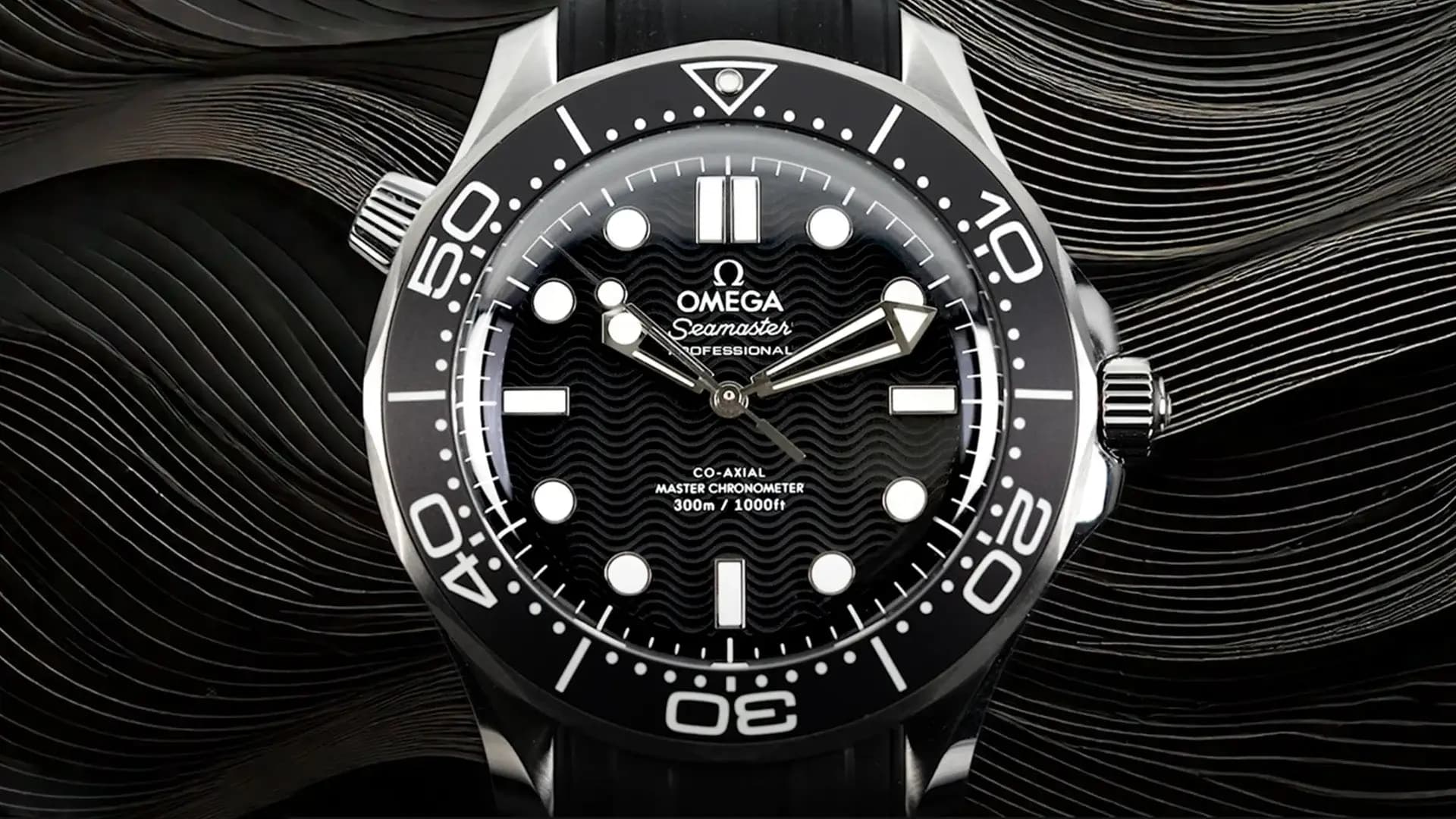
Modern Seamaster Diver 300M models (post-2018 redesign) feature ceramic bezel inserts with enamel-filled diving scales—a manufacturing process that exceeds Rolex’s Cerachrom bezel in precision.
The iconic laser-ablated wave dial directly references the original 1995 GoldenEye watch, with the wave pattern now laser-engraved onto the ceramic dial itself—a manufacturing achievement that means the pattern cannot scratch or wear away like printed alternatives.
This dial finishing represents genuine technical superiority: Rolex must rely on applied indices and printed elements that can theoretically fade over decades; Omega’s laser-engraving creates permanent patterns that become integral to the dial material itself.
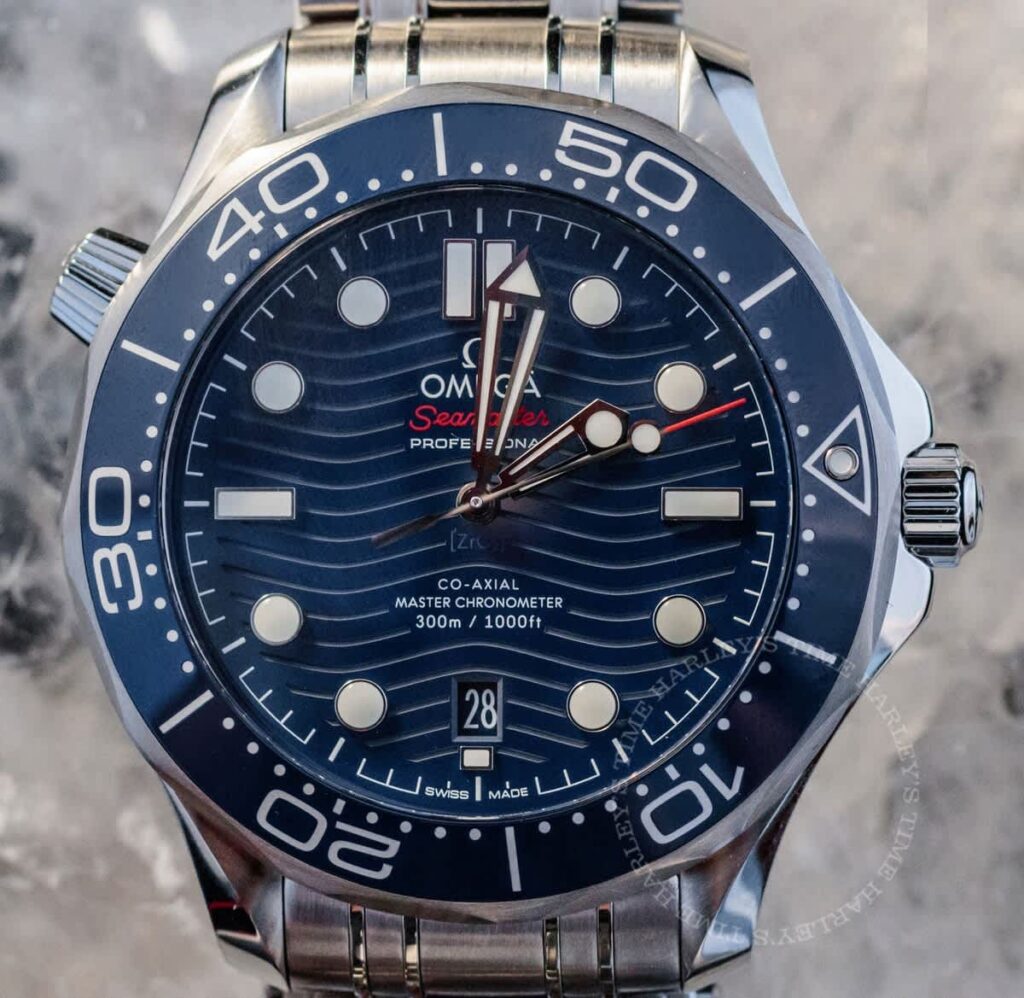
The Helium Escape Valve (HEV) at 10 O’clock
The Helium Escape Valve positioned at 10 o’clock represents one of diving’s most practical complications. During saturation diving (the extended underwater work performed by professional dive teams), helium becomes necessary for human respiration at extreme depths.
During decompression, pressure inside the watch case—compressed helium molecules—builds to dangerous levels. Without a relief valve, the crystal could pop off the case, destroying the watch. The HEV solves this by automatically venting internal pressure when decompression occurs, preventing crystal separation.
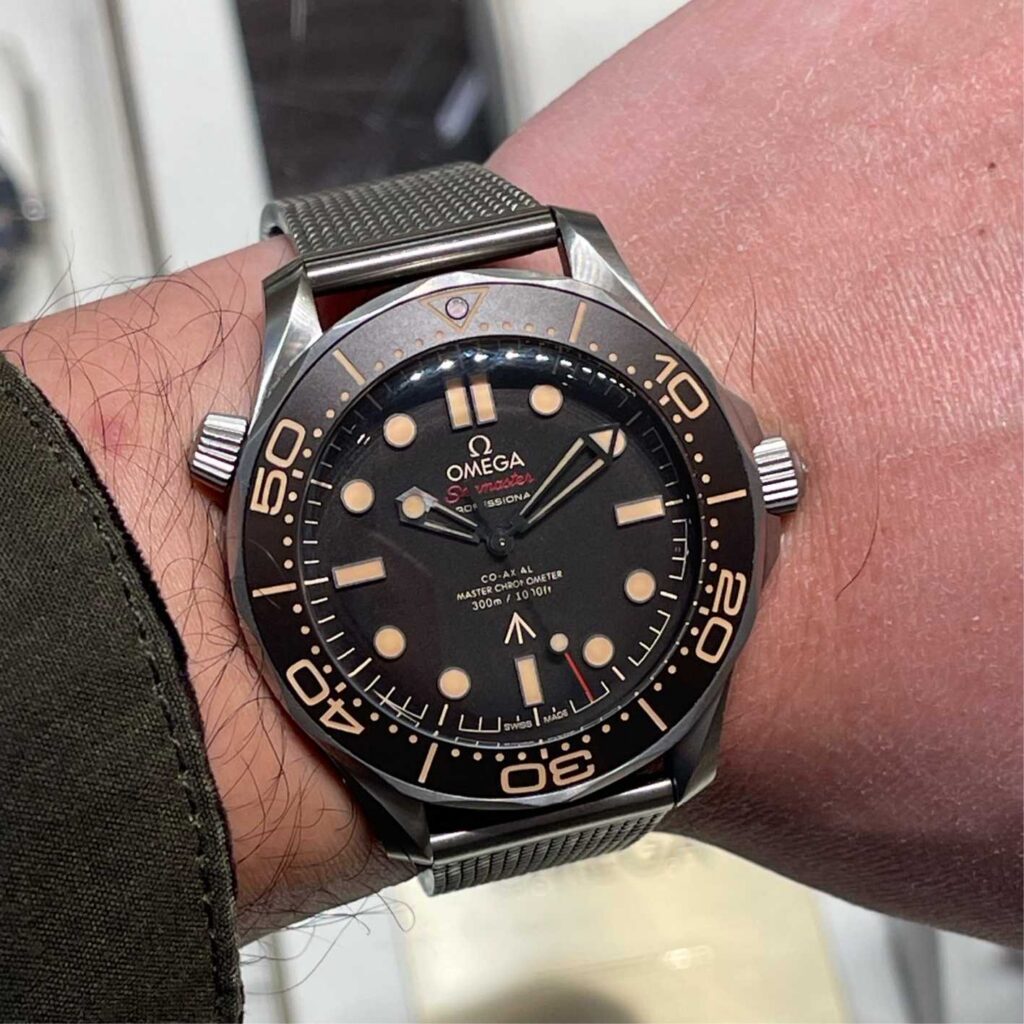
Rolex Submariners simply lack this feature—a limitation that matters exclusively to professional saturation divers, yet represents genuine technical sophistication for a tool watch.
Master Chronometer Certification vs. Superlative Chronometer
This distinction matters profoundly. While both Omega and Rolex certify their movements as chronometers, Omega’s Master Chronometer certification (METAS) exceeds Rolex’s Superlative Chronometer (COSC) in rigor and real-world precision standards.
COSC Certification (Rolex Submariner):
- Independent chronometer testing by Swiss Official Chronometer Testing Institute
- Accuracy standard: -4 to +6 seconds per day
- Magnetic resistance tested to COSC standards
METAS Master Chronometer Certification (Omega Seamaster):
- Initial COSC certification, then additional 8 independent METAS tests
- Accuracy standard: 0 to +5 seconds per day (no negative tolerance—the watch never loses time)
- Magnetic resistance tested to 15,000 Gauss (Omega certification, not just component testing)
- Temperature stability verified across extreme ranges
- Shock resistance independently verified
In practical terms: Omega’s Master Chronometer certification is approximately twice as rigorous as Rolex’s Superlative Chronometer certification. A certified Master Chronometer Seamaster is objectively more precise and more thoroughly tested than a Superlative Chronometer Submariner.
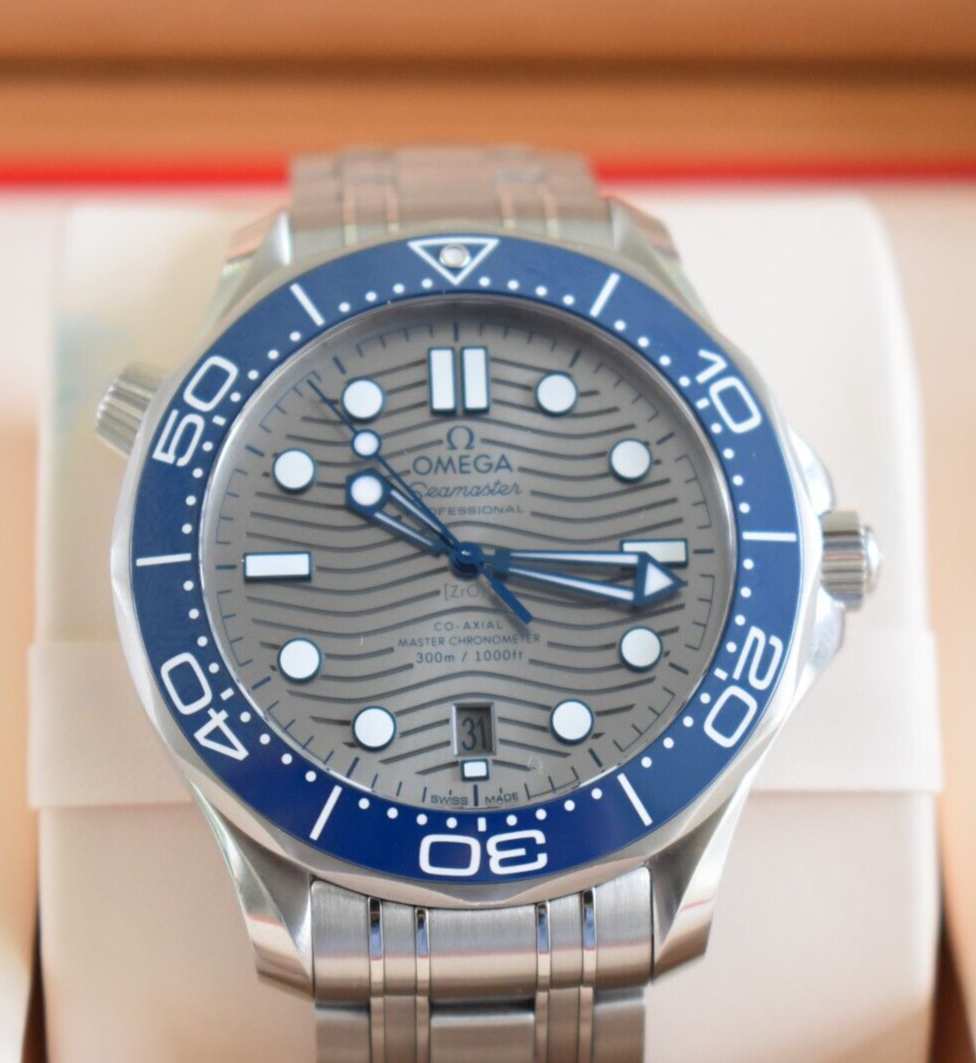
The Co-Axial Escapement: Revolutionary Efficiency
Omega’s Co-Axial escapement represents one of watchmaking’s genuinely revolutionary innovations. Patented by George Daniels in 1974 and perfected by Omega, the Co-Axial escapement reduces friction through novel escapement geometry, delivering three practical advantages:
Reduced friction → Reduced lubrication requirements → Longer service intervals
Traditional movements require frequent lubrication because friction-induced wear demands constant replenishment. Omega’s Co-Axial design eliminates roughly 60% of traditional escapement friction, meaning the watch can function reliably with minimal lubrication, enabling 5–10 year service intervals versus Rolex’s standard 3–5 years.
Improved accuracy → More stable timekeeping over months/years
Reduced friction means more consistent energy transmission to the balance wheel, improving accuracy stability over extended periods. While both Rolex and Omega meet chronometer standards at factory-fresh condition, the Seamaster’s superior engineering means it maintains accuracy stability longer.
Greater longevity → Watches functioning perfectly for generations
The Seamaster’s reduced wear means critical components degrade more slowly, extending the functional lifespan of the movement. Combined with METAS certification confirming this engineering, the Seamaster represents a genuinely superior long-term investment.
Movement Comparison: Caliber 8800 vs. Caliber 3235
| Specification | Omega Caliber 8800 (Seamaster) | Rolex Caliber 3235 (Submariner) |
|---|---|---|
| Power Reserve | 55 hours | 70 hours |
| Accuracy Certification | METAS Master Chronometer (0/+5 s/day) | COSC Superlative (-2/+2 s/day) |
| Magnetic Resistance | 15,000 Gauss (METAS certified) | Parachrom hairspring (~15,000 G theoretical) |
| Escapement Type | Co-Axial (reduced friction) | Chronergy (improved efficiency) |
| Service Interval | ~5–10 years | ~3–5 years |
| Shock Resistance | Paraflex absorbers | Paraflex absorbers |
| Manufacturing | 100% in-house Omega | 100% in-house Rolex |
The reality: Rolex’s 70-hour power reserve exceeds Omega’s 55 hours—a genuine advantage for extended travel without winding. However, Omega’s Master Chronometer specification and Co-Axial escapement deliver superior real-world precision, reduced maintenance requirements, and more impressive engineering certification.
A higher power reserve (Rolex) versus superior certification and reduced friction (Omega) represents different engineering priorities, not objective superiority either direction.
Pricing: The Absurdity of Submariner Premiums
November 2025 Pricing Reality:
| Watch | MSRP | Grey Market Average | Premium Over Retail | Availability |
|---|---|---|---|---|
| Omega Seamaster Diver 300M (steel/rubber) | $5,900 | $5,000–$5,200 | -12% to 0% | In stock |
| Omega Seamaster Diver 300M (steel/bracelet) | $6,500 | $5,400–$5,800 | -11% to 0% | In stock |
| Rolex Submariner No-Date (ref. 124060) | $9,500 | $13,500–$16,000 | +42–68% | 18–36 month wait |
| Rolex Submariner Date (ref. 126610) | $10,250 | $14,000–$18,000 | +36–75% | 24–48 month wait |
The fundamental absurdity: You can walk into an Omega authorized dealer today and purchase a Seamaster Diver 300M at MSRP or slight discount. The exact same purchase at a Rolex dealer requires a 2–4 year waiting list followed with 40–80% grey market premiums when purchased on the secondary market.
For technical specification comparison:
- Seamaster: Master Chronometer, Co-Axial escapement, HEV, 55-hour power reserve, 300m water resistance, in-house movement
- Submariner: Superlative Chronometer, Chronergy escapement, 70-hour power reserve, 300m water resistance, in-house movement
The Seamaster offers 85% of the Submariner’s technical features (losing only the longer power reserve) while costing 40–60% less on secondary markets. This pricing gap defies rational justification based on horological specifications alone.
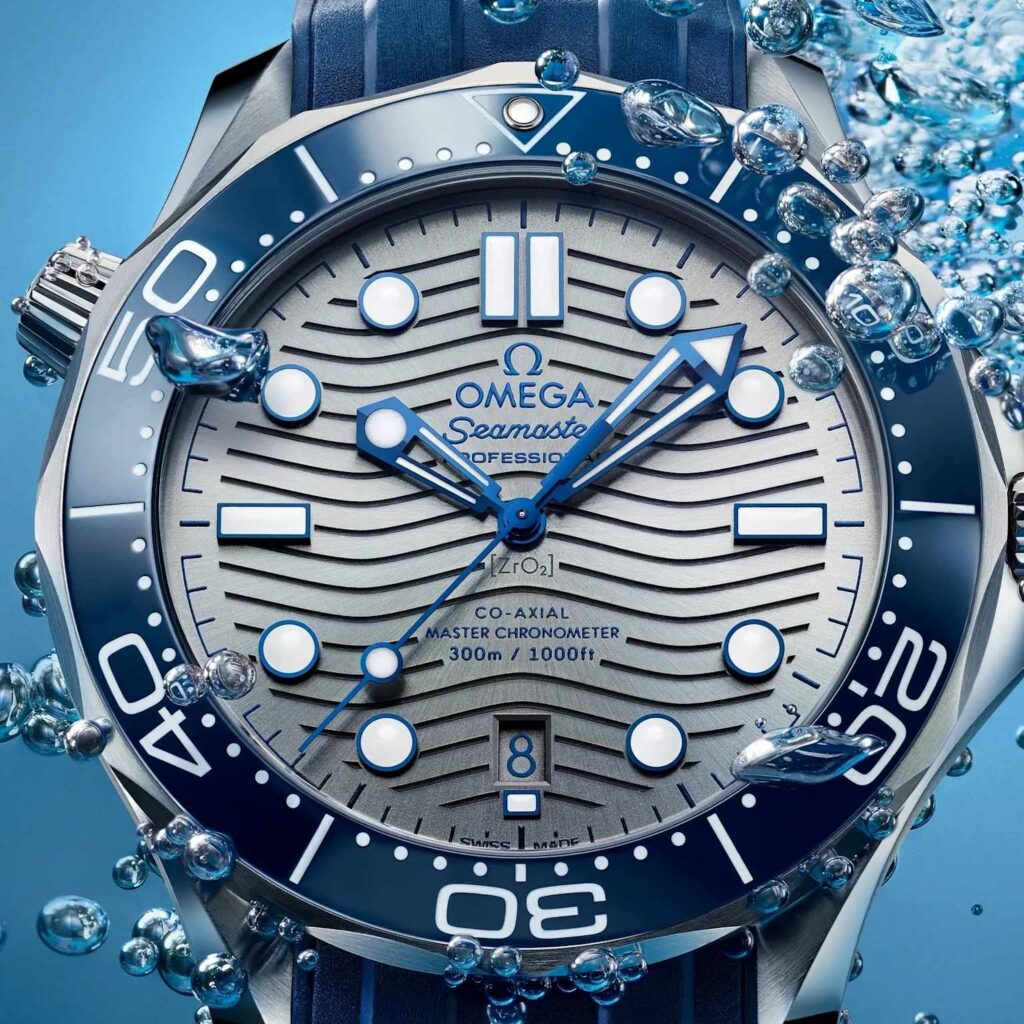
The Practical Reality: Why Value Matters
For $5,900–$6,500 MSRP, the Seamaster Diver 300M delivers:
- Immediate availability without waiting lists
- Master Chronometer certification (superior to typical Submariner certification)
- Co-Axial escapement (reduced friction, longer service intervals)
- Helium Escape Valve (practical saturation diving capability)
- Genuine in-house movement matching Rolex’s vertical integration
- James Bond cachet (legitimately, not aspirational)
- Wave dial aesthetic (widely regarded as more interesting than Submariner’s simplicity)
The Submariner costs $3,600–$4,350 more at MSRP, commands 18–48 month waiting lists, and trades at 40–80% premiums on grey markets, exclusively for brand status and cultural cachet rather than superior horological specifications.
Who Should Buy the Seamaster?
Choose Omega Seamaster Diver 300M if:
- You prioritize value and technical superiority over brand status
- You want a watch available immediately without waiting lists
- You appreciate Master Chronometer certification and Co-Axial engineering
- You prefer wave dial aesthetics over minimalist simplicity
- You want professional saturation diving capability (HEV)
- You value genuine in-house manufacturing and heritage
- You appreciate James Bond association (30-year proven connection)
Accept Rolex Submariner if:
- Brand prestige and cultural status matter more than technical specs
- You’re willing to wait 2–4 years for a watch
- You prefer the Submariner’s minimalist dial aesthetic
- You want the maximum power reserve (70 hours vs. 55 hours)
- You accept paying 40–80% premiums for brand dominance
- You value Rolex’s uncompromising durability reputation
Conclusion: The Smarter Choice
The Omega Seamaster Diver 300M represents one of 2025’s most underrated luxury purchases. Master Chronometer certification, Co-Axial escapement technology, professional diving functionality, James Bond heritage, immediate availability, and realistic pricing create an unbeatable value proposition that the Submariner simply cannot match—regardless of Rolex’s marketing superiority.
For collectors willing to choose substance over status, the Seamaster is genuinely the better watch at genuinely better pricing.
That’s not opinion—that’s mathematics.