
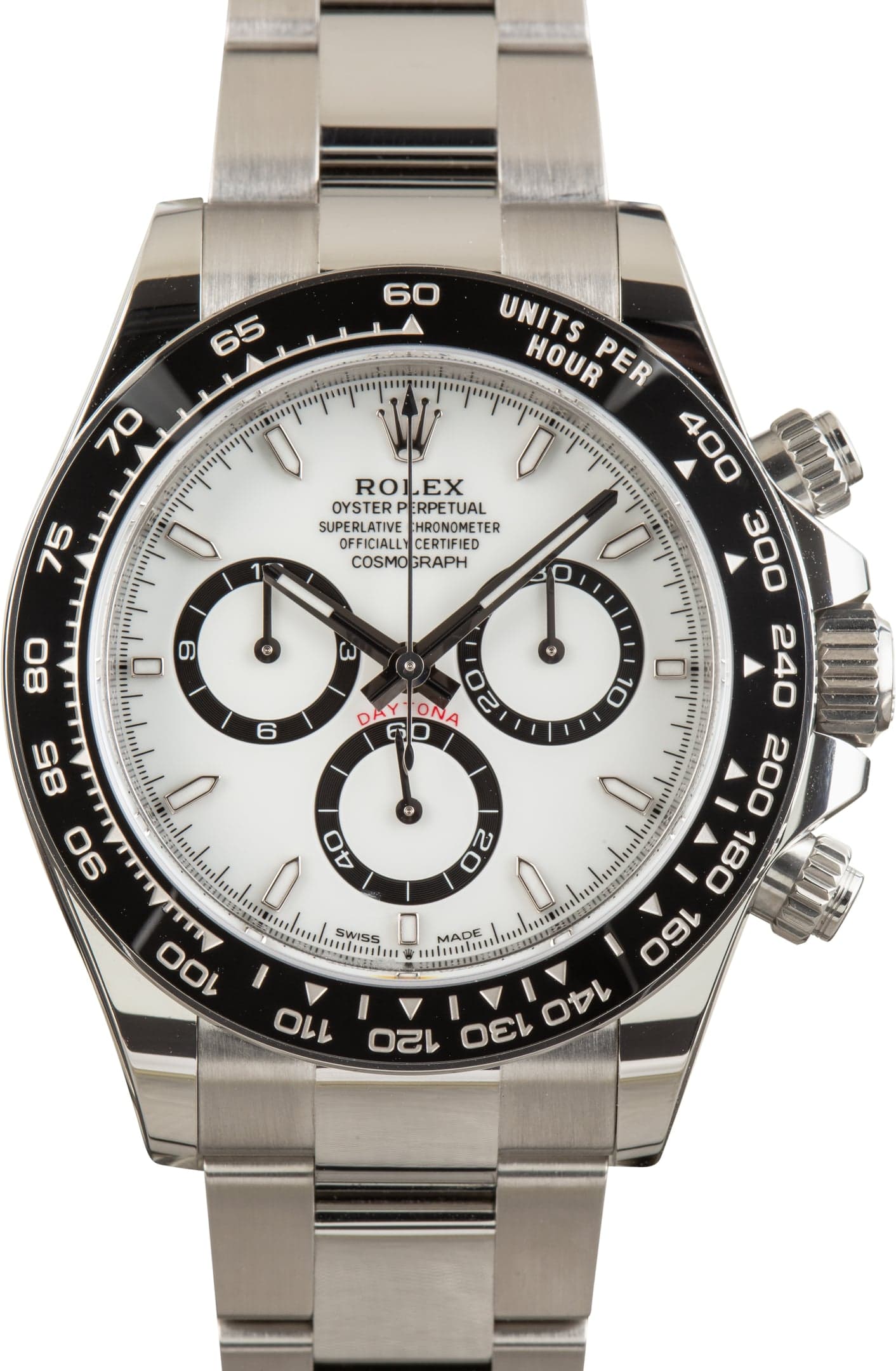
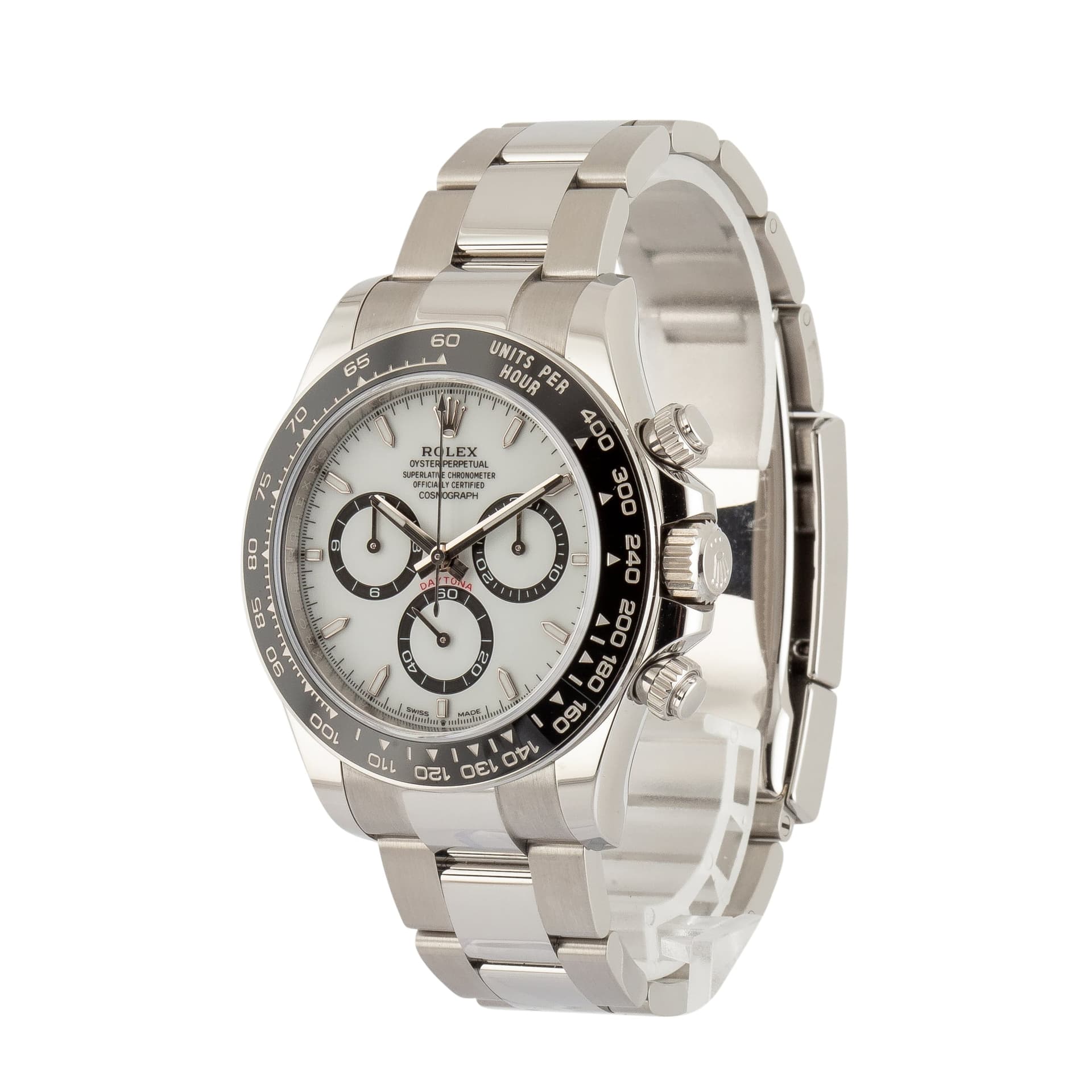
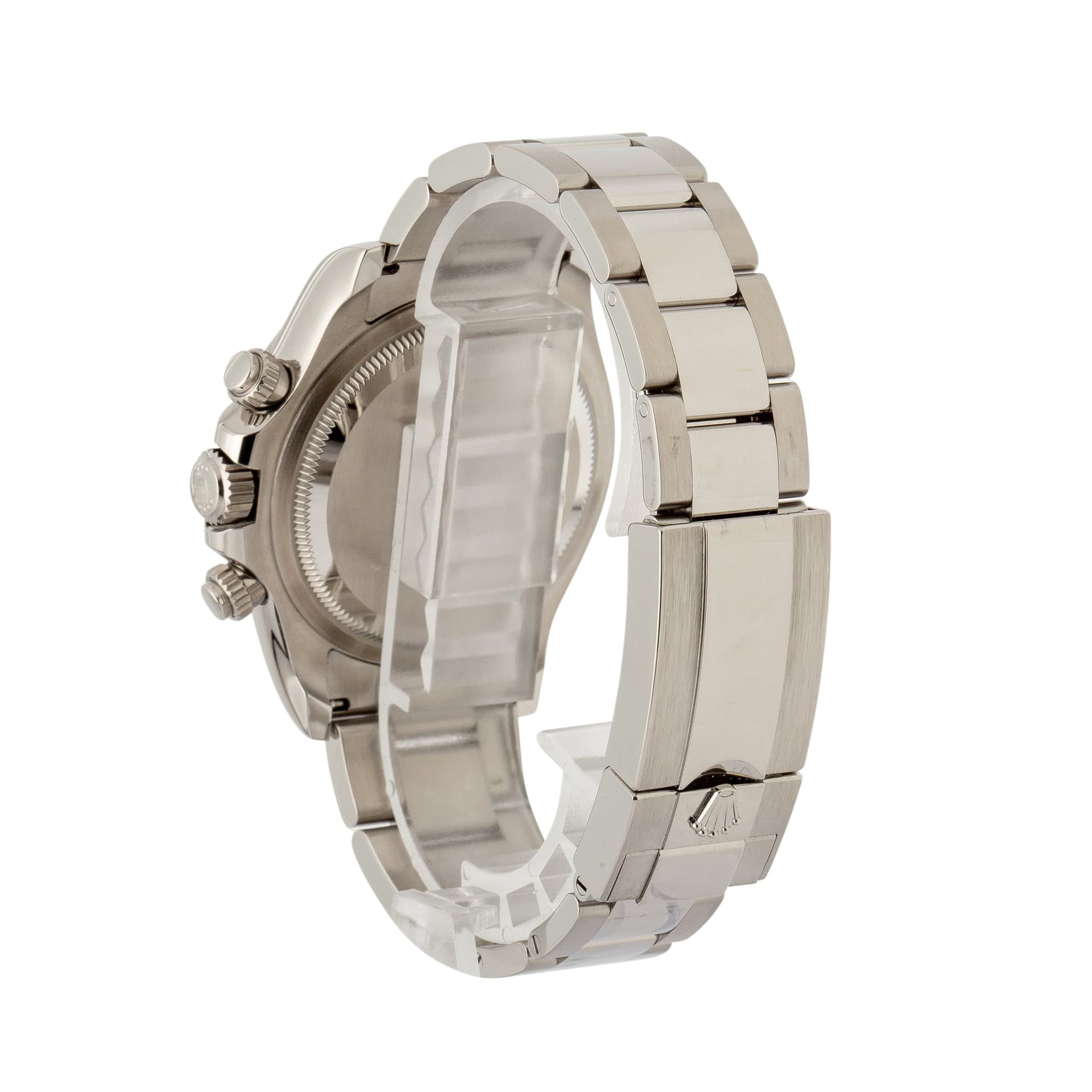
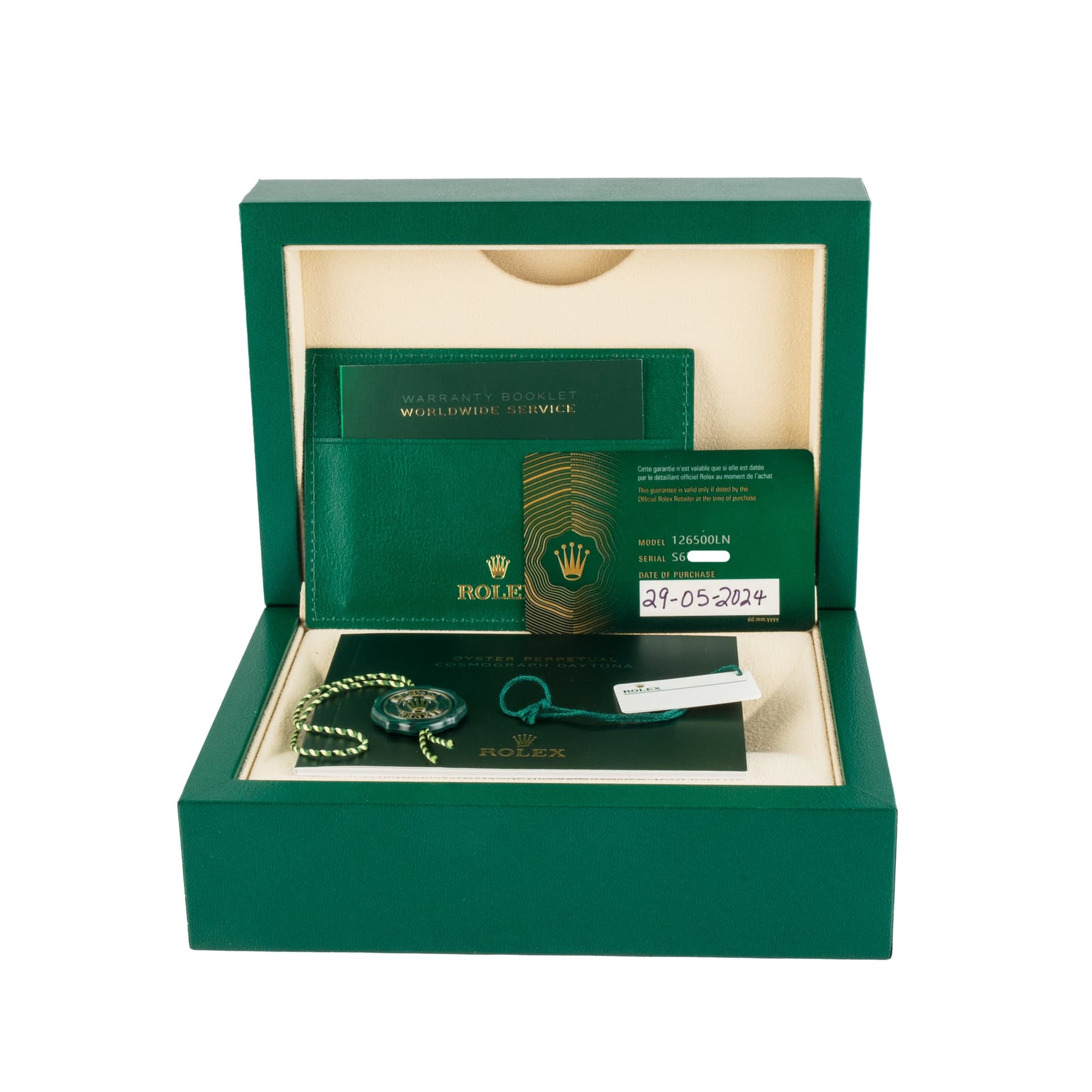
Rolex Cosmograph Daytona 40mm 126500LN “Panda”
A white dial with dark chronograph counters, black Cerachrom tachymeter bezel, and calibre 4131 define this coveted modern Daytona.
$40,795

Born in 1963 for professional racing drivers, the Rolex Cosmograph Daytona pairs a three-counter chronograph with a tachymetric bezel and 40 mm Oyster case. Compare current calibre 4131 references with earlier steel, gold, Oysterflex, and platinum generations.
A white dial with dark chronograph counters, black Cerachrom tachymeter bezel, and calibre 4131 define this coveted modern Daytona.
Model History & Buyer Guide
Rolex introduced the Cosmograph in 1963 with a tachymetric bezel and three-register layout for timing laps and calculating average speed. Early manually wound references used Valjoux-derived movements; the 1988 reference 16520 moved to an extensively reworked Zenith El Primero base, and the 2000 reference 116520 introduced Rolex’s in-house calibre 4130.
Those movement generations are not interchangeable collecting categories. Case proportions, subdial placement, bracelet construction, bezel material, and servicing all changed, so a reference and production period should be established before comparing prices.
The 2023 generation retains the 40 mm Oyster architecture while adding calibre 4131, revised dial furniture, and a metal rim around ceramic bezels. The range includes Oystersteel, two-tone, full gold, gold on Oysterflex, and platinum, with approximately 72 hours of power reserve.
Steel white-dial examples usually command the strongest premium, but rare dials can matter more than metal alone. A complete assessment should include dial code, bezel, bracelet or Oysterflex size, service history, and whether all parts match the reference.
Indicative secondary-market ranges in US dollars, researched from current market estimates and live dealer listings and updated August 2026. These are not fixed valuations: condition, originality, production year, service history, and completeness can move an individual watch outside the range.
| Reference | Configuration | Typical Pre-Owned Price | Market Note |
|---|---|---|---|
| 126500LN | Current Oystersteel, black or white dial | $29,000 — $41,000 | White dials normally sit at the top of the range |
| 116500LN | Discontinued Oystersteel, ceramic bezel | $26,000 — $36,000 | Condition and full-set status materially affect price |
| 116520 | Oystersteel, steel bezel, calibre 4130 | $18,000 — $29,000 | Earlier dial variants and unpolished cases can command more |
| 126515/18/19LN | Gold case on Oysterflex | $40,000 — $70,000+ | Metal and scarce dials create a wide spread |
| 126506 | Platinum with ice-blue dial | $85,000 — $160,000+ | Diamond and special-dial versions can exceed this range |
The Daytona’s value is tied to a precise combination of movement generation, bezel, dial, and case material—not simply to the word Daytona on the dial.
| Feature | Function | Why It Matters |
|---|---|---|
| Chronograph | Times elapsed seconds, minutes, and hours | Column-wheel and vertical-clutch architecture supports clean engagement |
| Tachymetric bezel | Calculates average speed over a known distance | Defines the racing purpose and strongly affects reference identity |
| Calibre 4131 | Current self-winding chronograph with about 72 hours reserve | Separates the current 1265xx generation from calibre 4130 watches |
| Screw-down controls | Seals crown and chronograph pushers | Supports the Oyster case’s 100 m water-resistance rating |
Use the exact reference—not the family name alone—to verify the following points before purchase.
| Check | What to Verify | Why It Matters |
|---|---|---|
| Dial and bezel | Correct factory configuration and period details | Service or replacement parts can alter collectability |
| Chronograph | Start, stop, reset, hand alignment, and amplitude | Complex movement service is more costly than cosmetic work |
| Case and set | Lug shape, bracelet wear, cards, tags, and service records | Sharp geometry and completeness support stronger pricing |
About Daytona
The 116500LN uses calibre 4130; the 126500LN introduced calibre 4131, revised dial proportions, and a metal edge around the ceramic bezel. Both are 40 mm steel Daytonas, but they belong to distinct generations.
The nickname describes its light dial and contrasting dark registers. It is informal market language, not a separate Rolex reference.
No. Market behavior varies by reference, metal, dial, condition, and timing. No future resale value is guaranteed.
NYC Diamond District
Our specialists can compare references, movements, condition, service history, and set completeness. Contact Atlas Luxury for current Daytona availability or help sourcing a particular configuration.