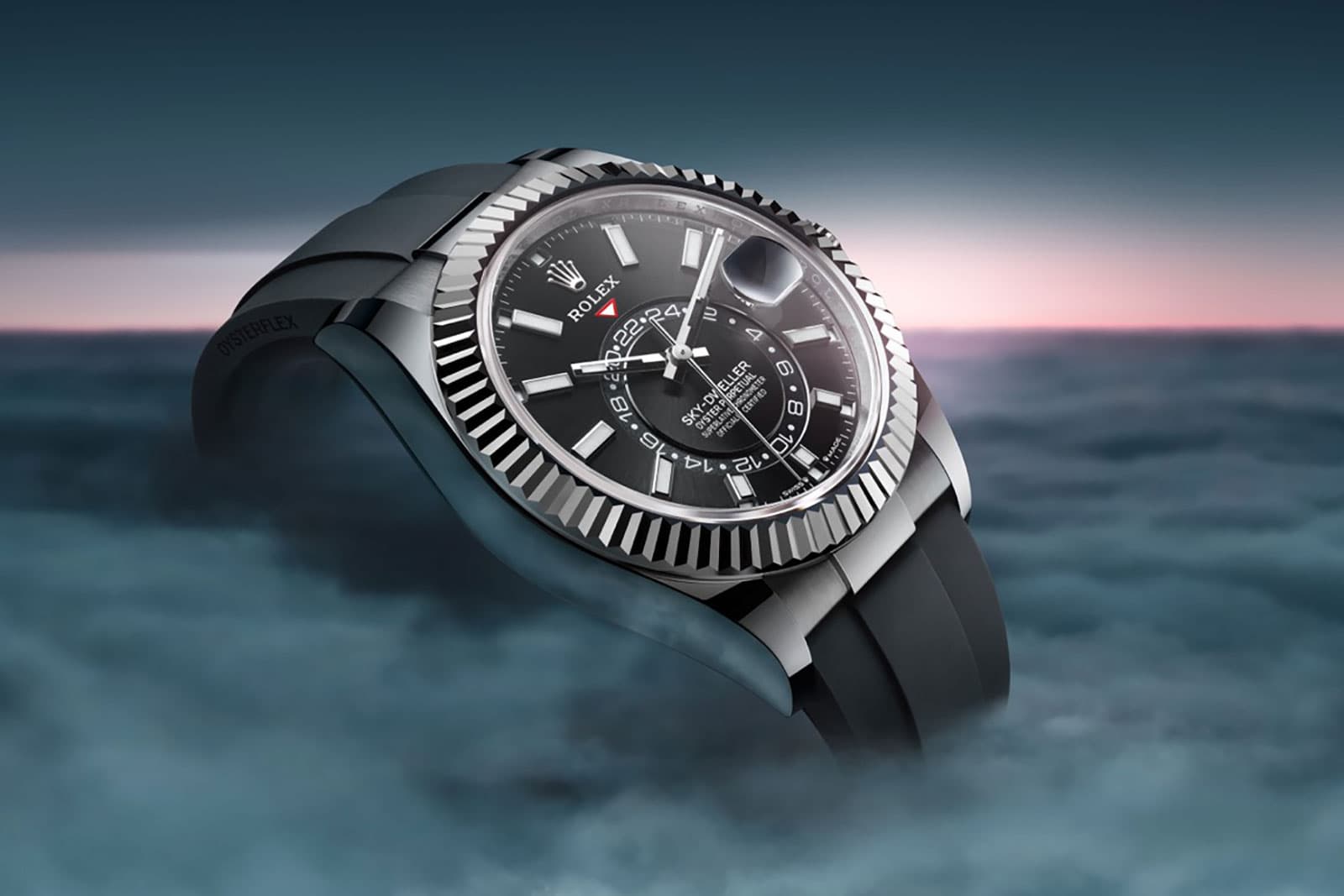
The Rolex Sky-Dweller exists in multiple metal, dial, and bracelet combinations that directly impact price, availability, and resale demand in the US secondary market. For 2026 buyers, understanding how configuration choices affect purchase cost—ranging from $17,750 at retail to $61,900—and secondary-market value is essential before committing capital or requesting a sourcing quote. This guide breaks down the mechanics: which dial colors command premiums, how band materials influence wear and pricing, which metal options suit your timeline, and what configuration data you need to provide when seeking inventory or pursuing a buy lead.
Quick Decision Snapshot
- Blue and mint green dials on stainless steel or two-tone models command the highest secondary-market premiums ($4,000–$6,000 above base), while white and black dials on gold versions typically underperform retail.
- Stainless steel (Oystersteel) offers the shortest waitlist and strongest resale traction; gold and white Rolesor variants have longer lead times but lower secondary-market demand unless paired with rare dial colors.
- Jubilee vs. Oyster bracelet adds $500–$1,000 to market price and affects comfort; Oysterflex (discontinued for most references) appears only on older models and increases collectibility.
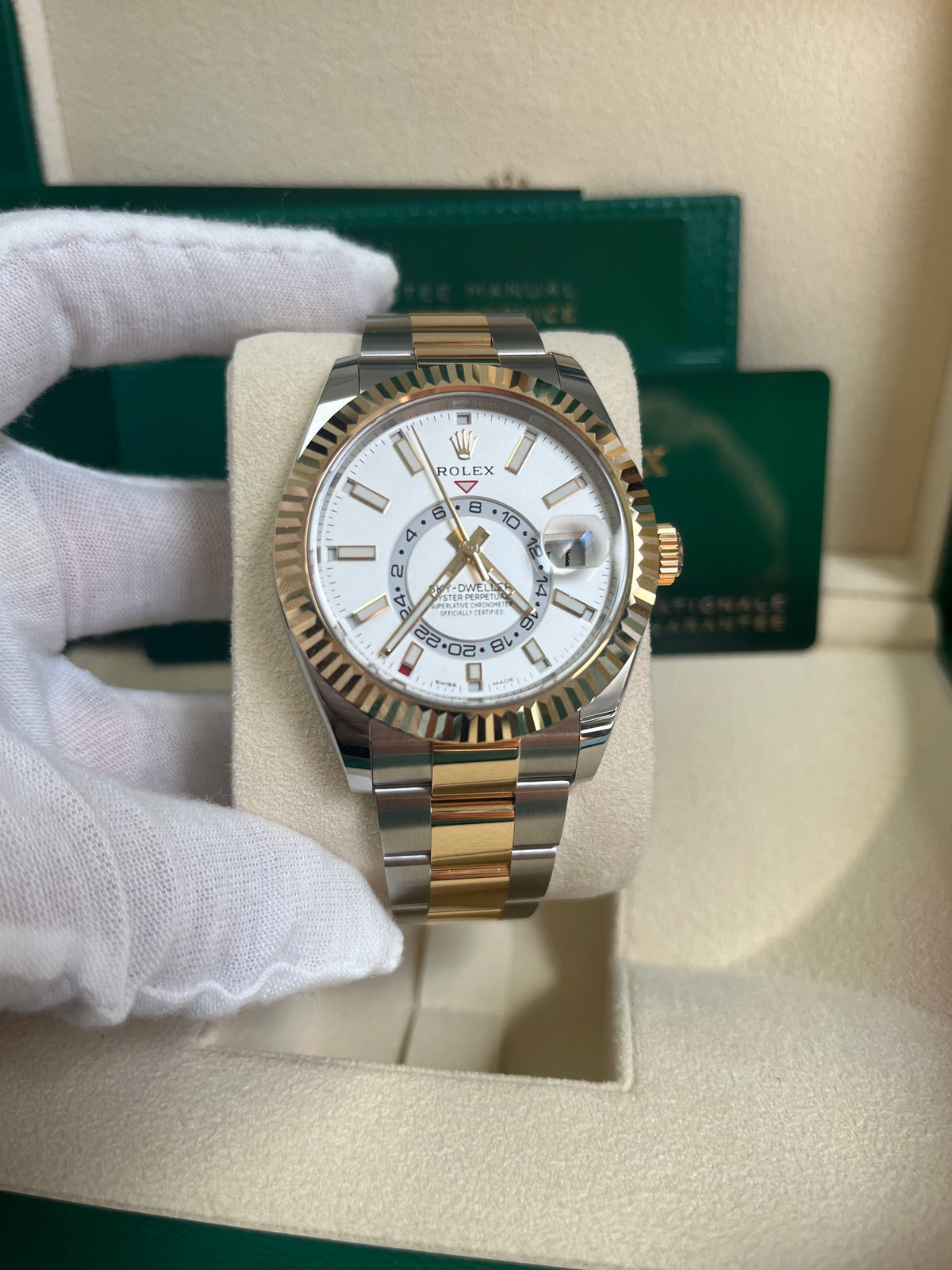
- Two-tone (Yellow or White Rolesor) blends durability and luxury aesthetics, sitting between steel accessibility and gold exclusivity in both price and demand.
- Fluted Ring Command Bezel is solid 18k gold on all models—non-negotiable; no configuration eliminates this feature.
This guide provides educational market overview and configuration guidance for US buyers; it does not constitute investment or financial advice.
What Actually Drives Value and Demand
The Sky-Dweller’s secondary-market value hinges on three factors: dial color, metal type, and completeness (box/papers/service history). Stainless steel with blue or mint green dials commands premiums because supply is tightly controlled by Rolex, and waitlists exceed availability by years. In contrast, yellow gold models—despite their prestige—have dipped well below retail on the secondary market unless they feature rare dial colors like green.
Reality check: Demand dynamics shift with retail availability. When Rolex restocks stainless steel models in boutiques, secondary-market premiums narrow; when stock dries up, grey-market prices spike. Configuration demand is not static.
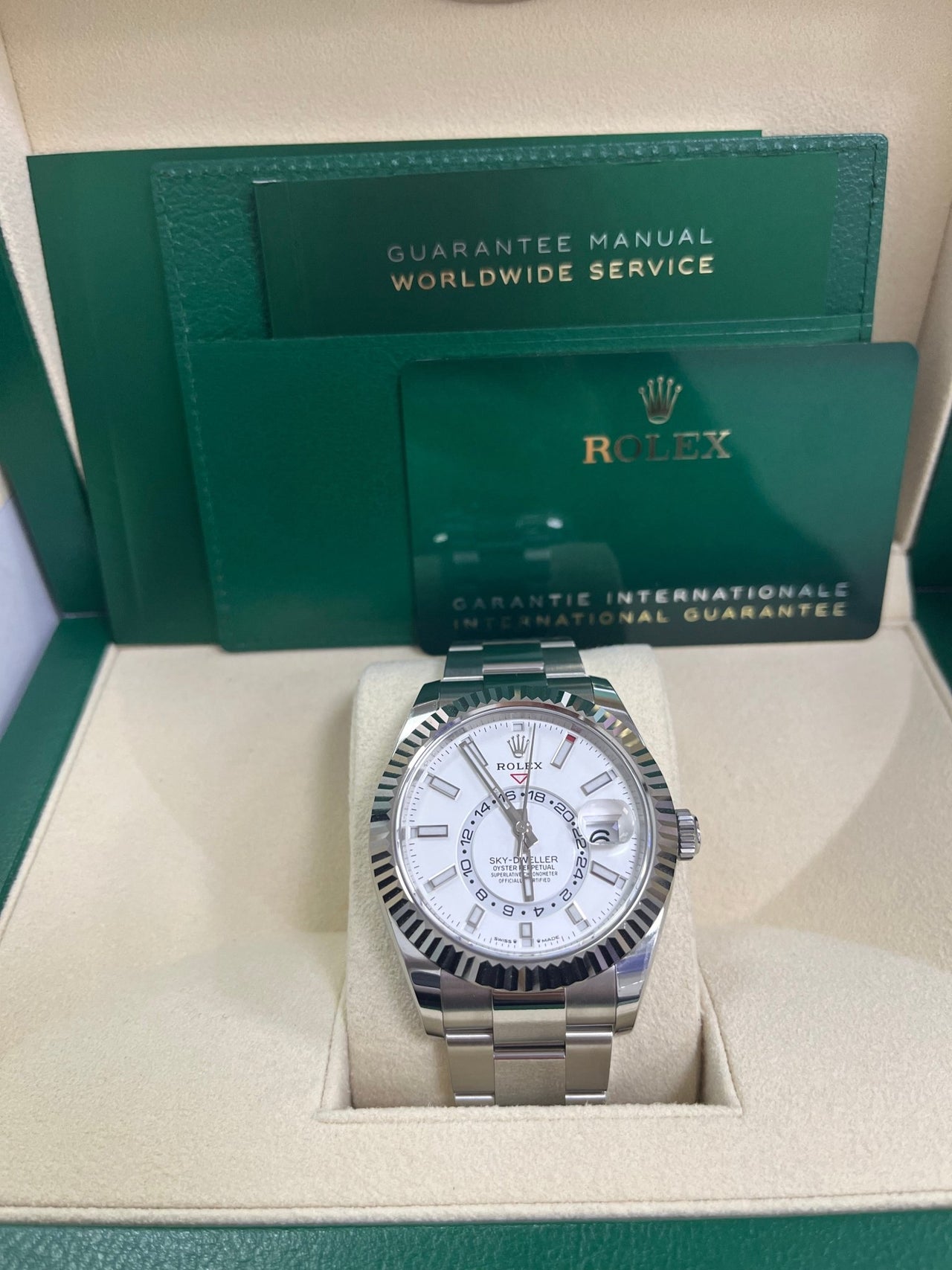
Example: A stainless steel Sky-Dweller with a white dial and Oyster bracelet trades near MSRP ($17,750 retail) on secondary platforms, while the same case with a blue dial typically commands $21,000–$23,000 even if purchased from a grey-market dealer today.
Category-Specific Evaluation Framework
When evaluating a potential Sky-Dweller acquisition, organize your decision by these watch-specific attributes:
- Brand & Model Reference
- Current generation: Ref. 336935 (yellow gold), 336934 (stainless), 336933 (two-tone), 336938 (white gold).
- Discontinued: Ref. 326935, 326235, 326135, white gold models, leather strap versions.
- Condition & Completeness
- Box, warranty card, and service records substantiate value and resale potential.
- Unworn (new with tags) commands 10–15% premium over gently worn.
- Service history required? Caliber 9002 movements (post-2023) typically run 5–7 years between services; budget $800–$1,200 for maintenance.
- Metal & Bezel
- All Sky-Dweller models feature a solid 18k gold fluted Ring Command Bezel, regardless of case material.
- Case options: stainless steel (Oystersteel 904L), yellow gold (18k), white gold (18k), Everose rose gold (18k), two-tone combinations.
- Dial & Dial Color Impact
- Standard options: bright black, intense white, bright blue, mint green, slate gray, chocolate, gold.
- Blue and green dials add $4,000–$6,000 to secondary-market price; slate/chocolate add $6,000–$9,000 on gold models.
- White and black dials trade closest to base MSRP.
- Bracelet Type
- Oyster (three-link solid steel/gold bracelet): sportier, lighter, standard on most references.
- Jubilee (five-link flexible bracelet): more formal, comfortable, adds ~$500–$1,000 to market price.
- Oysterflex (rubber/steel hybrid, discontinued): collector premium due to scarcity.
Pricing Mechanics and Trade-Offs
| Configuration | Retail MSRP | 2026 Secondary Market Range | Key Trade-Off |
|---|---|---|---|
| Stainless, white/black dial, Oyster | $17,750 | $17,500–$19,500 | Fastest liquidity; lowest premium; longest authorized waitlist. |
| Stainless, blue dial, Oyster | $17,750 | $21,000–$23,500 | Strong demand; 2–3 yr authorized waitlist; highest resale cushion. |
| Two-tone (Yellow Rolesor), white dial | $25,000 | $24,500–$26,500 | Balanced demand; mid-tier waitlist; moderate secondary cushion. |
| Yellow Gold, white/black dial | $41,000–$43,000 | $29,000–$37,000 | Below retail on secondary; gold weight adds material value; slower to sell. |
| Yellow Gold, green dial | $41,000+ | $61,000–$71,000 | Rare dial color; highest secondary premium; very limited supply. |
Example: A buyer sourcing a two-tone Yellow Rolesor with slate dial expects to pay approximately $31,000–$33,000 on the secondary market (vs. $25,000–$26,000 retail), accounting for the dial color premium and limited authorized access.
Pricing mechanics reflect three realities: (1) authorized waitlists force grey-market demand, (2) dial scarcity compounds with metal type (gold + rare color = steep premium), and (3) completeness (papers, service records) justifies 10–15% premiums over stripped examples.
Reality check: Gold prices fluctuate; when spot gold declines, yellow gold Sky-Dweller secondary prices compress further below retail, as demand relies less on material value and more on dial exclusivity.
Risk Control and Authentication Workflow
Before committing to a purchase, verify authenticity and condition through these steps:
- Dial & Bezel Inspection: Verify Ring Command Bezel engraving, dial printing clarity, and hour-marker luminosity consistency. Counterfeits often show fuzzy printing or incorrect font weights.
- Movement Verification: Request reference number, caliber (9002 post-2021), serial range, and production year from seller. Cross-check against Rolex production databases or third-party authentication services.
- Bracelet & Clasp Detail: Authentic Oystersteel uses solid center links; fakes often use hollow or stamped links. Jubilee five-link constructions should feel smooth and weighted.
- Box & Papers Authenticity: Rolex certificates of authenticity include specific security features, hologram placement, and serial matching to case. Request high-resolution photos under light.
- Condition Assessment: Request unedited photos of dial, case, bracelet (top and underside), clasp, and caseback. Document any scratches, polishing history, or service marks.
Action Plan by Intent
For Buyers: Configuration Intake & Next Steps
| Your Intent | Data Needed | Typical Timeline | Lead Action |
|---|---|---|---|
| I want to buy stainless steel + blue dial now | Reference, condition (unworn/worn), box/papers status, budget range, location. | 5–10 business days sourcing; 2–3 days completion. | Request sourcing quote; verify seller authentication protocol. |
| I’m comparing two-tone vs. steel options | Preferred dial color, bracelet type (Oyster vs. Jubilee), budget ceiling, use case (daily vs. occasional). | 1–2 weeks to identify matches; 3–5 days for price comparison. | Schedule comparison call; review market data sheet for selected refs. |
| I need a pre-owned gold model (any color) | Reference preference, dial color (if any), condition tolerance, service history requirement, shipping location. | 2–4 weeks sourcing (gold less liquid); 5–7 days closing. | Provide market-demand briefing; clarify gold price exposure. |
| I’m undecided on configuration | Email dial color preferences, metal affinity (steel, gold, two-tone), use case, and budget; we’ll recommend 2–3 options. | 3–5 business days strategy session; 1–2 weeks sourcing. | Book 20-minute configuration call; no commitment. |
Numbered Step Plan: Sourcing a Stainless Sky-Dweller
- Clarify your configuration: Select dial (blue, white, black, green), bracelet (Oyster or Jubilee), and condition (unworn vs. like-new vs. worn).
- Verify budget & timeline: Current secondary-market prices for stainless + blue range $21,000–$23,500; allow 1–2 weeks for sourcing.
- Request market check: Provide reference number, dial color, and location; we’ll confirm availability and comparable pricing.
- Review authentication: Request seller’s authentication process, box/papers documentation, and service history.
- Negotiate & inspect: Agree on price, arrange payment terms, and schedule pre-shipment inspection if remote.
- Arrange shipping & insurance: Insured overnight delivery to your location; we handle all logistics coordination.
- Final QC & receipt: Unbox, inspect under light, verify serial/reference, and confirm against detailed photos provided pre-shipment.
- Post-purchase support: First-year follow-up on wear, service intervals, and resale planning if needed.
What We Need to Move Fast
To accelerate sourcing and provide accurate pricing, provide:
- Preferred reference (336934 stainless, 336935 yellow gold, etc.) or case material if undecided.
- Desired dial color (blue, white, green, black, slate, chocolate) or top 2–3 choices.
- Acceptable condition (unworn/mint, like-new, lightly worn, worn, as-is).
- Bracelet preference (Oyster, Jubilee, no preference).
- Box/papers requirement (full set essential, papers only acceptable, strip acceptable).
- Service history needed? (full documentation, partial acceptable, unknown acceptable).
- Budget range (give floor and ceiling; helps prioritize available stock).
- Location & shipping (US state/zip; helps coordinate delivery).
Example: "Seeking stainless steel, blue dial, Oyster, like-new with box and papers, budget $21,500–$23,000, prefer unworn, located in NYC, ready to move this week."
Risk Mitigation: Common Configuration Pitfalls
- Overpaying for dial color: Mint green and blue dials command premiums, but not uniformly across metals. Stainless + blue = fair premium; gold + green = extreme premium. Verify comparable sales before agreeing to price.
- Bracelet mismatch: Jubilee adds cost and comfort; Oyster offers sportiness. Confirm bracelet type matches your intent—swapping later costs $1,500–$3,000 plus downtime.
- Incomplete documentation: Box and papers add 10–15% value in resale. If missing, negotiate a 12–15% discount from complete-set pricing.
- Service history gaps: A Sky-Dweller with unknown maintenance history risks undisclosed wear or movement issues. Request service records or budget $1,000+ for pre-purchase inspection.
- Confusing references: Ref. 336934, 326934, 336933, and 336935 each have different metals and date ranges. Verify reference number against authentication documentation before committing.
FAQ
1. Which Sky-Dweller dial color holds value best on the secondary market? Blue and mint green dials on stainless steel or two-tone models command the strongest secondary premiums ($4,000–$6,000 above white/black dials). However, resale speed is fastest for white/black dials because they appeal to broader buyers; colored dials attract collectors willing to wait longer but pay more.
2. Is a stainless steel Sky-Dweller better than gold for a first-time luxury watch buyer? Yes, if you prioritize resale flexibility, shorter authorized waitlists, and daily wearability. Stainless offers the broadest secondary-market demand and lowest maintenance costs. Gold is prestigious but typically underperforms retail on secondary unless paired with rare dial colors.
3. What’s the typical authorized Rolex waitlist for a stainless Sky-Dweller with a blue dial? Waitlists vary by boutique and region, but blue dial stainless models typically face 2–3 year queues as of early 2026. Demand far outpaces supply, driving grey-market premiums of $3,000–$6,000 above retail.
4. Do I need the box and papers to resell a Sky-Dweller? No, but they add 10–15% to resale value and accelerate sales. Buyers of expensive watches prefer complete sets for authentication confidence. A stripped example loses appeal to collectors but still finds buyers at a 12–15% discount.
5. How often does a Sky-Dweller need servicing? The Caliber 9002 movement typically runs 5–7 years before service is recommended. Full service (cleaning, regulation, seal replacement) costs $800–$1,200 through authorized Rolex dealers; extended intervals are possible if worn conservatively.
6. Should I choose Oyster or Jubilee bracelet? Oyster (three-link) feels sportier and lighter, suits casual wear, and resizes easily. Jubilee (five-link) offers more comfort and formal aesthetics, adds ~$500–$1,000 to price, and appeals to collectors. No performance difference; choose by feel and lifestyle.
7. Is the yellow gold Sky-Dweller a good investment? Depends on configuration. Gold + rare dial (green, slate) = strong secondary premium. Gold + standard dial (white, black) = typically trades 15–30% below retail on secondary market. Treat as a luxury wear item, not an appreciation vehicle.
8. What’s the difference between a two-tone Yellow Rolesor and a full yellow gold Sky-Dweller? Two-tone combines stainless center links with gold outer links and bezel, reducing gold weight (and cost) by ~40% while retaining luxury appeal. Retail: ~$25,000 vs. $41,000+ for full gold. Secondary-market demand is stronger for two-tone because it bridges accessibility and prestige.
9. Are pre-owned Sky-Dwellers with unknown service history a good buy? Proceed cautiously. Request factory documentation or have an independent watchmaker inspect the movement for wear before committing. Budget an additional $1,000–$1,500 for pre-purchase assessment if history is unclear.
10. How do I verify that a secondary-market Sky-Dweller is authentic? Request unedited photos of dial (printing clarity), bezel engraving (sharpness), movement (serial/caliber), and box/papers under bright light. Cross-check serial against Rolex production ranges; consider third-party authentication ($200–$400) if purchase exceeds $25,000.