The Rolex GMT-Master II configuration starts with three core decisions: dial color, bracelet style, and case metal. These choices directly affect market availability, pricing, and long-term appeal in the US luxury watch market. Whether you’re sourcing pre-owned or tracking retail availability, understanding your configuration options—from classic black dials and steel cases to two-tone setups and white gold—determines how quickly you can acquire the specific watch and what secondary-market demand looks like.
Quick Decision Snapshot
Before diving into technical details, here’s what matters for most US buyers:
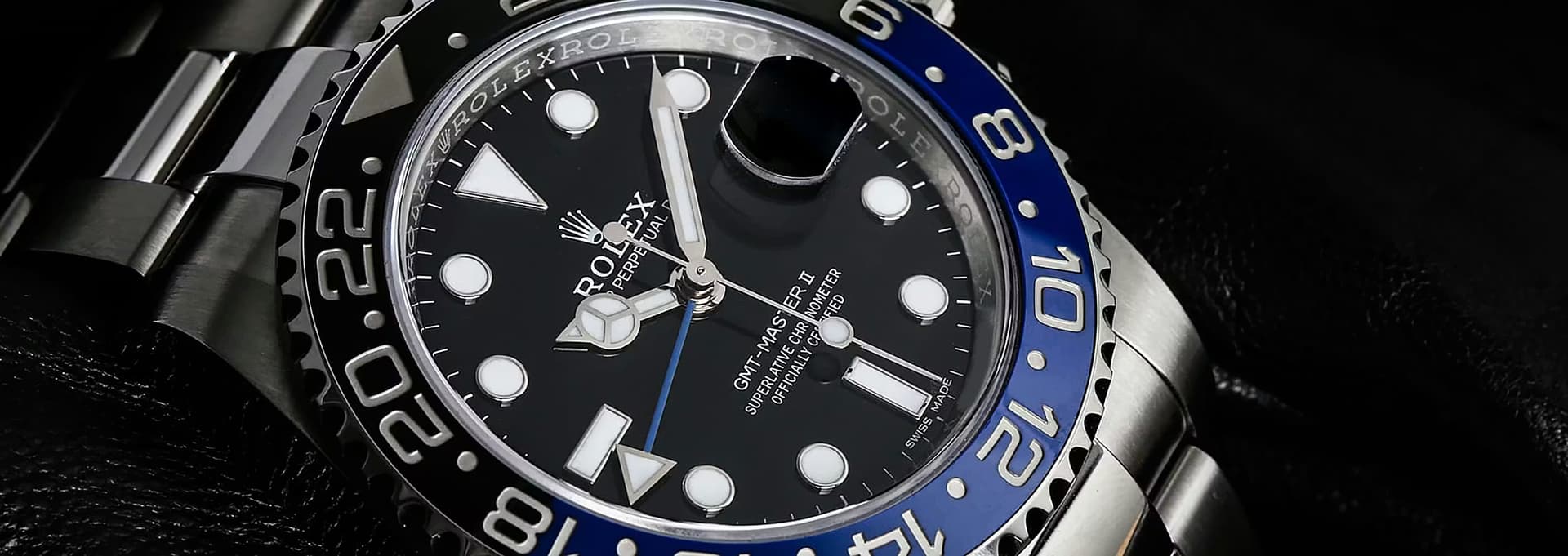
- Bezel and dial combos drive demand: “Pepsi” (red-blue), “Batman” (black-blue), and black dials command strong resale interest and shorter hold times.
- Bracelet choice (Oyster vs. Jubilee) impacts comfort and market price; Oyster is sportier, Jubilee more dressy.
- Metal matters for visibility: Oystersteel is most common and most liquid; gold (18K yellow, white, or rose) runs $15,000–$35,000+ depending on reference; platinum is rare and slow-moving.
- Dial variants (sunburst, matte) and lume color (white, cream) are subtle but influence collector appeal and regional preference.
- Availability windows vary: steel in-stock Rolex models may have shorter waits than precious metals through authorized channels; gray market and secondary platforms show different inventory depth by configuration.
This is educational market guidance, not financial advice. Prices and availability shift with demand, condition, and authentication.
What Actually Drives Value and Demand
Configuration availability and collector preference are the primary levers for resale velocity and pricing. A black-dial steel GMT-Master II on an Oyster bracelet typically moves faster and holds closer to market price than an uncommon dial or unusual metal mix. Practical factors—wearability, visibility, water resistance, and maintenance cost—matter more to US buyers than rarity alone.
Reality check: Many first-time GMT-Master II buyers assume rare dial colors or two-tone metals guarantee higher prices. In reality, US market demand clusters around proven combos (Pepsi, Batman, black on steel), and unusual configurations can sit on secondary platforms for months at lower margins. Demand for white gold, platinum, or discontinued matte dials is regional and collector-driven, not mass-market.
Example: A 2023 black-dial steel Oyster GMT-Master II with papers typically sells within 30–45 days in the $12,500–$13,500 range (pre-owned, excellent condition). A white-gold Pepsi of the same era may sit 60+ days or require a $2,000+ price reduction to move.

Category-Specific Evaluation Framework
When evaluating a GMT-Master II configuration for acquisition or sale, isolate these technical variables:
- Reference number and generation – Determines movement (3186 vs. 3285), bezel type (aluminum vs. Cerachrom ceramic), and hand design (Mercedes vs. arrow-style).
- Case metal – Steel (904L Oystersteel), 18K gold (yellow, white, rose), platinum (950); each carries distinct service costs ($500–$2,500 per major service) and resale profiles.
- Bracelet configuration – Oyster (three-link sport) vs. Jubilee (five-link dress); both come with Oysterlock clasp and Easylink extension, but Jubilee is heavier and less common on steel references.
- Dial and bezel combination – Color pairing (Pepsi, Batman, Coke, or all-black); aluminum inserts (older) vs. Cerachrom (ceramic, introduced mid-2000s+); lume color (white or cream/tritium on vintage).
- Condition assessment – Crystal clarity, bracelet wear (stretch, scratches), dial patina, movement accuracy, service history, and box/papers completeness.
- Authentication markers – Serial range, dial printing quality, hand alignment, bezel tolerance, and movement finishing for pre-owned sourcing.
Rolex offers a configurator on their US site, but most US buyers seeking pre-owned pieces or specific references rely on secondary markets, authorized dealers, and direct sourcing due to retail wait lists (typically 2–8 years for stainless steel).
Pricing Mechanics and Trade-Offs
| Configuration | Typical US Market Price (Pre-Owned, Good–Excellent) | Availability Window | Resale Speed | Notes |
|---|---|---|---|---|
| Steel, black dial, Oyster bracelet | $11,500–$13,500 | 30–45 days | Fast (1–2 months) | Most liquid; highest volume of inventory |
| Steel, Pepsi or Batman, Oyster | $12,500–$14,500 | 45–60 days | Moderate-fast | Strong collector demand; limited supply |
| 18K yellow or rose gold, any dial | $18,000–$28,000 | 60–90 days | Moderate | Niche appeal; service costs higher ($1,500+) |
| 18K white gold, any dial | $20,000–$32,000 | 90–120+ days | Slow | Polarizing; harder to place; white gold service $2,000+ |
| Platinum | $35,000–$55,000 | 120+ days | Very slow | Rare production; ultra-niche; platinum service $2,500+; weight affects wear |
Speed vs. margin trade-off: – Fast placement (30–45 days, tight margin): black steel on Oyster, modern references (post-2010), papers present, excellent condition. – Moderate placement (60–90 days, mid-range margin): Pepsi/Batman, mixed condition, vintage or two-tone, partial documentation. – Slow placement (120+ days, requires discount): platinum, white gold, non-standard dial, poor condition, no box/papers.
Example: A buyer sourcing a steel Pepsi in fine condition for $13,200 can typically resell 6–8 weeks later for $13,500–$14,000 (retail context). A white-gold black-dial watch acquired at $22,000 may require 4+ months and a $2,000–$3,000 price drop to find a buyer.

Risk Control and Authentication Workflow
Before committing to any GMT-Master II configuration—whether retail or secondary market—verify these critical touchpoints:
- Serial number legitimacy: Cross-check against Rolex production databases (year-to-reference alignment); confirm via certificate of authenticity or Rolex service records.
- Movement inspection: Request photos of dial-side and case-back; confirm movement references (3186 vs. 3285) and finishing match stated reference; spot-check hand alignment and lume consistency.
- Dial and printing quality: Verify printing sharpness, tritium/lume color consistency, and dial surface (matte vs. sunburst) against reference specs; poor printing is a red flag.
- Bezel and crystal: Confirm Cerachrom (ceramic) vs. aluminum insert; check for bezel click smoothness (24-position bidirectional); inspect crystal for scratches, hazing, or AR coating separation.
- Box, papers, and service history: Original boxes, hang tags, and warranty cards significantly boost resale and buyer confidence; service cards from Rolex or authorized centers add authenticity and peace of mind.
- Test the movement: Spin the watch, confirm GMT hand independence (shouldn’t move with 12-hour hand), and listen for any grinding or stuttering.
Use certified pre-owned platforms, established dealers with authentication guarantees, or in-person inspections for high-value acquisitions ($15,000+).
Action Plan by Intent
If You’re Buying (Acquiring a Specific Configuration)
| Step | Action | Timeline | Typical Cost/Resource |
|---|---|---|---|
| 1. Define your target config | Decide on dial, metal, bracelet, generation (e.g., steel Pepsi, Oyster, 2020+) | Day 1 | None; research |
| 2. Set price ceiling and availability window | Establish max budget and acceptable wait time (30 days vs. 6 months); note condition threshold | Day 1–2 | Market monitoring (free to $100/month alerts) |
| 3. Source across channels | Check authorized Rolex retailers for retail availability; monitor secondary platforms, dealer networks, and direct sourcing contacts | Days 2–30 | $0–$500 (platform fees, broker contacts) |
| 4. Request detailed documentation | Ask for photos (dial, case-back, papers, serial), service history, and condition notes before committing | Days 3–7 | None |
| 5. Arrange pre-purchase inspection | If buying over $15,000, hire a third-party watch appraiser or authenticator ($150–$300) | Days 7–10 | $150–$300 |
| 6. Finalize and secure shipping | Confirm authenticity, negotiate warranty/returns, arrange insured courier delivery | Days 10–12 | Shipping $50–$150; insurance included |
Rolex GMT-Master II bracelet and dial customization post-purchase is not standard; Rolex does not offer dial swaps or bracelet exchanges through retail channels. Used dials and bracelets exist in the aftermarket, but swapping voids any remaining warranty and carries authentication risk.
Reality check: Many US buyers expect to order a “custom config” directly from Rolex online and receive it in weeks. Retail reality: Rolex enforces allocation limits and wait lists (2–8 years for steel references). Non-steel models sometimes have shorter waits (12–36 months for gold). Secondary market is the fastest route for specific configurations, but requires 10–30% negotiation room.
Example: Buyer wants a steel Pepsi Jubilee. Authorized retailer wait: 5+ years. Secondary market: 10–20 listings found within 3 days, prices $13,500–$14,800, condition ranges excellent to very good, typical settlement in 7–10 days after offer and inspection.
FAQ
1. What is the difference between an Oyster and Jubilee bracelet on a GMT-Master II? The Oyster is a three-link sport bracelet, lighter and more casual; the Jubilee is a five-link dress bracelet, heavier and more formal. Both have Oysterlock clasp and Easylink extension. Jubilee is rarer on steel GMT-Master IIs and typically adds $500–$1,000 to secondary-market pricing.
2. Does Rolex offer a configurator to build a custom GMT-Master II online? Rolex.com has a watch configurator for some Professional models, but it reflects available retail stock, not custom builds. Most configurations require either retail wait-list allocation or secondary-market sourcing.
3. What is the most liquid (fastest-selling) GMT-Master II configuration in the US? Steel case, black or Pepsi dial, Oyster bracelet, modern reference (post-2010), excellent condition with papers. These move in 30–60 days at near-market prices.
4. How much more does a white-gold GMT-Master II cost than steel? 18K white gold references run $20,000–$32,000 vs. steel at $11,500–$14,500, a premium of 60–130%. White gold also has higher service costs ($2,000+) and slower resale velocity.
5. What does Cerachrom bezel mean, and is it better than aluminum? Cerachrom is a ceramic insert, more scratch-resistant and color-fast than aluminum. Rolex introduced ceramic on GMT-Master II around 2005+. Ceramic is standard now and preferred; aluminum is vintage/collectible but fades with time.
6. Can I swap dials or bracelets on a GMT-Master II after purchase? Aftermarket dials and bracelets exist, but swapping voids warranty, may affect water resistance, and carries authentication risk. Not a standard Rolex service. Most buyers keep original configuration.
7. What is the average wait time for a new GMT-Master II at a Rolex dealer in the US? Steel references typically 2–8 years. Gold references 1–3 years (less demand). Availability varies by Rolex boutique location and your relationship/purchase history with the dealer.
8. Is platinum a good choice for a GMT-Master II? Platinum is rare and prestigious but heavy, slow to resell (120+ days), and costly to service ($2,500+). Best for collectors or long-term keepers, not resale-focused buyers.
9. How do I verify that a pre-owned GMT-Master II is authentic? Request detailed photos of dial, movement (via case-back), serial number, and papers. Confirm serial range matches reference and year. Consider hiring a certified appraiser ($150–$300) for purchases over $15,000.
10. What should I pay for a pre-owned GMT-Master II in excellent condition, and how do I know if it’s fair value? Steel black/Pepsi: $12,000–$14,500 (depending on generation, papers, service history). Gold: $18,000–$32,000. Compare listings across secondary platforms, check condition descriptions carefully, and account for shipping/transaction fees. Fair value is typically 5–15% below current retail-equivalent pricing.