The Rolex GMT-Master II remains one of the most sought-after luxury watches in the US secondary market, with retail prices now at $12,000 for steel models and secondary-market asking prices ranging from $20,000 to $47,000+ depending on configuration and condition. Buying one requires understanding current pricing mechanics, authentication standards, and the gap between authorized-dealer waiting lists and faster secondary-market acquisition. This guide walks you through the research, sourcing, and verification steps that informed US buyers are currently using to secure a GMT-Master II efficiently.
Quick Decision Snapshot
The fastest path to acquisition depends on your budget, timeline, and priority. Here’s what matters most right now:
- Authorized dealers: Typically require 2–5+ year wait lists for steel models; MSRP is $12,000 as of January 2026, but no guarantee of allocation.
- Secondary-market platforms: Faster delivery (days to weeks); asking prices range $19,500–$45,000+ for steel and mixed-metal models, depending on reference and condition.
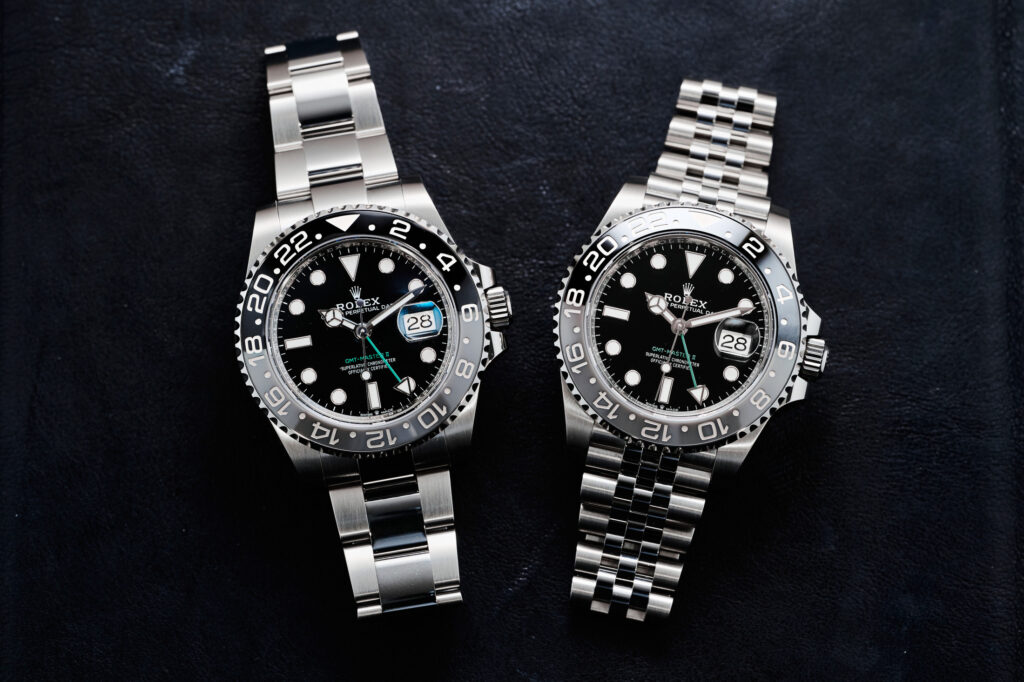
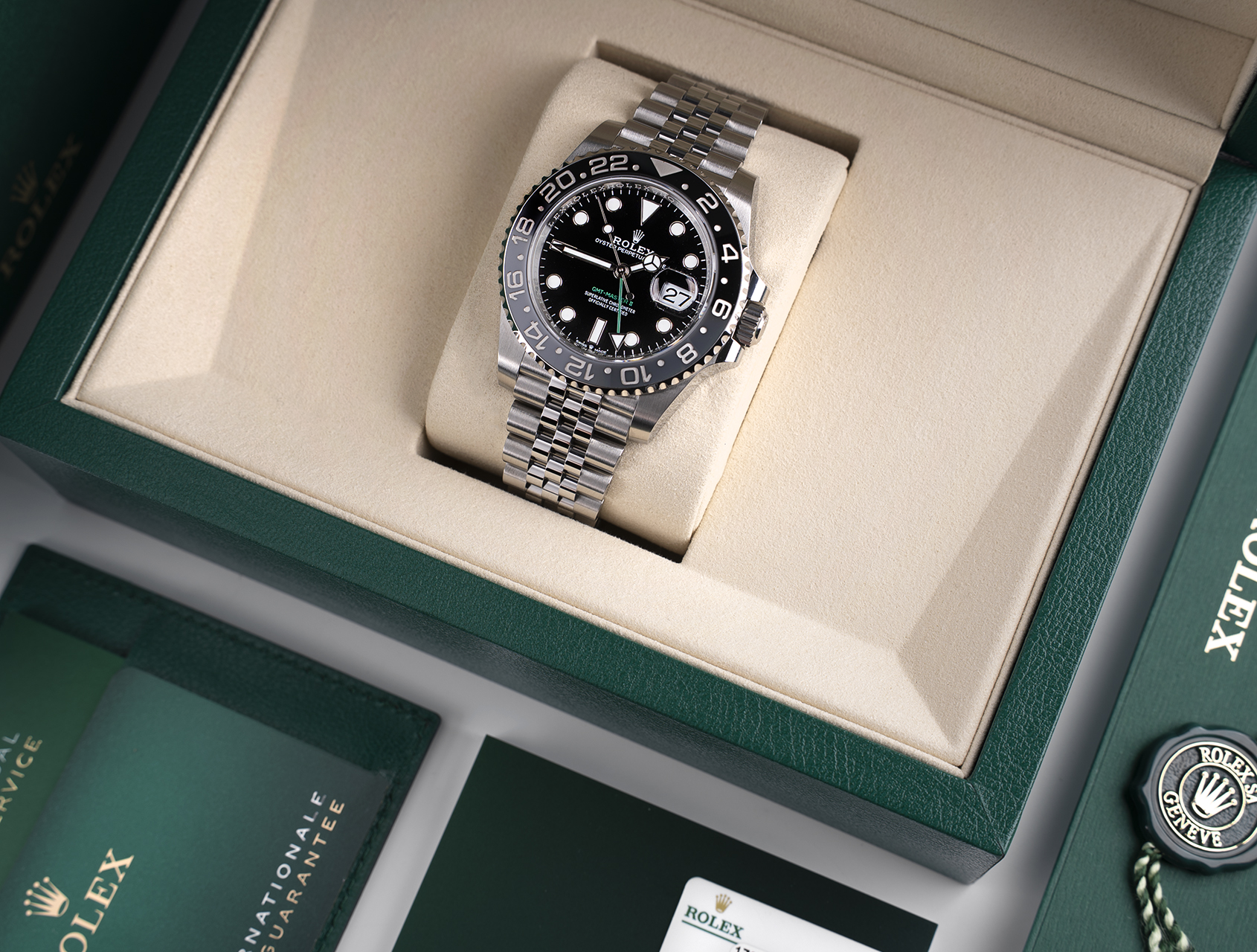
- Bezel and dial combinations: Steel with grey-and-black ceramic (ref. 126710GRNR) and Pepsi ceramic (ref. 126720VTNR) command premiums in the $20,000+ range.
- Service history and completeness: Watches with original box, papers, and recent service records typically command 5–15% higher secondary-market prices than comparable units without documentation.
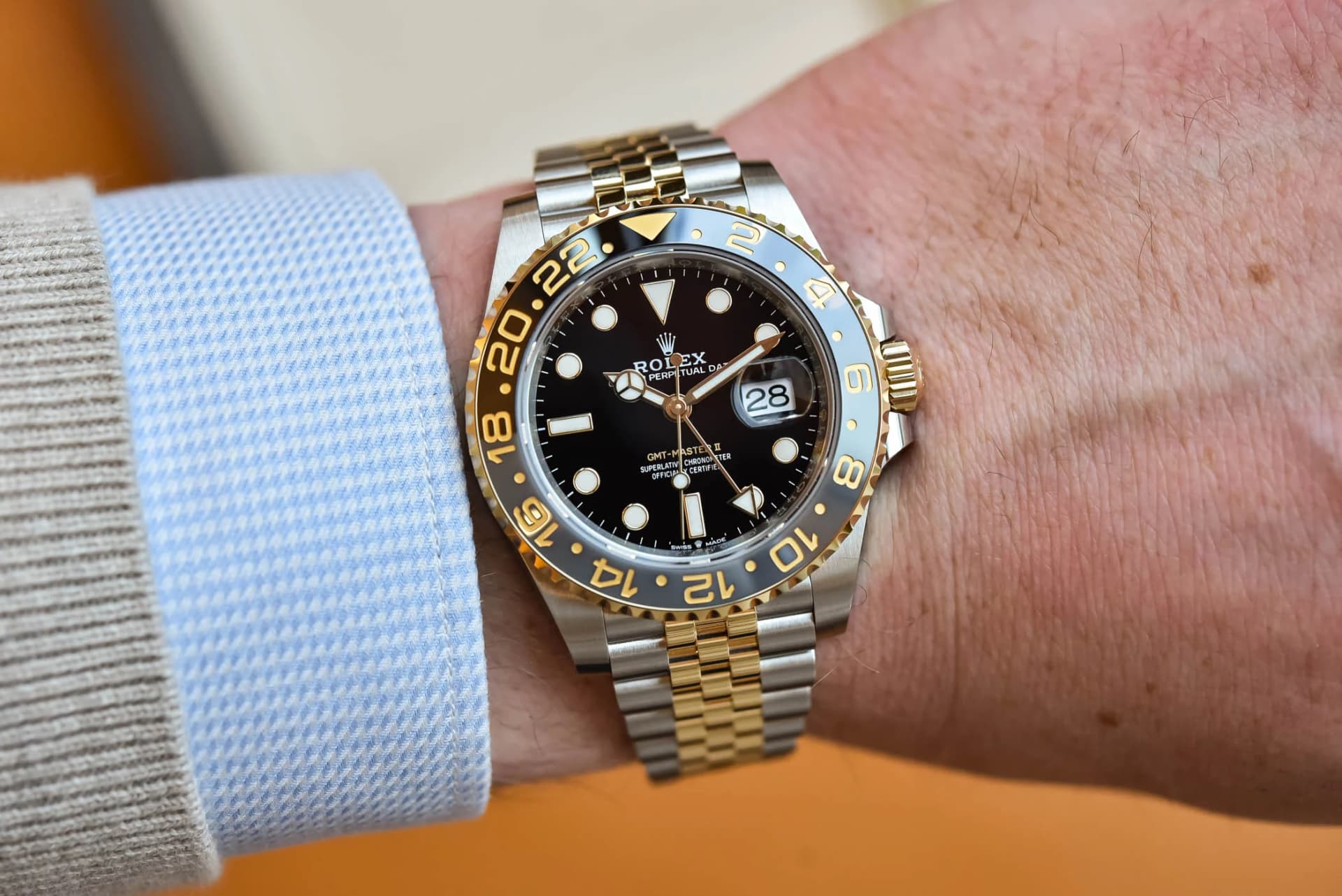
- Gold and Rolesor models: Mixed-metal and solid-gold variants ($42,000–$47,000+) experience different demand and pricing mechanics than steel; precious-metal prices and commodity input costs drive year-over-year swings.
This is educational market guidance, not financial or investment advice.
What Actually Drives Value and Demand
The steel GMT-Master II has experienced significant retail pricing pressure—jumping 6.2% in early 2026—while secondary-market premiums remain stubbornly high, reflecting authorization-channel constraints and limited new supply reaching the market.
Reality check: Retail price increases do not immediately compress secondary-market asking prices. In many cases, secondary-market sellers hold or even increase their asking prices for 6–12 months following a retail adjustment, betting that demand from excluded buyers will remain strong.
The gap between Rolex’s MSRP and what watches trade for on the secondary market reflects a fundamental supply reality: authorized dealers allocate most steel sports watches to VIP or long-standing customers, leaving the majority of US buyers to source pre-owned. This dynamic has kept GMT-Master II asking prices in the $19,500–$26,000 range for steel models even as retail rose from $11,300 to $12,000.
Example: A grey-and-black ceramic steel GMT-Master II (ref. 126710GRNR) retails for $11,250 MSRP but trades for $20,000+ on secondary platforms—a 78% premium. That premium exists because authorized-dealer allocation is extremely competitive and gray-market buyers have to pay the secondary-market price.
Precious-metal models follow different price drivers: gold and Everose alloys are subject to commodity fluctuations, making year-over-year comparisons more volatile. For example, the Rolex GMT-Master II “Root Beer” (Everose and yellow gold) jumped from AU$28,700 in 2025 to AU$32,800 in 2026—a 14% increase tied partly to material and production costs.
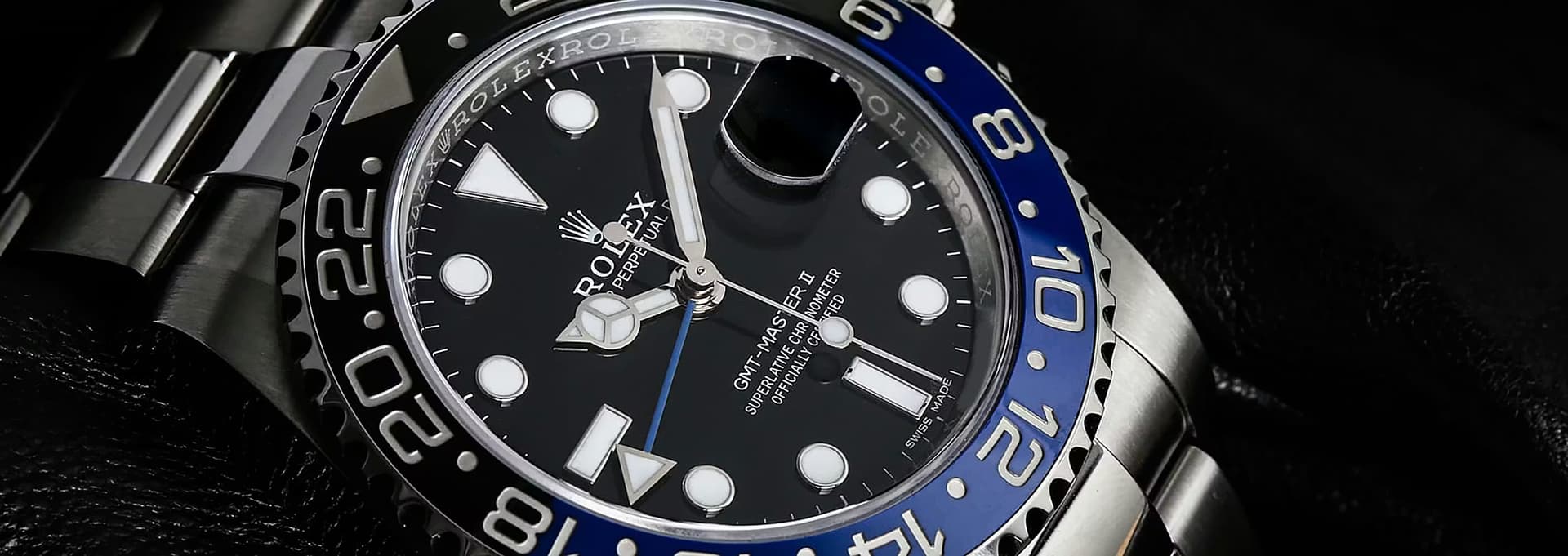
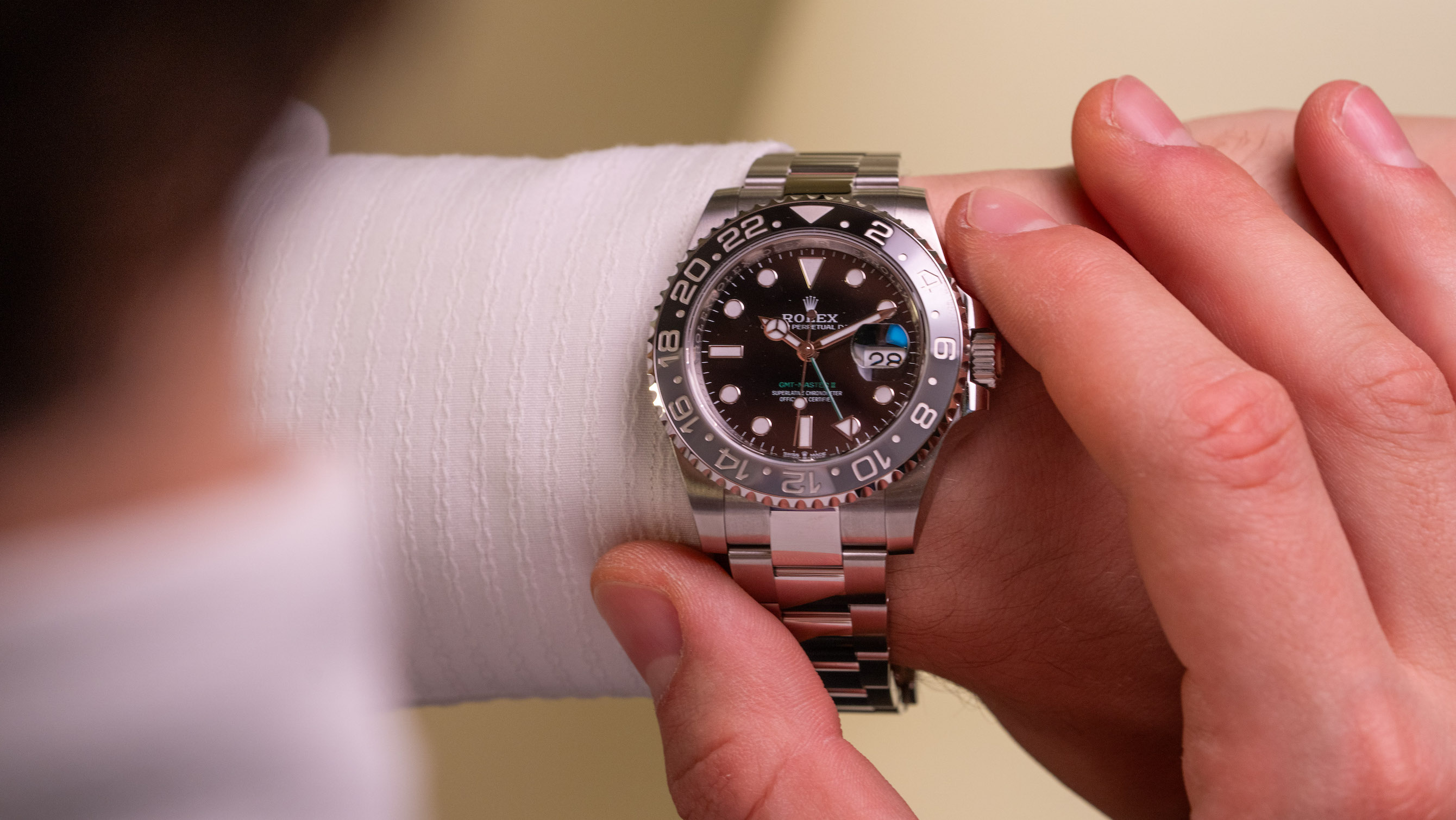
Demand also hinges on bezel configuration, dial color, and bracelet choice. Pepsi (red-and-blue ceramic), Batgirl (black-and-blue ceramic), and “Root Beer” (brown-and-red Everose) variants command higher secondary-market premiums than all-black or all-grey options.
Category-Specific Evaluation Framework
When evaluating a specific GMT-Master II listing, assess condition, movement reliability, set completeness, and provenance. The following framework helps you compare options across different platforms and sellers.
1. Movement and Service History – Request documented service history: if the watch was serviced in the last 3–5 years, ask for the service card or Rolex certificate. – Confirm movement caliber: modern GMT-Master II models use the caliber 3186 or 3285 (newer ref. 126710 and ref. 126720 models). Older “Fat Lady” references (ref. 16760) use the caliber 3085. – Verify the last known service date: watches that have not been serviced in 7+ years may require immediate or near-term service ($800–$2,500 depending on scope).
2. Case and Bracelet Condition – Examine for signs of over-polishing or significant case wear. Light scratches on the case and bracelet are normal for pre-owned watches; deep gouges or refinishing reduce value by 10–20%. – Check the bracelet for end-link fit and clasp function. Worn bracelets may need replacement, adding $1,500–$3,000 to total cost. – Verify the reference number, case serial, and lug width match the listing description.
3. Dial, Bezel, and Lume – Inspect the dial for fading, printing errors, or luminous-material degradation. Dial condition is one of the highest-impact factors on secondary-market price; a faded or marked dial can reduce value by 15–30%. – Check the ceramic bezel for chips, cracks, or fading of the pip. A damaged bezel typically costs $200–$400 to replace at an independent watchmaker. – Confirm the lume (luminous material) on the hands and hour markers glows evenly; very old watches may have lost luminescence, which is normal but affects perceived condition.
4. Set Completeness and Papers – Original boxes and papers add 5–15% to secondary-market asking prices. Watches sold with full set (watch, outer box, inner presentation box, warranty card, service papers) command a premium over “watch only” sales. – Verify the warranty card date matches the reference number and case serial. Mismatches or absent cards raise fraud risk and reduce buyer confidence.
Steps to Verify Model Configuration and Authenticity
- Cross-reference the reference number against Rolex’s official discontinued and current model database. Example: ref. 126710GRNR is the current steel version with grey-and-black ceramic; ref. 116710LN is the discontinued all-black ceramic version.
- Confirm case back serial and movement serial match the warranty card and service records. Mismatches or absent serials are a red flag for non-original movements or frankenwatch assemblies.
- Photograph and measure key dimensions: case diameter (typically 40mm), thickness, lug-to-lug distance, and bezel width. Request photos from the seller that clearly show the dial, case back, bracelet, and clasp hallmarks.
- Request current condition photos in daylight and indoor lighting, including the dial at an angle to check for printing sharpness and dial surface finish.
- Ask the seller for a statement of known service history, any known issues, and the reason for sale. Transparency here reduces post-purchase disputes.
- If purchasing over $15,000, request an in-person inspection or independent authentication before payment. Third-party authentication services ($100–$300) are worthwhile risk mitigation.
Pricing Mechanics and Trade-Offs
The secondary-market price for any GMT-Master II is driven by three variables: material (steel vs. mixed metal vs. solid gold), reference and configuration (bezel, dial, bracelet type), and condition (service history, set completeness, visible wear). Understanding these trade-offs helps you decide which configurations offer better value for your budget.
| Configuration | Typical Ask Price | Retail MSRP | Premium to MSRP | Speed to Acquire | Condition Notes |
|---|---|---|---|---|---|
| Steel, grey-and-black ceramic, Jubilee | $20,000–$24,000 | $12,000 | 67–100% | 1–4 weeks | Most liquid; recent references (2023+) command higher premiums |
| Steel, Pepsi ceramic, Jubilee | $22,000–$26,000 | $12,000 | 83–117% | 2–6 weeks | Higher demand; discontinued refs. trade at premium |
| Rolesor (steel/gold), mixed-metal | $18,500–$22,000 | $16,450 | 12–34% | 1–4 weeks | Less liquid than full steel; margin lower |
| Solid 18K gold (yellow or white) | $42,000–$50,000 | $38,900 | 8–29% | 3–8 weeks | Tied to gold spot price; lower trading volume |
Example: You find a 2022 GMT-Master II (ref. 126710GRNR) with complete set—box, papers, warranty card—in excellent condition. The seller is asking $23,500. Compare this to a 2019 ref. 116710LN (discontinued all-black ceramic) in near-mint condition, also with papers, asking $19,500. The newer model commands a $4,000 premium despite lower vintage appeal because it has a more recent service history window and benefits from the newer bezel design. Depending on your risk tolerance and desire for warranty coverage, the newer model may represent better value if you plan to hold it long-term.
Trade-off logic: – Speed vs. price: Buying from major secondary-market platforms (Chrono24, Watchuseek, eBay) takes 7–30 days longer than buying from a local dealer, but prices may be 3–8% lower due to lower overhead. – Authentication risk vs. discount: Listings with full documentation, recent service records, and third-party authentication certificates carry higher asking prices but lower fraud risk. “Watch only” or minimal-documentation sales may be 10–20% cheaper but require independent verification. – Set completeness vs. usability: Buying without box and papers saves $1,500–$3,000 but limits future resale liquidity by 5–15%. If you plan to keep the watch for 10+ years, the documentation discount may not be worth the reduced flexibility.
Risk Control and Authentication Workflow
Counterfeit and “frankenwatch” GMT-Master II units do exist on secondary platforms, though they are less common at the $20,000+ price point. Authentication risk concentrates in watches listed below $18,000 or through informal private-seller channels. Implement these controls to reduce fraud exposure.
- Request high-resolution close-up photos of the dial, case back, and bracelet clasp. Rolex printing is extremely precise; blurry text, poor alignment, or uneven font weight are red flags. Modern Rolex dials have sharp, consistent printing; vintage watches show age-appropriate patina but no smudging or reprinting.
- Verify the case back serial using Rolex’s official serial decoder. Rolex used different date ranges for serials by caliber; a case serial that falls outside the correct era for the reference number is a fraud indicator. (Note: pre-2006 Rolex watches do not have case back serials; confirm this if buying older references.)
- Confirm the movement is original by examining caliber, plate engraving, and jewel count. Non-original or “Frankenstein” movements (assembled from parts of different watches) are extremely difficult to spot without disassembly, but mismatched serial numbers or missing service documentation can hint at non-originality.
- Request a statement from the seller about any known service, repairs, or replacement parts. Legitimate sellers disclose this; reluctance to detail service history is a risk signal.
- If the asking price is 15–25% below market comparables, investigate why. Deep discounts often signal condition issues, absent documentation, or fraud attempts. Market-rate discounts (3–8%) are typical; outliers deserve extra scrutiny.
Action Plan by Intent (Buy)
You have decided to buy a GMT-Master II. The following table outlines the typical timeline, costs, and next actions based on your sourcing channel. Choose the path that aligns with your budget and urgency.
| Channel | Timeline | Typical Cost Range | Pros | Cons |
|---|---|---|---|---|
| Authorized dealer (wait list) | 18–60+ months | $12,000 MSRP + tax | Warranty, guaranteed authenticity, no counterfeit risk | Extremely long wait; no guarantee of allocation |
| High-volume secondary platform | 7–14 days delivery | $19,500–$26,000 | Fast; large inventory; buyer protection policies | Moderate premium to local; authentication risk if not using certified sellers |
| Independent dealer or consignor | 3–7 days | $20,000–$25,000 | Fast; can negotiate; access to in-house authentication | Higher margin; less formal buyer protection |
| Private sale (local or online) | 1–7 days | $19,000–$24,000 | Potentially lowest price; direct negotiation | Highest fraud risk; no formal recourse if watch is fake or misrepresented |
Fast-Track Buy Checklist (5 Steps)
- Assess your budget and configuration priority. Are you seeking the newest steel model (ref. 126710GRNR), a discontinued variant (ref. 116710LN Pepsi), or an older “Fat Lady” (ref. 16760)? Your target reference determines where you search and what price you should expect. Prioritize bezel and dial combination (Pepsi, Batgirl, Root Beer, all-black) before bracelet type (Oyster or Jubilee).
- Search multiple platforms simultaneously. Use Chrono24, Watchuseek, eBay, and reputable independent dealer websites. Set up alerts for your target reference and save 5–10 listings that match your specification. Do not commit to the first listing; comparing 5–10 options takes 2–3 hours and often reveals price outliers or better-condition examples.
- Request complete photo sets and documentation from at least 3 sellers. Ask for photos of the dial, case back, bracelet clasp, box, warranty card, and any service papers. Request the case serial number and watch dimensions (case diameter, thickness, lug-to-lug). Reputable sellers respond within 24 hours; slow or evasive responses are warning signs.
- Verify serial numbers and service history using Rolex’s resources and third-party databases. Cross-reference the case serial, movement serial, and warranty card date against the reference number. If the watch has been serviced, request a copy of the service card or Rolex certificate. Missing documentation does not guarantee fraud, but it reduces confidence.
- Negotiate and finalize the deal, then arrange secure payment and authentication if needed. Most secondary-market sellers expect 3–8% negotiation room from opening ask. If the watch exceeds $15,000, request that payment be held in escrow pending independent authentication ($100–$300 via a third-party watchmaker or appraiser). Once authenticated, fund the sale and arrange insured shipping.
Reality check: Even after thorough due diligence, 3–5% of secondary-market watch purchases encounter issues post-delivery (incorrect documentation, undisclosed service, minor damage not visible in photos). Budget an additional $200–$500 for potential authentication, light repair, or service discovery. Reputable dealers stand behind their sales; confirm the seller offers a 2–7 day return or inspection window before you commit payment in full.
Example: You identify a 2021 steel GMT-Master II (ref. 126710GRNR, grey-and-black ceramic, Jubilee bracelet) listed at $22,500. It has box and papers, and the seller claims "excellent condition." You request photos and discover light desk diving marks on the case and bracelet. You cross-reference the serial number and confirm it matches the warranty card (2021 date). You request the most recent service history; the seller provides a Rolex service card dated 2024, showing a routine service. You negotiate the price down to $21,800, then use an escrow service to hold payment pending your independent inspection upon delivery. The watch arrives, is verified as authentic and in the stated condition, and you release payment. Total time from first listing to acquisition: 12 days. Premium to MSRP: 82% (typical for this reference and condition in early 2026).
FAQ
Q: How much should I expect to pay for a steel GMT-Master II right now? A: As of March 2026, steel GMT-Master II prices range from $19,500–$26,000 on secondary platforms, depending on reference, condition, and set completeness. The newest references (2023+) with grey-and-black ceramic command $20,000–$24,000; discontinued Pepsi variants ask $22,000–$26,000. Budget 65–100% above MSRP if you’re not willing to wait for an authorized dealer.
Q: Is it worth waiting for an authorized dealer, or should I buy pre-owned? A: That depends on your timeline and budget. Authorized-dealer wait lists typically exceed 2–5 years for steel models. If you need a watch within 6–12 months, secondary-market purchase is the only realistic option. If you have unlimited time and want MSRP plus tax only, join the wait list at your local authorized dealer; note that allocation is not guaranteed even after waiting.
Q: What’s the difference between buying a GMT-Master II with full set versus watch-only? A: Watches with original box, papers, and warranty card command a 5–15% premium on the secondary market because they offer resale liquidity and authentication confidence. Watch-only sales are typically $1,500–$3,000 cheaper. If you plan to hold the watch for 10+ years and never sell, the discount may justify going without documentation; otherwise, the set is worth the premium.
Q: How do I verify that a GMT-Master II is authentic? A: Start by requesting high-resolution close-up photos of the dial, case back, and bracelet. Check Rolex printing (font, alignment, spacing) against verified references online. Cross-reference the case serial and movement serial using Rolex’s official database. Request service documentation and warranty card dates; mismatches are red flags. For watches over $15,000, invest in a third-party authentication ($100–$300) from an independent watchmaker or appraiser before you commit full payment.
Q: What should I expect to pay for service if I buy a pre-owned GMT-Master II without recent service? A: A routine Rolex service (cleaning, lubrication, pressure testing, gasket replacement) costs $800–$1,500 depending on whether parts need replacement. If the watch has not been serviced in 7+ years, budget $1,500–$2,500 for a more comprehensive overhaul. This is a common negotiation point on secondary-market purchases; factor expected service cost into your offer.
Q: Are gold or Rolesor GMT-Master II models a better value than steel? A: Not necessarily. Gold and Rolesor models experience different demand and commodity-driven pricing. While they may seem cheaper than steel by percentage premium (8–34% above MSRP vs. 67–100% for steel), they appeal to a smaller buyer pool and experience higher price volatility tied to gold spot price. If you love the aesthetic, a Rolesor or gold GMT-Master II can be good value; if you’re optimizing for resale liquidity, steel is typically easier to flip.
Q: How long does it typically take to receive a pre-owned GMT-Master II after purchase? A: Most high-volume secondary platforms ship within 7–14 days of purchase. Independent dealers or consignors may ship within 3–7 days if the watch is in-stock. Private sales vary; negotiate shipping terms upfront. Always request insured, tracked shipping with signature confirmation for purchases over $10,000.
Q: What’s the difference between a Pepsi, Batgirl, and Root Beer GMT-Master II? A: These are bezel-and-dial color combinations. Pepsi is red-and-blue ceramic bezel with matching hour hand; Batgirl is black-and-blue ceramic; Root Beer is brown-and-red Everose (discontinued). Pepsi and Root Beer typically command higher secondary-market premiums ($22,000+) because they are sought-after and less commonly traded. Batgirl and all-black variants are more liquid but trade at slightly lower prices.
Q: Should I buy a vintage or modern GMT-Master II? A: Modern references (2020+) offer newer movements, ceramic bezels, and current warranty potential. Vintage models (pre-2010) have historical appeal and stable pricing but may require imminent service and have less precise movements. If you’re buying for reliability and modern specifications, choose post-2020; if you value vintage character and don’t mind service history, vintage can offer similar or lower cost depending on reference.
Q: What are the risks of buying a GMT-Master II from an unauthorized or private seller? A: Risks include counterfeit watches, “Frankenstein” assemblies (non-original movements), missing or fraudulent documentation, undisclosed service issues, and no recourse if problems emerge post-sale. Mitigate by requesting complete authentication (photos, serials, service history), using escrow services for large purchases, and booking independent third-party verification before payment.