
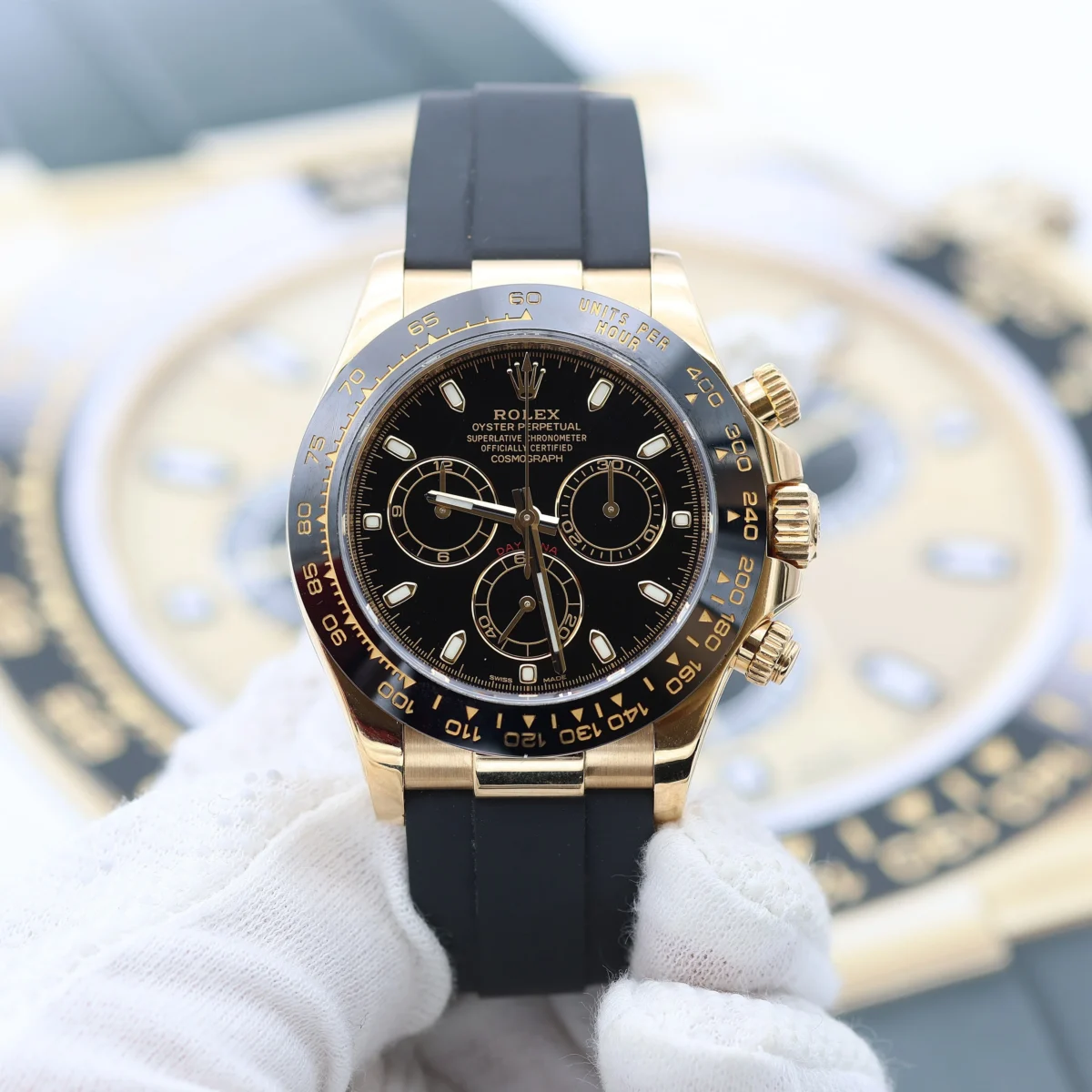
Rolex Daytona secondary market pricing in the US ranges from $20,000 for entry-level stainless steel models to $510,000+ for rare precious metal configurations, driven primarily by reference number, material composition, dial variant, and condition rather than retail MSRP alone. The gap between MSRP and secondary-market trading prices reflects constrained supply at retail, sustained collector demand, and metal-dependent liquidity mechanics. Understanding which specific Daytona configuration matches your intent—and what inputs accelerate a transaction—is critical to navigating this market efficiently without overpaying or underestimating value.
Quick Decision Snapshot
- Stainless steel Daytonas (126500LN, 116500LN): $28,000–$34,000 typical range for recent models, with black dials at lower end and panda dials commanding 20–30% premium.
- Two-tone Daytonas (126503, 116503): $22,000–$23,750 range; less volatile than steel due to lower collector saturation.
- Gold and Platinum models: $40,000–$172,000+ depending on material (yellow, white, rose, platinum), dial rarity, and bracelet type.
- Meteorite, green, and rainbow dials: Ultra-rare configurations trade $150,000–$510,000; market moves on specialist demand, not typical volume.
- Current market correction: Secondary prices remain elevated 357% above 2010 baseline ($8,300 AOV) despite 2022–2024 pullback from peak $53,911 levels.
Educational market guidance only; not financial or investment advice.
What Actually Drives Value and Demand
Secondary-market Daytona pricing is determined 80% by reference number and material, 15% by condition and service history, and 5% by market sentiment and timing. Retail MSRP functions as background context only; scarcity and collector competition set floor and ceiling, not Rolex’s suggested price.
Reality check: The Daytona corrected 51% from peak (2022: $53,911 → 2024–2025: ~$37,995 average), yet remained Rolex’s most expensive modern sports model. This volatility reflects speculative collector behavior during the 2020–2022 surge, not fundamental value destruction. Current pricing preserves a 357% appreciation baseline since 2010, indicating sustained long-term demand despite short-term correction.
Material composition is the primary demand lever. Steel Daytonas dominate retail scarcity and collector attention because Rolex produces them in finite volume through authorized dealers; precious metal versions appeal to a narrower wealth cohort and trade less frequently, which can reduce liquidity but stabilize pricing. Dial variant—especially panda (white dial, black subdials), black dial, and discontinued specialty dials (meteorite, green, blue)—adds 10–50% premiums for steel and up to $350,000+ for rare gold/platinum combinations.
Condition cascades value: unworn with full set (box, papers, hang tags) commands top-tier pricing; light wear reduces expected value 10–15%; heavy wear or missing papers can drop value 20–30% depending on reference and material.
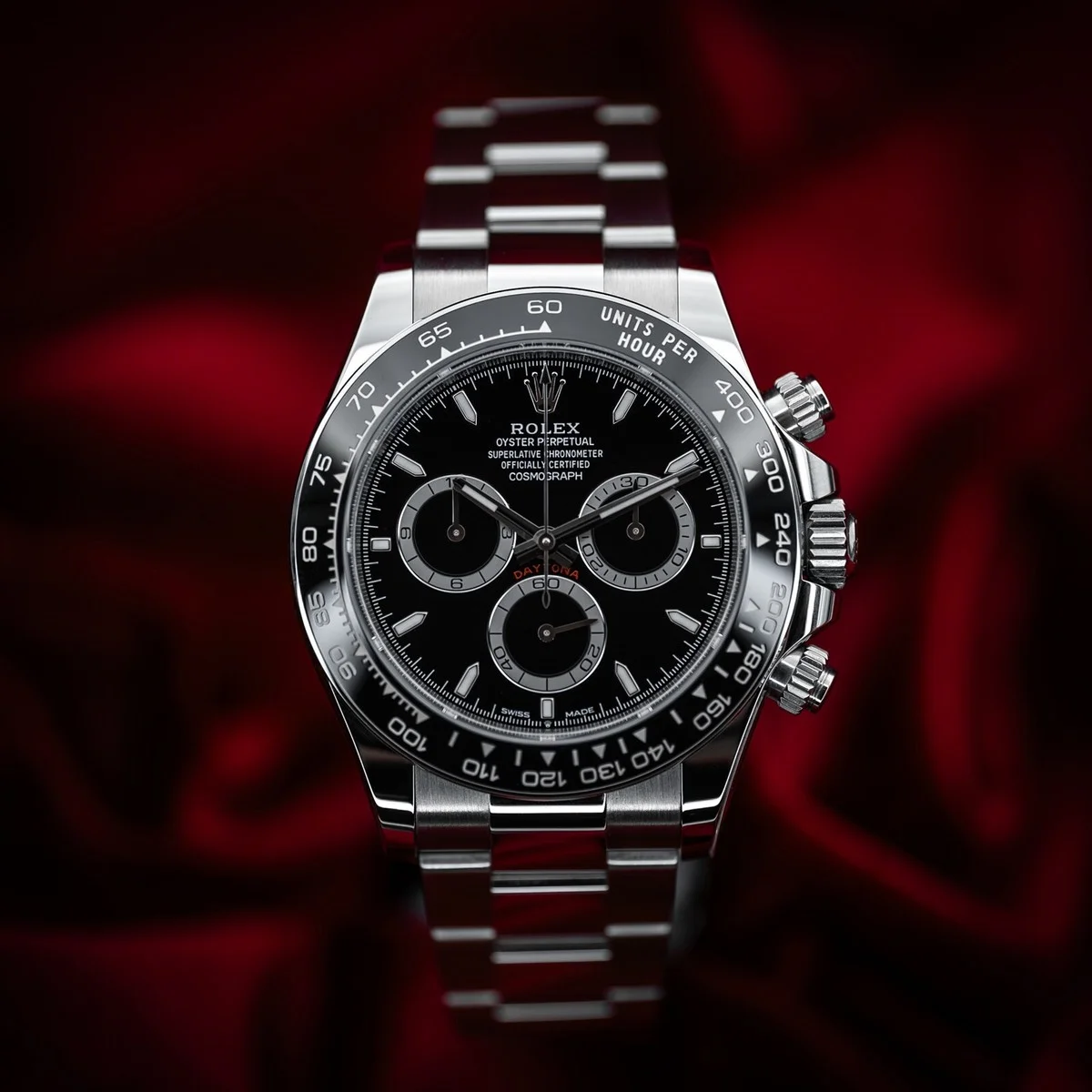
Example: A 126500LN steel Daytona with black dial, light wear, and full set typically lists $28,000–$30,000. The same reference in panda (white dial with black subdials) adds $4,000–$6,000. A 116500LN (previous generation) black dial trades $22,500, reflecting generation-to-current-model gap.
Category-Specific Evaluation Framework
Before engaging with a seller or buyer, standardize your assessment checklist. For the Daytona—a chronograph sports watch in multiple materials—use this verification workflow:
- Reference & Material Verification: Confirm the exact reference number (e.g., 126500LN vs. 116500LN) and material composition (steel, two-tone, precious metal) to establish the correct market baseline.
- Dial & Bezel Assessment: Identify the dial variant (e.g., panda, black, meteorite). Inspect dial printing precision and lume color to ensure they match factory specifications and show no signs of unauthorized refurbishment.
- Condition & Hardware Scoring: Evaluate the case and crystal for wear (unworn, light, or heavy). Verify the bracelet and clasp (Oyster, Jubilee, or Oysterflex) against reference specs to ensure no aftermarket swaps have occurred, which can lower value by 15–25%.
- Mechanical Integrity: Test the chronograph pushers and reset function (in person or via video). Identify any stiffness, drag, or reset failure, as these indicate mechanical issues requiring a $300–$600 service reserve.
- Provenance & Documentation: Validate the “full set” status. Cross-reference serial numbers, warranty dates, and box production codes against watchmaker databases to detect fraud or mismatches.
Pricing Mechanics and Trade-Offs
Daytona secondary-market pricing follows material tiers, with each material band showing distinct liquidity and margin trade-offs. The table below maps typical configurations, their current range, and the buyer/seller friction points:
| Material/Reference | Typical Market Range (2026) | Liquidity (Speed to Sale) | Margin Trade-Off | Primary Risk |
|---|---|---|---|---|
| Steel 126500LN Black | $28,000–$32,000 | High (5–14 days) | Tight 8–12% | Saturation risk if demand softens |
| Steel 126500LN Panda | $33,000–$36,000 | High (7–21 days) | 10–15% | Condition authenticity of dial |
| Two-Tone 126503 | $23,000–$24,000 | Medium (14–45 days) | 12–18% | Lower collector demand; slower turnover |
| Yellow Gold 126508 | $48,000–$52,000 | Medium (21–60 days) | 8–14% | Metal-price correlation drift |
| Platinum 126506 | $105,000–$125,000 | Low (45–120 days) | 10–20% | Ultra-niche buyer pool; authentication cost |
Example: A seller offers a steel 126500LN black-dial Daytona for $24,000 claiming light wear and full set. Current market range is $28,000–$32,000. The $4,000 discount suggests: (a) accelerated sale urgency, (b) undisclosed condition issues, or (c) below-market seller pricing. A buyer should investigate condition photos, service records, and authentication before committing. A dealer purchasing at $24,000 can typically retail at $28,500–$30,000, yielding 12–18% gross margin after authentication and holding costs.
Risk Control and Authentication Workflow
Secondary-market Daytona transactions carry authentication, provenance, and service-history risks. De-risk by implementing these controls before committing to purchase or sale:
- Order certified authentication from a specialist firm if purchasing above $30,000. Costs $150–$400 but prevent five-figure counterfeit loss. Reputable firms provide written reports and insurance backing.
- Request full service history documentation. Rolex service records (dated and stamped) prove legitimate history and justify premium pricing. Undocumented watches require budget for immediate service ($400–$800 for Daytona chronograph).
- Verify bracelet/clasp against reference specs. Fake or mismatched bracelets are common on higher-value models. Oyster, Jubilee, and Oysterflex bracelets have distinct engineering; swaps lower value 15–25%.
- Test chronograph pushers and chronograph reset function in person or via detailed video. Stiff pushers, chronograph drag, or reset failure flag wear or mechanical issues; budget $300–$600 service reserve.
- Confirm dial printing and lume color match reference photos. Rolex dial text is printed to sub-millimeter precision; poor printing quality or lume discoloration (purple or uneven yellowing) indicates refurbishment or fakery.
- Validate papers and box against watchmaker databases. Serial numbers, warranty dates, and box production codes must align. Mismatches (e.g., warranty dated after a “2015” watch) indicate fraud.
Action Plan by Intent
Daytona transactions vary sharply by buyer, seller, or sourcing intent. The table below maps your objective to fastest execution path and required inputs:
| Your Intent | Typical Timeline | Required Documentation | Pricing Expectation | Key Risk |
|---|---|---|---|---|
| Buy (retail/personal) | 5–21 days | Authentication cert, service history, photos, seller ID | Market-rate +2–5% | Over-authentication costs; overpaying for rarity |
| Sell (hold/liquidate) | 7–45 days | Box, papers, service records, detailed condition photos | Market-rate −3–8% | Underpricing; slow buyer pool for specific config |
| Source/Flip (dealer) | 14–60 days | Full provenance audit, broker referrals, cash offer pre-auth | Market-rate −10–18% | Margin compression; authenticity disclosure burden |
| Appraise (insurance/estate) | 1–3 days | Recent comps, condition scoring, metal/ref verification | ±5% of market range | Condition assessment subjectivity |
Execute a Daytona transaction efficiently with this step-by-step workflow:
- Define Intent and Assess Liquidity: Determine your objective (buy, sell, or source). Acknowledge the expected timeline based on material (e.g., 5–14 days for steel vs. 45–120 days for platinum) to set realistic pricing expectations.
- Compile Critical Evidence: Gather or request 12–15 high-resolution photos (showing dial text, case sides, caseback, bracelet, and serial numbers), a video of the chronograph function, and all available service history documentation.
- Establish Market Alignment: Price the watch or evaluate the asking price based on current secondary market ranges, factoring in the 10–30% premium for specific dials (like the panda) and deducting value for missing papers or heavy wear.
- Mandate Third-Party Authentication: For any transaction exceeding $25,000, order a certified authentication report from a specialist firm ($150–$400). Never skip this step to avoid five-figure counterfeit losses.
- Secure the Transfer: Execute the final payment and delivery using insured shipping and reputable escrow services, ensuring funds are released only after physical verification and authentication are complete.
Reality check: A buyer approached by a seller offering a $18,000 "stainless steel Daytona" should immediately assume counterfeit or undisclosed damage. Current market floor for any modern stainless Daytona is $20,000+. Pricing 10%+ below market in this category signals fraud, not opportunity.
What we need to move fast
To process your Daytona inquiry and provide a firm valuation or sourcing path, gather these inputs upfront:
- Watch details: Exact reference number (126500LN, 116500LN, etc.), material (steel, two-tone, gold, platinum), dial color, bracelet type (Oyster, Oysterflex, Jubilee).
- Condition state: Worn/unworn, visible scratches or dings, service history (last service date, Rolex-certified or independent), full set status (box, papers, links, manual).
- Intent: Buy, sell, source, or appraise; timeline urgency; budget/pricing flexibility.
- Photographic evidence: 12–15 high-res photos (dial, case sides, caseback, bracelet, dial text, lume aging, serial number visibility), video of chronograph function if accessible.
- Location: Shipping destination or in-person meeting availability (US-based preferred for liquidity and insurance).
FAQ
Q: What is the difference between a steel Daytona 126500LN and 116500LN in secondary market pricing? A: The 126500LN (current generation, ceramic bezel) trades $28,000–$34,000, while the 116500LN (previous generation, steel bezel) trades $22,500–$29,000, a $5,000–$7,000 gap reflecting production recency and collector preference for newer specs. The ceramic bezel and updated case finishing on the 126500LN drive the premium.
Q: Why do panda Daytonas cost more than black dials on the secondary market? A: Panda dials (white with black subdials) represent <15% of Rolex Daytona production at retail; collector demand consistently exceeds supply, commanding 15–30% premiums over black dials. Rarity + aesthetic preference = pricing leverage.
Q: How much does condition impact Rolex Daytona value? A: Unworn with full set commands top retail pricing; light wear (hairline scratches, minimal bracelet patina) reduces value 8–12%; moderate wear drops value 15–20%; heavy wear or missing papers reduces value 20–35% depending on reference. Condition is the most subjective pricing variable.
Q: Are two-tone Daytonas harder to sell than steel? A: Yes. Two-tone models trade 10–30% slower than steel because the collector base is smaller and resale predictability is lower. However, two-tone pricing is often more stable because fewer speculative buyers drive demand, reducing volatility risk.
Q: What is the liquidity difference between a $30,000 steel Daytona and a $150,000 gold Daytona? A: Steel Daytonas typically sell within 7–21 days to a large buyer pool; gold Daytonas often require 45–120 days because the buyer pool is <10% the size of steel collectors. This liquidity gap justifies dealer markups of 8–15% for gold to offset holding cost and buyer-find risk.
Q: How do I verify that a Daytona is authentic before paying $25,000+? A: Request full provenance (box, papers, service records), send detailed condition photos to a third-party authenticator ($150–$400 cost), verify the serial number against Rolex production databases, and test chronograph function. Never skip authentication above $25,000.
Q: Has the Daytona market crashed, or is pricing still stable? A: The market corrected 51% from peak ($53,911 in 2022 → ~$37,995 average by 2025), but pricing remains 357% above 2010 baseline, indicating sustained long-term demand despite short-term volatility. Current pricing reflects normalized post-surge levels, not fundamental decline.
Q: What is the fastest way to sell a Daytona on the US secondary market? A: Offer 5–8% below current market rate to attract quick buyer interest; use escrow and insured shipping; ensure full documentation (box, papers, service records); and consider a dealer broker if timing is critical (24–72 hour sale possible at 10–15% discount).
Q: Do MSRP increases affect secondary market pricing? A: Minimally in the short term. A 2025 MSRP increase from $15,500 to $16,900 for the 126500LN does not immediately raise secondary pricing; instead, it widens the gap between retail and grey market, sustaining secondary prices at $28,000–$34,000 or higher.
Q: Which Daytona configuration offers the best liquidity for resale: steel, two-tone, or gold? A: Stainless steel black-dial models offer the fastest sales (5–14 days) and lowest spread (8–12% margin); panda steel is slightly slower (7–21 days) but commands stronger pricing; two-tone trades medium speed (14–45 days) with stable margins (12–18%); precious metals trade slowest (45–120 days) with highest margin potential (10–20%).