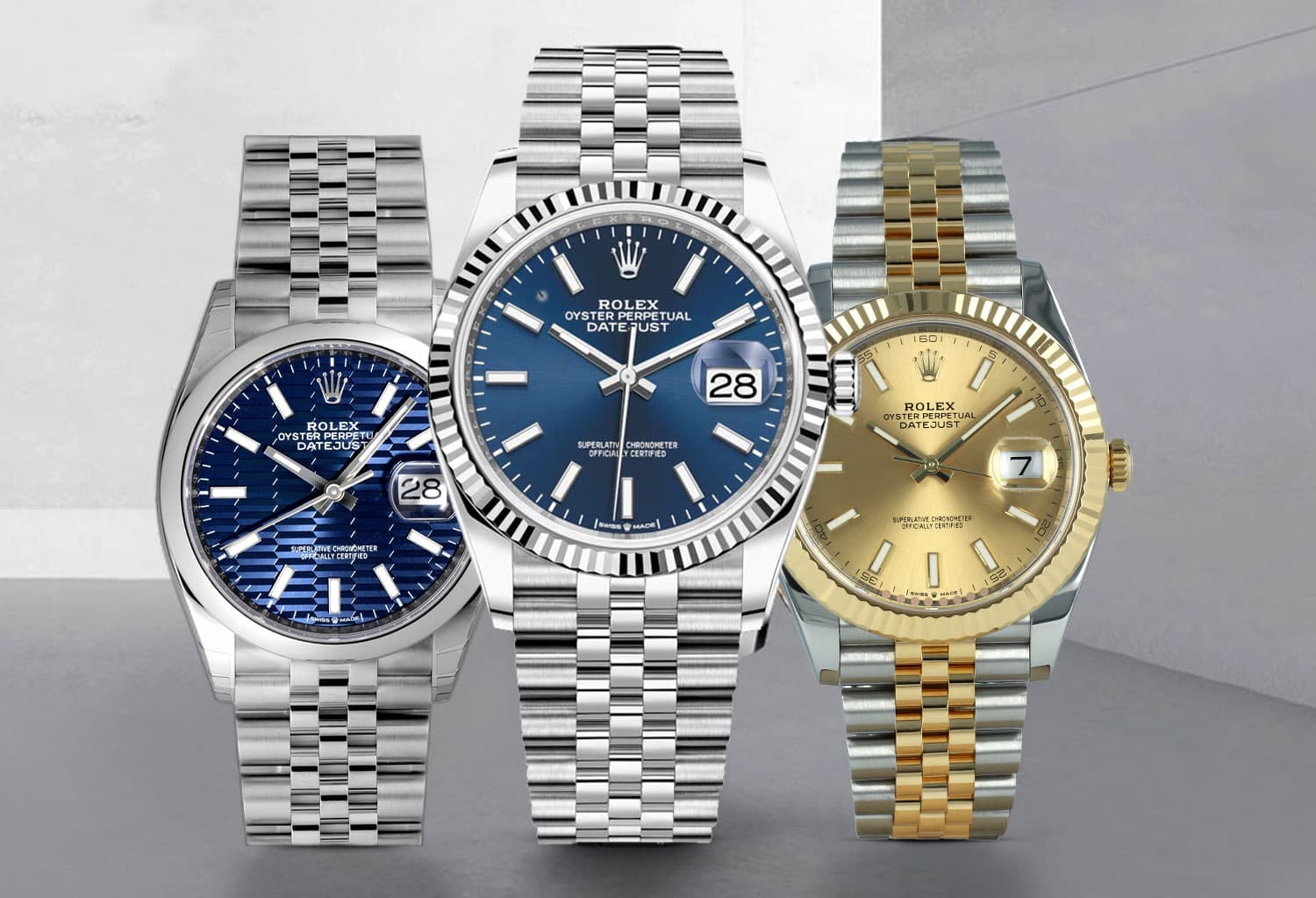
The Rolex Datejust is simultaneously the most recognizable watch in the world and the most confusing to actually buy. Walk into an authorized dealer, and you’re suddenly drowning in a sea of choices: 36mm or 41mm? Fluted or smooth bezel? Jubilee or Oyster bracelet? Steel, two-tone, or gold? Blue dial, black dial, Wimbledon dial, or one of thirty other options? It’s overwhelming—and that’s before you even consider whether to buy new, grey market, or vintage.
Here’s the truth: the Datejust’s endless configurability is both its genius and its curse. Rolex designed this watch to be everything to everyone, which means finding your perfect Datejust requires understanding what each choice actually means for your wrist, your lifestyle, and your wallet. This guide cuts through the complexity and explains exactly what matters when choosing a Datejust in 2025.
A Brief History: The Watch That Changed Everything
In 1945, Rolex introduced the Datejust to celebrate the brand’s 40th anniversary—and accidentally invented the modern wristwatch. This was the first self-winding waterproof chronometer wristwatch with an automatically-changing date display. Before the Datejust, if you wanted to know the date, you either memorized it or bought a calendar. The Datejust made that information instantaneous and elegant.
The original Datejust featured a 36mm yellow gold case, fluted bezel, and the brand-new Jubilee bracelet created specifically for this model. In 1953, Rolex added the Cyclops magnifying lens over the date window—that iconic bubble on the crystal that magnifies the date 2.5x. This feature became so synonymous with Rolex that it now appears on the Submariner, GMT-Master, and Sky-Dweller.
For nearly 80 years, the Datejust has remained fundamentally unchanged in concept while evolving through materials, movements, and sizes. It’s the watch your grandfather wore, the watch you’ll pass to your children, and the watch that never goes out of style.
The Great Debate: 36mm vs. 41mm
This is where most buyers freeze. The Datejust 36 (reference 126234 in steel/white gold) represents classic proportions—the original size from 1945 that defined luxury watch dimensions for generations. The Datejust 41 (reference 126334 in steel/white gold) represents modern tastes, offering contemporary wrist presence without crossing into oversized territory.
Key dimensional differences:
| Specification | Datejust 36 | Datejust 41 |
|---|---|---|
| Case Diameter | 36mm (actual) | 39.5mm (marketed as 41mm) |
| Lug-to-Lug | 43.1mm | 47.4mm |
| Bracelet Width | 20mm | 21mm |
| Weight | ~121 grams | ~134 grams |
| Dial Size | 30mm | 32mm |
Note that the “41mm” Datejust actually measures closer to 39.5mm when you put calipers on it—Rolex rounded up for marketing purposes. This means it wears slightly smaller than you’d expect, making it more versatile than true 41mm watches.
Choose the 36mm if:
- Your wrist measures under 6.5 inches
- You appreciate vintage-inspired proportions and classic elegance
- You want a watch that disappears under dress shirt cuffs effortlessly
- You prefer understated luxury that doesn’t announce itself
- You value lighter weight for all-day comfort
Choose the 41mm if:
- Your wrist measures over 7 inches
- You prefer modern watch sizing and bolder wrist presence
- You want improved dial legibility with larger hour markers
- You appreciate how the wider fluted bezel catches more light
- You’re comfortable with slightly more weight and substance
For wrists between 6.5–7 inches, both sizes work beautifully—your decision comes down to aesthetic preference rather than fit concerns.
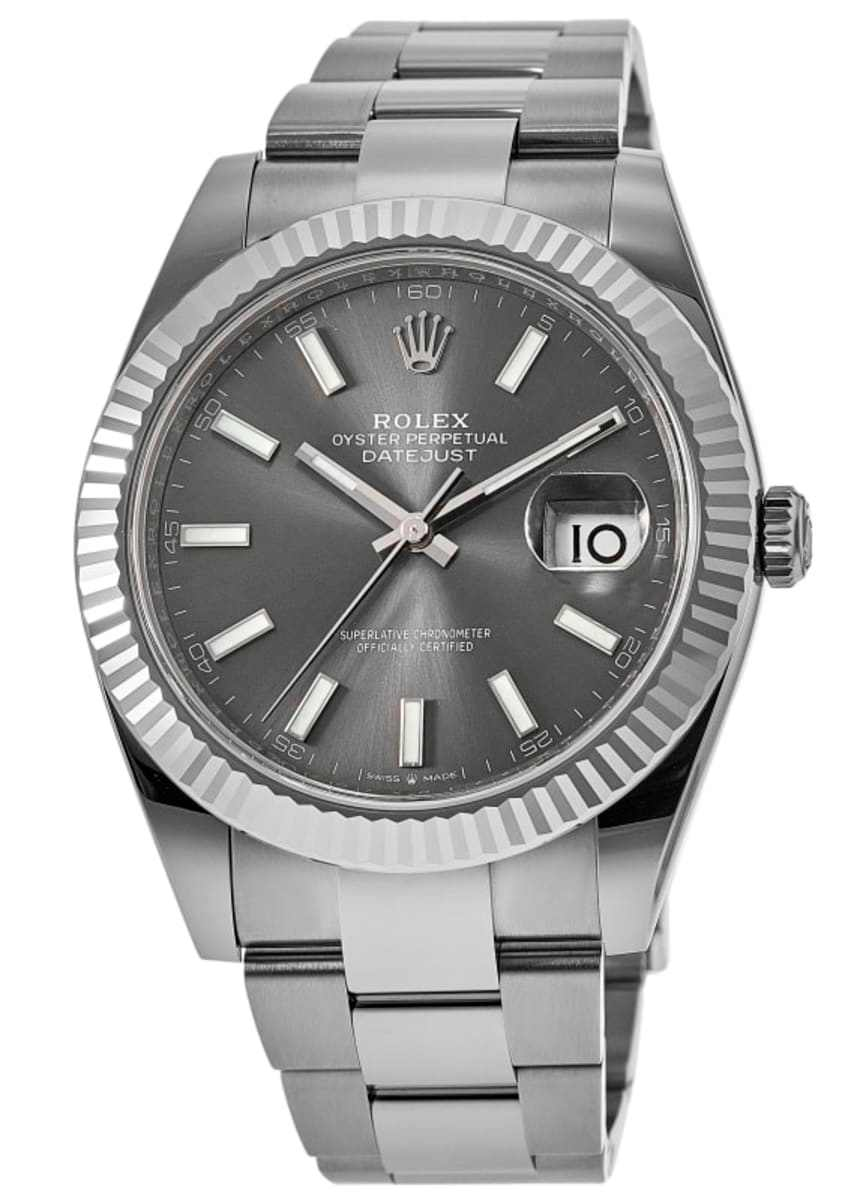
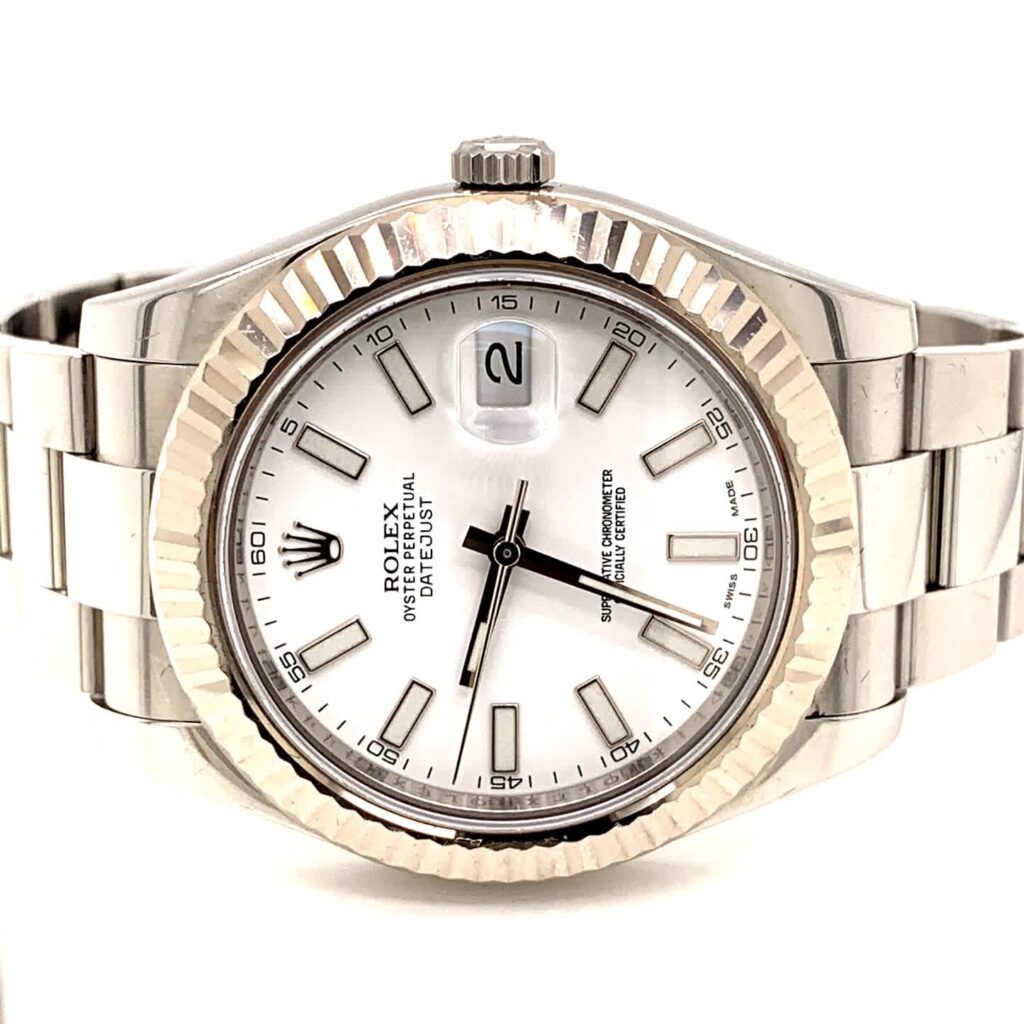
Bezels: Fluted vs. Smooth vs. Engine-Turned
The bezel choice fundamentally changes the Datejust’s personality and price.
Fluted Bezel (White Gold)
The fluted bezel is the Datejust’s signature element—those iconic ridges that catch and reflect light, creating brilliant visual sparkle. Originally designed in 1926 as a functional element (the ridges screwed the bezel onto the case to ensure waterproofness), it evolved into a purely decorative feature that defines Rolex luxury.
Critical fact: All modern fluted bezels are crafted from 18k white gold, never steel. This precious metal requirement explains why a Datejust with a fluted bezel costs $2,000–$3,000 more than an identical model with a smooth steel bezel.
Fluted bezel advantages:
- Iconic Rolex design language instantly recognizable
- Reflects light dramatically, creating “sparkle” effect
- Hides minor scratches better than smooth bezels due to textured surface
- Adds dressy, formal elegance to any outfit
- Associated with premium Datejust models historically
Fluted bezel considerations:
- Significantly increases cost (white gold construction)
- More “flashy” appearance—less subtle than smooth bezels
- Requires commitment to dressier aesthetic
- May feel too formal for purely casual lifestyles
Smooth Bezel (Steel or Gold)
The smooth bezel offers minimalist elegance and modern versatility. Crafted from polished Oystersteel (or gold on precious metal models), it creates a clean, uninterrupted surface that emphasizes the dial rather than the bezel itself.
Smooth bezel advantages:
- Lower cost (steel construction available)
- Modern, sporty aesthetic works across casual to formal contexts
- Versatile—transitions seamlessly between outfit styles
- Less visually “loud”—preferred by those seeking subtle luxury
- Easier to match with various dial colors
Smooth bezel considerations:
- Polished surface shows scratches more visibly
- Less traditionally “Rolex” in appearance
- Lacks the light-catching drama of fluted bezels
Engine-Turned Bezel (Vintage)
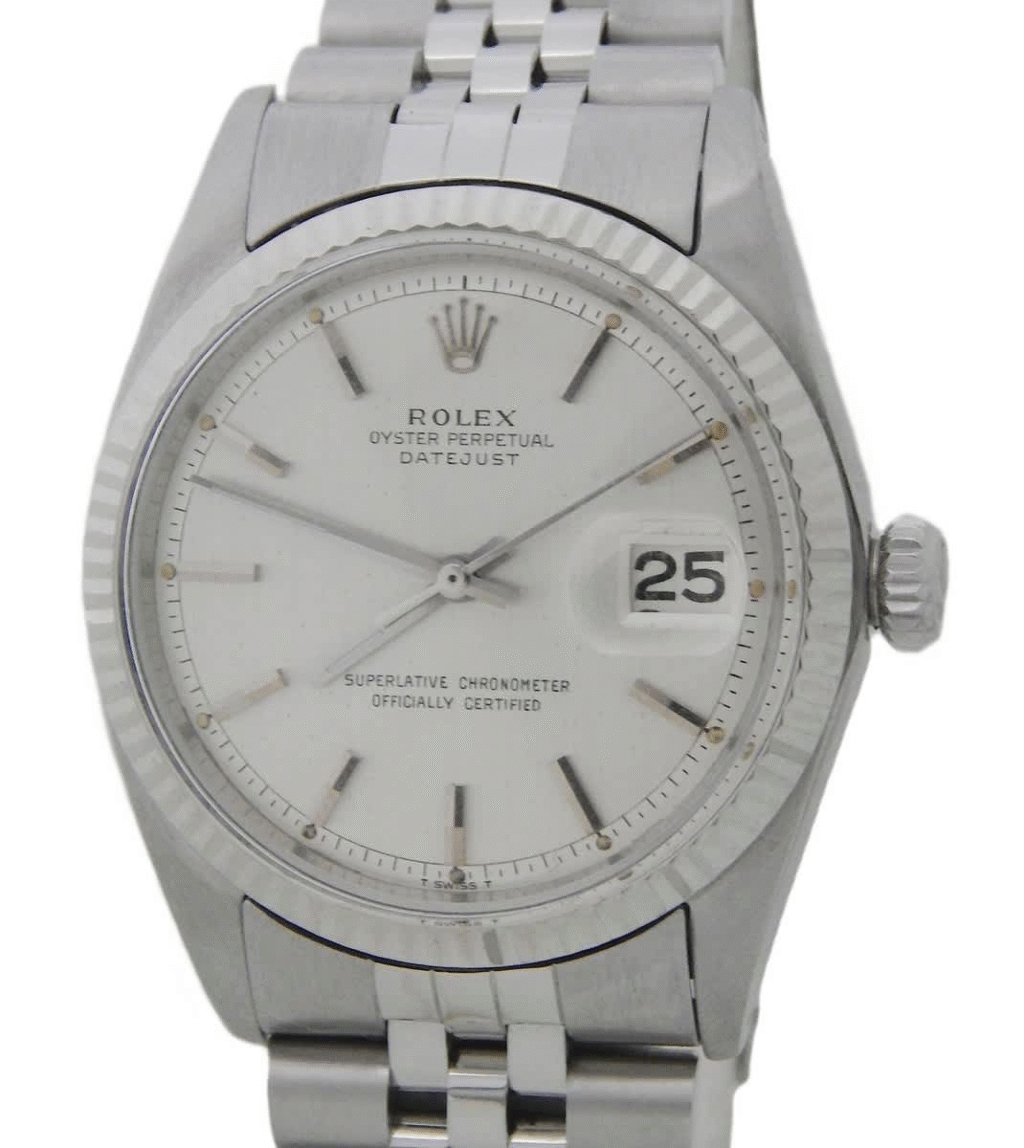
The engine-turned bezel features geometric patterns etched into the metal surface, creating subtle texture. This bezel style appeared primarily on vintage Datejust references from the 1960s–1980s and is rarely offered on modern production models. Collectors prize engine-turned bezels for their distinctiveness, but they remain niche compared to fluted or smooth options.
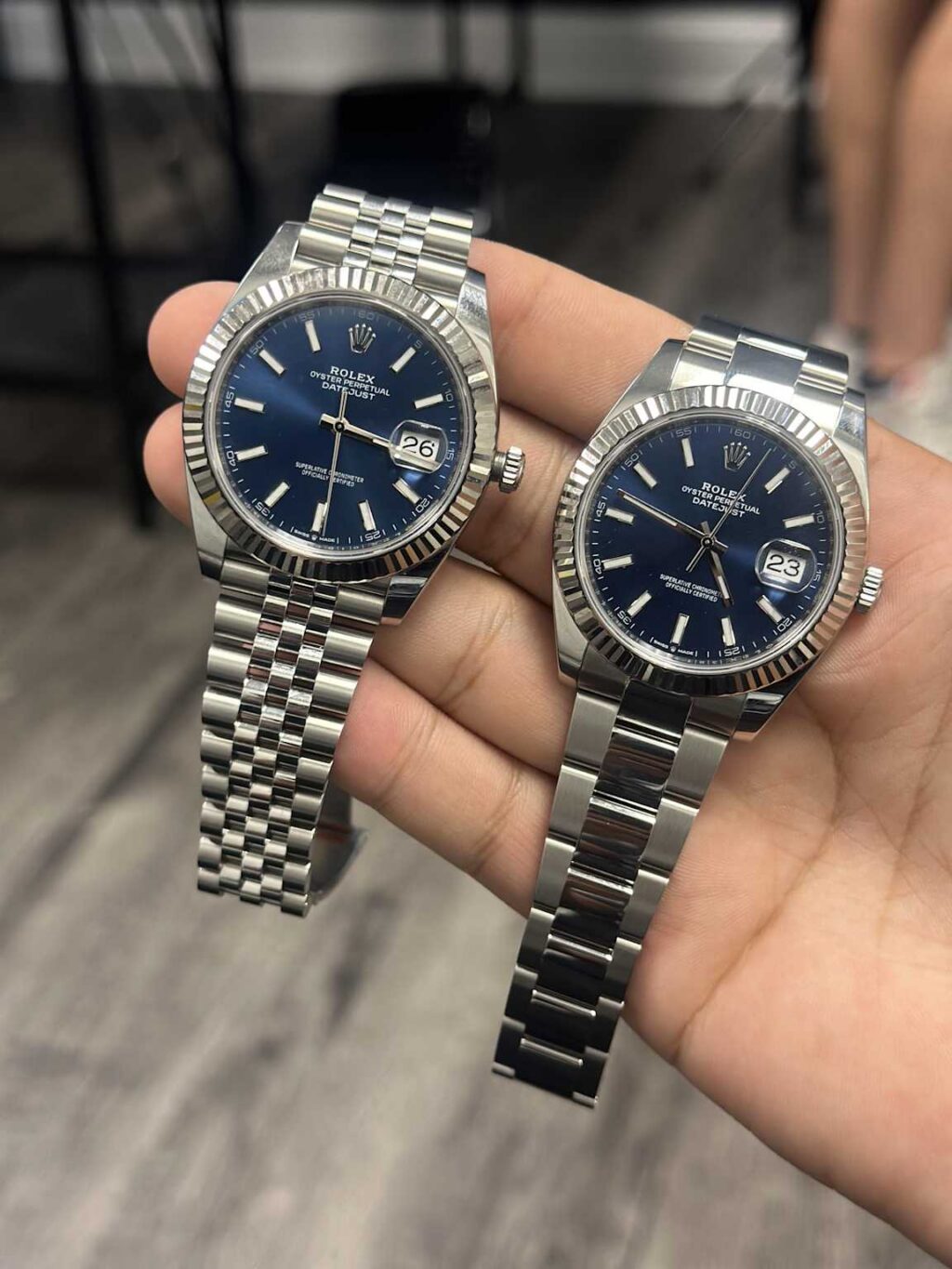
Bracelets: Jubilee vs. Oyster
The bracelet decision rivals the bezel choice in importance—it fundamentally alters how the watch feels and presents on your wrist.
Jubilee Bracelet
The five-link Jubilee bracelet was created specifically for the Datejust in 1945 and remains its most iconic pairing. The intricate interlinked design creates a dressy, elegant appearance with exceptional flexibility and comfort.
Jubilee advantages:
- Maximum flexibility—conforms to wrist movement beautifully
- Classic Datejust pairing with historical significance
- More comfortable in warm weather (better airflow)
- Dressy appearance suitable for formal occasions
- Lighter feel despite similar weight to Oyster
Jubilee considerations:
- Polished center links scratch visibly with daily wear
- Requires more frequent cleaning (dust accumulates in links)
- Perceived as less sporty than Oyster
- May feel “too dressy” for purely casual lifestyles
Oyster Bracelet
The three-link Oyster bracelet delivers sporty durability with clean, linear design. It’s the same bracelet used on Submariners and GMT-Masters, bringing athletic credibility to the dressy Datejust.
Oyster advantages:
- More durable—brushed center links hide scratches better
- Sporty, contemporary aesthetic
- Easier to clean and maintain
- Perceived as more versatile across casual to formal
- Preferred by buyers who prioritize practicality
Oyster considerations:
- Slightly less flexible than Jubilee
- Some find it less comfortable for extended wear
- Less historically “correct” for the Datejust
- May feel too casual for ultra-formal events
The verdict: If you’re buying one Datejust to wear everywhere, the Jubilee offers superior comfort and traditional elegance. If you prioritize durability and modern sportiness, the Oyster delivers. Many collectors eventually own both configurations because they genuinely feel like different watches.
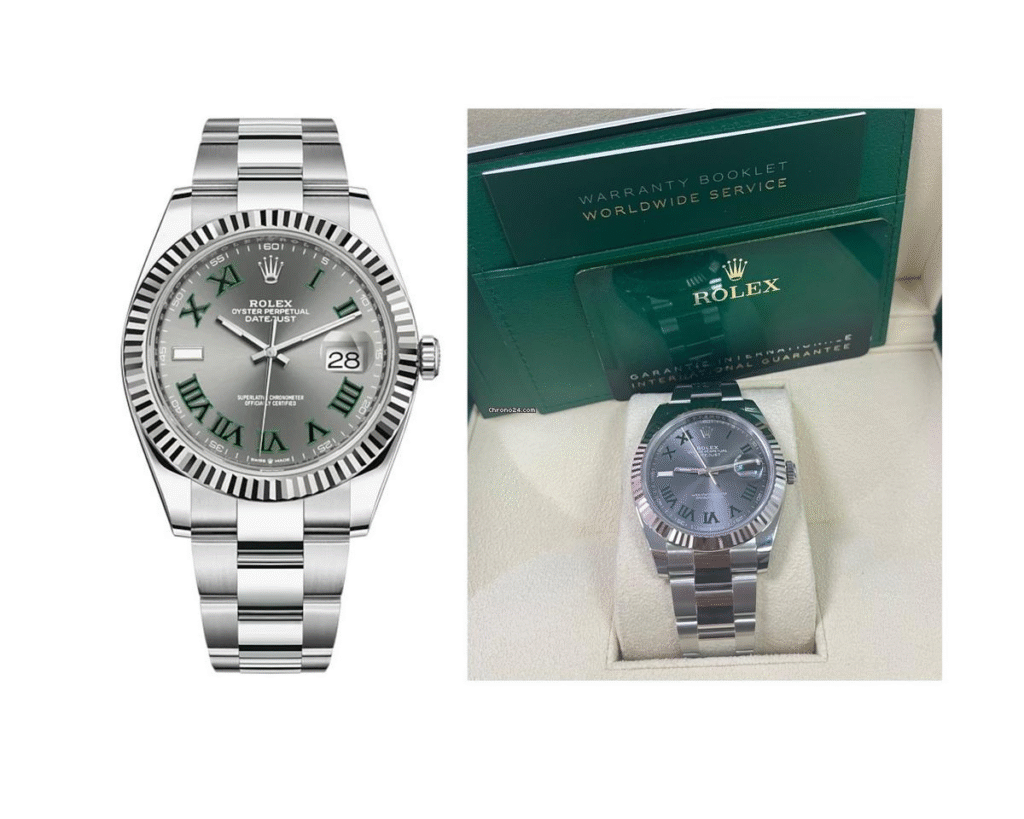
The “Wimbledon” Dial: Why the Premium?
The Wimbledon dial—officially just called the “slate dial” by Rolex—features a grey sunburst background with black Roman numerals outlined in green. Introduced to celebrate Rolex’s partnership with the Wimbledon tennis championships, this dial has become one of the most sought-after Datejust configurations in 2025.
Why Wimbledon dials command premiums:
- Scarcity: Rolex produces far fewer Wimbledon dials than standard black or blue variants, creating natural supply constraints
- Unique visual identity: The green accent on Roman numerals makes it instantly recognizable and distinctive
- Celebrity visibility: Roger Federer, Carlos Alcaraz, and other Rolex ambassadors wear Wimbledon dials prominently
- Investment potential: Wimbledon dials consistently trade 15–25% above retail on grey markets, with certain two-tone configurations reaching 30–40% premiums
Current pricing (November 2025):
- Datejust 36 Wimbledon (ref. 126234): $13,500 grey market vs. $9,050 MSRP
- Datejust 41 Wimbledon (ref. 126334): $16,200 grey market vs. $10,600 MSRP
The Wimbledon dial effectively costs you $3,000–$5,000 more than comparable standard dials when purchasing from grey market dealers due to demand exceeding supply.
Vintage vs. Modern: Understanding Reference Numbers
Rolex reference numbers evolved from four digits (pre-1980s) to five digits (1980s–2000s) to six digits (2000s–present), with each generation offering distinct characteristics.
Four-Digit References (Pre-1980s)
Example: Datejust ref. 1601, 1603
- Crystal: Acrylic (plexi)
- Bracelet: Hollow links, lighter weight
- Movement: Manual or early automatic (Caliber 1560/1570)
- Aesthetic: “Pie pan” dials with downward-sloping edges
- Lug holes: Drilled through, making strap changes easier
- Price: $4,000–$8,000 depending on condition
Four-digit Datejusts deliver authentic vintage charm with patina, but require understanding of vintage watch ownership—acrylic scratches easily, service can be expensive, and water resistance degrades over decades.
Five-Digit References (1980s–2005)
Example: Datejust ref. 16234 (36mm), 16220
- Crystal: Sapphire (scratch-resistant)
- Bracelet: Solid end links (later models)
- Movement: Caliber 3135 with quickset date
- Aesthetic: Flat dials, modern proportions
- Power reserve: 48 hours
- Price: $6,000–$10,000
Five-digit Datejusts represent the sweet spot for many collectors—modern reliability with vintage character. The ref. 16234 remains especially desirable due to its classic 36mm sizing and robust Caliber 3135 movement.
Six-Digit References (2005–Present)
Example: Datejust ref. 126234 (36mm), 126334 (41mm)
- Crystal: Sapphire with anti-reflective coating
- Bracelet: Solid links throughout, concealed clasp
- Movement: Caliber 3235 (70-hour power reserve, Chronergy escapement)
- Lume: Chromalight (blue glow, 8-hour duration)
- Accuracy: -2/+2 seconds per day
- Price: $7,700–$16,200 new
Modern six-digit Datejusts offer cutting-edge horological technology, superior accuracy, and extended power reserve—but lack the vintage charm and patina that some collectors prize.
References 126334 vs. 126234: The Critical Difference
The most common buyer confusion involves ref. 126334 vs. 126234—these look nearly identical but differ in one crucial specification: size.
- Ref. 126234: Datejust 36mm with fluted white gold bezel
- Ref. 126334: Datejust 41mm with fluted white gold bezel
Both feature:
- Steel case with white gold fluted bezel (Rolesor)
- Caliber 3235 movement
- 70-hour power reserve
- Choice of Jubilee or Oyster bracelet
- Identical dial options
The only difference is case size—yet this creates a $600–$800 price gap, with the 41mm commanding a premium.
Buyer’s Decision Framework
Step 1: Determine your budget
- $7,500–$9,000: Stainless steel with smooth bezel, standard dials
- $9,000–$11,000: Steel/white gold (Rolesor) with fluted bezel, standard dials
- $11,000–$14,000: Rolesor with fluted bezel, Wimbledon or special dials
- $14,000–$20,000: Two-tone (steel/yellow gold) or full gold models
Step 2: Choose your size
- Measure your wrist circumference
- Try both 36mm and 41mm in person if possible
- Consider lifestyle (formal vs. casual dominance)
- Remember: 36mm = classic, 41mm = contemporary
Step 3: Select bezel and bracelet
- Fluted + Jubilee = maximum traditional elegance
- Smooth + Oyster = maximum modern versatility
- Fluted + Oyster = formal presence with sporty edge
- Smooth + Jubilee = understated dressy flexibility
Step 4: Pick your dial
- Black/blue/silver = timeless, universally available
- Wimbledon = premium, investment-grade collectibility
- Other colors = personal preference, varying availability
Step 5: New vs. grey market vs. vintage
- New from AD: MSRP pricing, full warranty, 6–24 month wait
- Grey market: 10–40% premiums, immediate delivery, partial warranty
- Vintage: Variable pricing, character/patina, requires expertise
The Final Word
The Datejust remains the perfect first Rolex and the perfect only Rolex. Its configurability ensures that somewhere in the dozens of available references, there’s a Datejust that perfectly matches your wrist, your style, and your budget. The key is understanding that every choice—size, bezel, bracelet, dial—creates a genuinely different watch experience.
For most buyers in 2025, the sweet spot is a Datejust 36mm (ref. 126234) with fluted white gold bezel and Jubilee bracelet. This configuration delivers classic Datejust aesthetics, comfortable wrist presence, and versatility across every possible context—from boardrooms to beaches to black-tie events. At approximately $9,050 MSRP ($10,500–$11,500 grey market), it represents exceptional value for modern Rolex engineering wrapped in 80 years of design heritage.
Whatever configuration you choose, remember: you’re not just buying a watch. You’re buying the watch that defined what luxury wristwatches should be—and 80 years later, nothing’s done it better.