Pre-owned Rolex Datejust watches typically trade between $5,995 and $10,495 across current US market conditions, depending on reference, case material, condition, and completeness of box/papers. The Datejust commands steady resale demand but does not exhibit the dramatic premiums seen in sports models like Submariner or Daytona. Your buy decision hinges on three factors: what specific configuration fits your use case, whether you’re comfortable with the liquidity profile of steel versus gold, and how to validate authenticity and condition before committing capital.
Quick Decision Snapshot
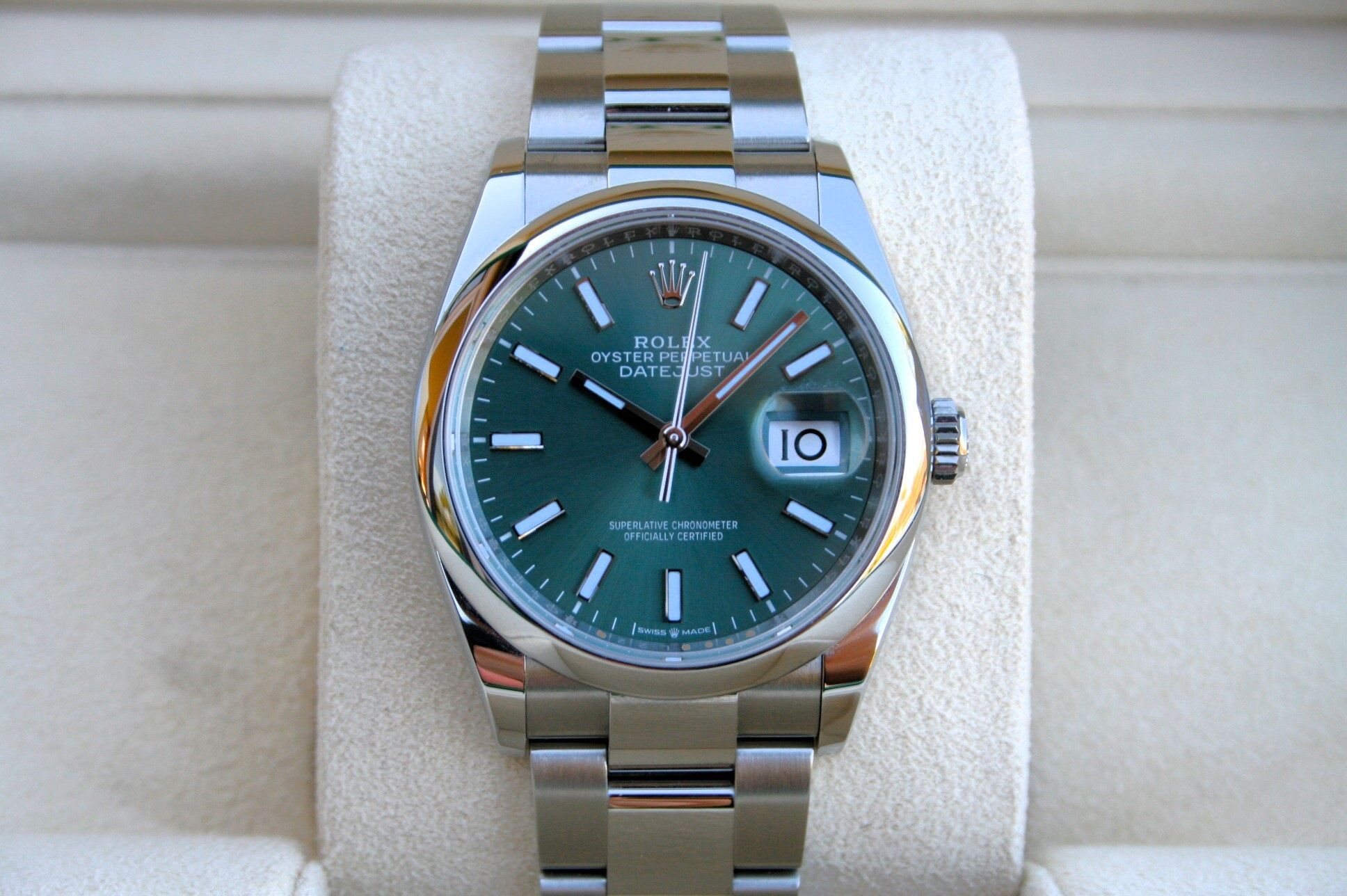
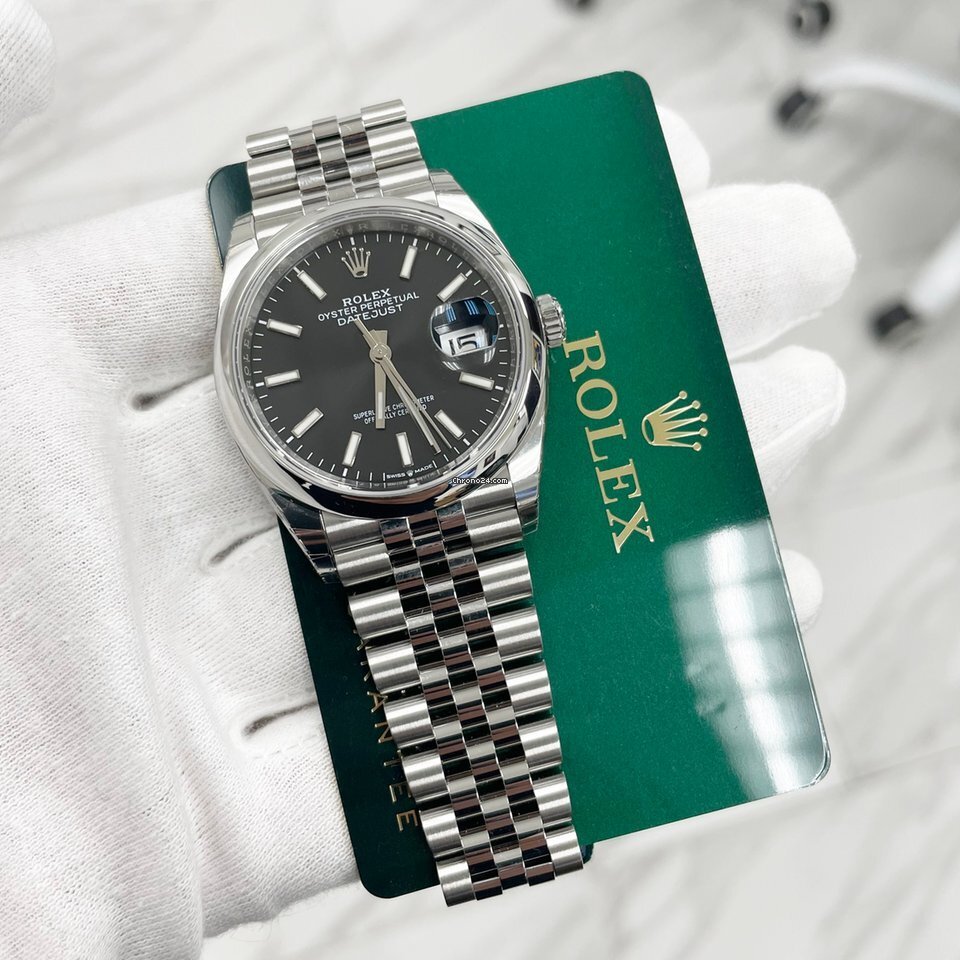
- Steel Datejust 36mm (126200) currently sits around $8,995 pre-owned; reliable entry-level positioning with strong secondary-market liquidity.
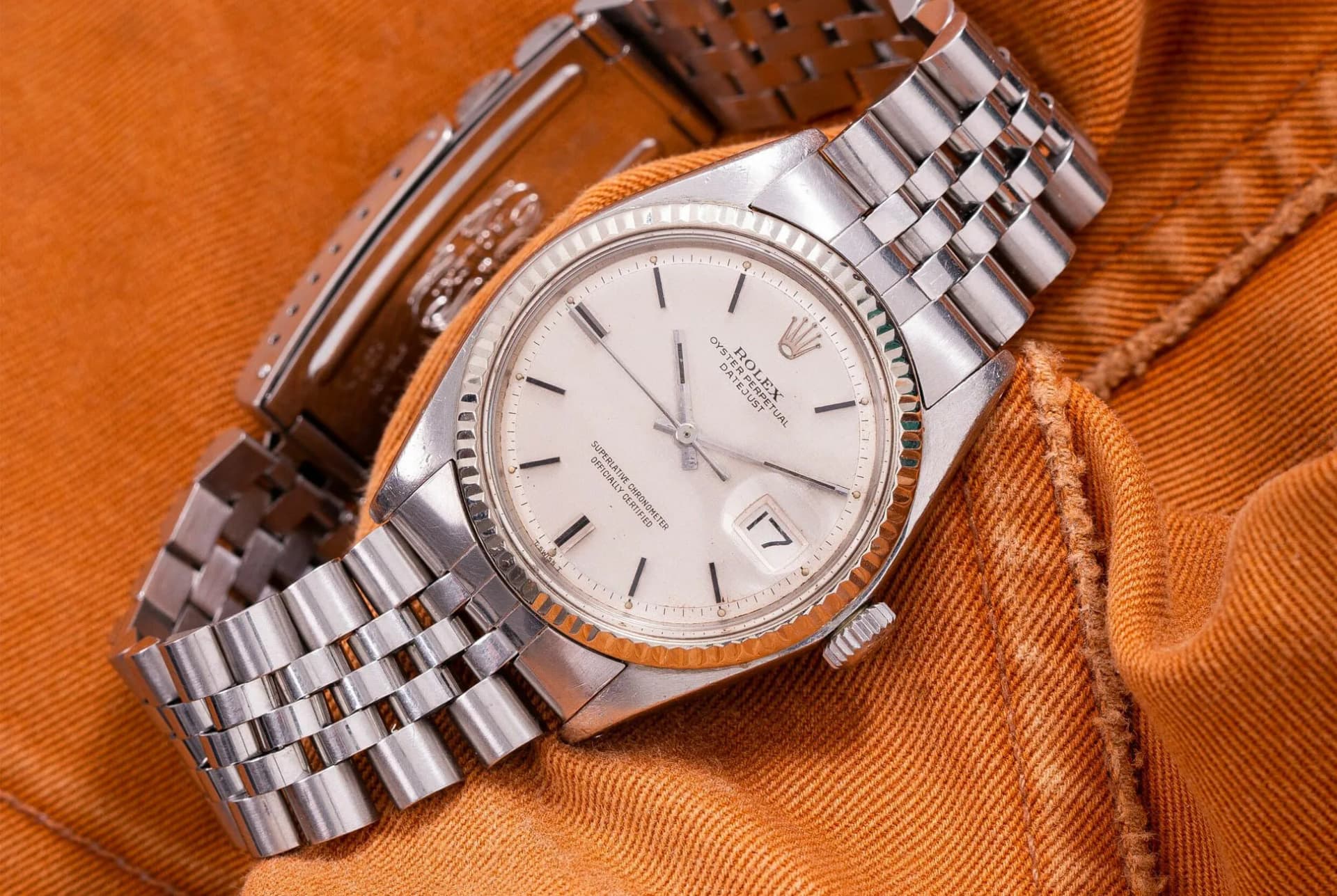
- Mid-size or vintage references (16200, 68248) run $5,995–$9,150; lower barrier to entry but more variable condition and service history.
- Datejust 41mm (126300) trades near $9,795 pre-owned; appeals to buyers seeking larger wrist presence without sports-model pricing.
- Gold Day-Date or two-tone Datejust models range $23,795–$45,495 pre-owned; premium materials create thicker spreads between buy and sell prices.
- Complete set status (original box, papers, bracelet links, service documentation) can add $500–$2,000 to asking price.
Educational market guidance only; not financial advice. Pre-owned pricing varies by dealer, condition grade, and demand cycle.
What Actually Drives Value and Demand
The Datejust holds value through steady brand recognition and broad appeal—not speculation. Unlike Daytona or steel sports models, Datejust resale relies on everyday wearability, classic styling, and the watch’s 70-year heritage rather than artificial scarcity. This stability is a feature for practical buyers but means you should not expect 15–20% annual appreciation as with hot-ticket references.
Reality check: The Rolex Datejust resale market reflects predictable wear patterns and service expectations. Over a decade, comparable growth averages 3.3% annually when annualized from 1994 baseline data. This is above-average for consumer goods but should never be framed as an investment guarantee. Condition, case material (steel vs. gold), dial variant (especially special colors), and provenance all shift individual value significantly.
Example: A steel Datejust 126200 in excellent condition with box and papers may command $9,500–$10,200 on secondary platforms today. The same reference with signs of heavy use and no original papers could trade $7,500–$8,500—a $1,500–$1,700 gap driven entirely by condition and completeness, not model rarity.
Demand drivers on the US market include: – Entry-level positioning for first-time luxury watch buyers – Corporate/professional setting appropriateness across industries – Predictable service ecosystem (every Rolex dealer can service) – Historical track record of steady (not explosive) value retention

Category-Specific Evaluation Framework
When evaluating a pre-owned Datejust, use this five-point checklist:
- Reference number and production era: Confirm the reference (e.g., 126200, 116200, 16200) against Rolex’s historical timeline. Older references (16200, 68248) carry vintage pricing; newer ones (126200, 126300) align with current market comps.
- Case material and condition: Steel (904L stainless) shows wear visibility more than gold; inspect for polishing severity, bezel sharpness, and crown/case-back logo depth. Gold two-tone or solid gold shows fewer scratches but costs 2–3x more to refinish.
- Movement and service history: Confirm when last serviced (typically every 7–10 years for Rolex). A recent service adds $500–$1,200 to value; a watch overdue for service could mean $1,200–$2,500 future cost for you.
- Box, papers, and set completeness: Original boxes, warranty cards, service records, and intact bracelet with all links increase appeal to future resellers. Missing papers reduces resale liquidity by 8–15%.
- Dial condition and dial variant: Standard dials (black, white, champagne) hold value uniformly; special colors (green, silver ombré) command premiums if authentic but narrow the buyer pool.
Use this step-by-step intake process to narrow candidates:
- Pull 3–5 active listings from major platforms matching your budget and size preference.
- Screenshot condition descriptions, pricing, and photos; note whether box/papers are included.
- Cross-reference each reference number on Rolex’s timeline (e.g., 126200 launched 2020, 116200 produced 2000–2009).
- Calculate the service gap: if no service date provided, assume $1,500 future cost in your budget math.
- Reach out to seller with questions on original owner, ownership duration, and any known service or repair history.
- Request high-resolution photos of dial, case sides, crown, and bracelet clasp (these reveal condition truth).
- If serious, arrange professional authentication before payment—typically $150–$300 and 48 hours.
Pricing Mechanics and Trade-Offs
| Reference | Case Material | Typical Pre-Owned Range (US) | Liquidity Profile | Service Cost (Est.) |
|---|---|---|---|---|
| 16200 | Steel | $5,995–$7,500 | Moderate (vintage collector interest) | $1,200–$1,800 |
| 116200 | Steel | $6,895–$8,500 | High (popular entry era) | $1,200–$1,600 |
| 126200 | Steel | $8,995–$10,200 | Very High (current reference) | $1,200–$1,500 |
| 126300 (41mm) | Steel | $9,795–$11,000 | Very High (modern size preference) | $1,200–$1,500 |
| 228238 (gold) | Yellow Gold | $42,950–$48,500 | Moderate-to-High (depends on dial) | $1,500–$2,500 |
The speed-versus-margin equation: Sellers who want a transaction within 7–14 days typically price 8–12% below current market comps to attract immediate buyers. Those willing to wait 45–90 days can hold firm on higher pricing, betting on demand cycles. As a buyer, this means you can negotiate down on “must-sell” watches or wait for better comps if you’re flexible on timeline.
Example: A steel Datejust 126200 listed at $10,495 in November may fall to $9,800–$10,000 by mid-December if no offers emerge. The seller's urgency (year-end cash flow, estate sale, dealer lot turnover) often determines price elasticity more than watch condition.
Material-driven trade-offs: – Steel: Lower entry cost ($5,995–$10,495), easier to polish/restore, faster resale. – Gold (yellow, white, rose): Higher sticker ($23,795+), slower resale, higher insurance cost, more appealing in formal settings. – Two-tone: Middle ground on price; watch resale more sensitive to gold market fluctuations.
Risk Control and Authentication Workflow
Authentication is non-negotiable. The secondary Rolex market includes counterfeits, misrepresented service histories, and refinished cases. Here’s how to verify before you buy:
- Serial number and case-back logo: Use Rolex’s official reference database or dealer verification. Authentic Datejusts show correctly proportioned crown logo, proper engraving depth, and serial consistency with claimed production year.
- Movement photo and manual wind test: Request video of seller hand-winding the watch and observing rotor spin. Movement engravings, balance wheel quality, and escapement geometry are hard to counterfeit at scale.
- Lume quality and dial printing: Genuine Rolex uses specific lume compounds (newer = brighter white glow); dial text is laser-printed with zero ink bleeding. Poor print quality or uneven lume indicates red flag.
- Weight and bracelet solidity: Counterfeit bracelets often feel light or rattle. A genuine Datejust bracelet is solid, heavy, and end-links fit snugly with no play.
- Documentation chain: Verify seller can provide original box, warranty card, and any service records. Mismatches (e.g., warranty card dated after claimed purchase year) warrant follow-up.
Red-flag signals that demand professional inspection: – Seller cannot produce photos of movement or case-back serial. – Asking price is 20%+ below comparable listings without clear reason (recent major service, damage history, non-original parts). – Dial printing appears fuzzy or uneven under magnification. – Seller pressures quick decision or discourages inspection by independent watchmaker. – Bracelet has soft solder joints (should be solid welds) or end-links rattle.
Action Plan by Intent (Buy)
| Buyer Profile | Best Entry Point | Timeline | Budget Allocation | Recommended Next Step |
|---|---|---|---|---|
| First-time buyer | Steel 126200, excellent condition, with papers | 30–60 days | $9,500 total; $8,500 watch + $1,000 buffer (inspection, setup, contingency) | Sourcing request + authentication appointment |
| Upgrader from entry model | 41mm 126300 or two-tone 36mm | 45–90 days | $10,500–$12,000 total | Direct inventory review + in-person viewing if NYC-local |
| Collector (specific reference) | Vintage 16200 or 68248, documented history | 60–120 days | $6,500–$8,500 total | Condition assessment + provenance verification |
| Gold-segment buyer | Yellow or white gold Day-Date/Datejust | 90–180 days | $35,000–$50,000 total | Market comp analysis + consultation call |
Your buy-side action sequence:
- Define your must-haves: case size (36mm vs. 41mm), case material (steel vs. gold), and budget ceiling.
- Set a condition floor: decide if you accept refinished cases, service-overdue watches, or require full documentation.
- Search active inventory across 3–5 platforms; screenshot all candidates with pricing and photos.
- Prioritize watches with clear service history or recent Rolex service documentation.
- Contact sellers of your top 2–3 candidates; ask for video, detailed condition notes, and authentication references.
- Request professional authentication by a trusted watchmaker or dealer (48 hours, typically $150–$300).
- Negotiate final price; expect 8–15% room depending on seller urgency and market comps at that moment.
- Arrange secure payment (escrow strongly recommended for four-figure transactions) and insured shipping.
Reality check: Buying pre-owned Rolex online requires patience and due diligence. Do not rush. A watch discovered to be counterfeit or misrepresented after purchase is a legal/financial nightmare with limited recourse outside escrow or credit-card chargeback. Spend an extra week verifying; the deal that seems urgent is often the deal with hidden issues.
Example: A buyer finds a steel Datejust 126200 listed at $9,200—$800 below market. Seller claims "estate sale, urgent liquidation." After authentication, the movement is revealed as a partial replica with non-Rolex parts. Professional re-service would cost $2,000+ to source genuine components. The buyer's "deal" became a $2,800 loss. Slow down; verify; protect your capital.
What We Need to Move Fast
If you’re ready to move on a pre-owned Datejust, gather this intake information so we can prioritize your search and respond within 4–8 hours:
- Reference and size preference: 126200, 116200, 126300, or specific reference you’re targeting.
- Case material: Stainless steel, yellow/white/rose gold, or two-tone.
- Condition acceptance level: Excellent/like-new only, good with light scratches, or any condition.
- Box and papers: Critical, preferred, or not required.
- Budget range: Minimum and maximum you’re prepared to spend.
- Timeline: Days to weeks before decision needed.
- Location: Your US state/city for logistics and in-person viewing logistics if applicable.
Fastest contact channels: – Call/Text: Reach our US team for same-day lead intake. – WhatsApp: Share photos and condition details in real-time conversation. – Request quote: Submit intake form with watch details; we return comparable pricing and sourcing timeline within 4 hours. – Book appointment: Schedule 20-minute consultation to discuss market positioning, negotiation strategy, and authentication process.
Typical response window: 4–8 hours on weekdays, 24 hours on weekends. Lead routing to our buy-side team begins immediately upon intake submission.
FAQ
1. How much should I expect to pay for a pre-owned Rolex Datejust in 2026 on the US market? Steel Datejust 36mm models range $5,995–$10,200 depending on reference age and condition. The 126200 (current reference) clusters around $8,995–$10,200 for excellent examples with papers. Vintage 16200 and 68248 models run $5,995–$7,500.
2. Is a pre-owned Datejust a good investment, or should I buy new? Datejust resale holds value steadily but does not appreciate significantly; long-term annualized gain averages 3.3% historically. Buy pre-owned if you want entry-level pricing or access to vintage/discontinued references. Buy new only if you value warranty and immediate brand-new condition—retail premiums ($14,000+) are rarely recovered on resale.
3. What’s the liquidity difference between steel Datejust and gold Datejust? Steel Datejust sells faster and with tighter price spreads (±$300–$500 range). Gold Day-Date or two-tone models take longer to move and have wider ask-bid spreads ($2,000–$5,000), especially if they’re non-standard dial colors. If you might resell within 2–3 years, steel is safer.
4. How do I spot a counterfeit pre-owned Datejust without a professional? Check movement engravings (fuzzy printing is a red flag), dial text clarity (laser-printed, zero ink bleed), case-back serial alignment with production year, and bracelet weight/solidity. Counterfeits struggle with movement authenticity and lume quality. When in doubt, pay $150–$300 for professional authentication—it’s insurance, not luxury.
5. Does the original Rolex box and papers really add $1,000+ to the price? Yes, typically $500–$2,000 depending on condition and completeness. Box, warranty card, and service history increase resale appeal and buyer confidence. Papers especially reduce risk perception for secondary buyers. Missing papers doesn’t make a watch inauthentic, but it does compress valuation by 8–15%.
6. What’s the difference between Datejust 36mm and 41mm on resale value? The 41mm (126300) is newer and appeals to buyers preferring larger wrist presence; it trades around $9,795–$11,000 pre-owned. The 36mm (126200) is more classic-proportioned and also liquid at $8,995–$10,200. Resale velocity is similar; choice is personal wrist size preference, not valuation strategy.
7. Should I buy a pre-owned Datejust that’s “overdue” for service? Only if the asking price reflects the service cost ($1,200–$1,800 for Rolex service) and you’re confident the movement is sound. Budget-conscious buyers can negotiate 10–20% off if you commit to immediate Rolex service. Avoid if the watch hasn’t been serviced in 12+ years and movement sounds rough.
8. How do I decide between a Datejust and a Datejust II or Datejust 41? Datejust 36/41 are contemporary references (post-2020); Datejust II (116300) is older. Modern references have updated movements and styling; vintage commands lower entry prices but may need service soon. Choose based on wrist size and whether you value warranty/modernity versus affordability.
9. What happens if I buy a pre-owned Datejust and discover it’s been refinished? A refinished case loses $1,000–$3,000 in value immediately. Rolex refinishing service costs $500–$800 but reduces resale appeal compared to original finish. If not disclosed by the seller, this is grounds for return/refund under most platform buyer-protection policies. Always ask: “Is this original finish or refinished?”
10. Can I negotiate the price of a pre-owned Datejust, or is the asking price fixed? Secondary market pricing is negotiable, especially if the seller has held the watch 60+ days without offers. Expect 8–15% room depending on market conditions and urgency. Steel models are harder to negotiate (tight spreads, many buyers); gold models offer more flexibility. Make a respectful offer 10% below ask and see if seller engages.
Atlas Luxury content is built from active US market monitoring, authentication workflows, and transaction-level buyer/seller patterns. This guide reflects Q1 2026 market conditions and typical pricing across major secondary platforms and independent dealers.
Your next step: gather the intake details above and reach out via call, text, WhatsApp, or quote request. We’ll match you to available inventory, walk you through authentication, and close your purchase within 30–60 days depending on configuration complexity and your timeline flexibility. No obligation to buy; we’re here to clarify your decision and protect your capital.