
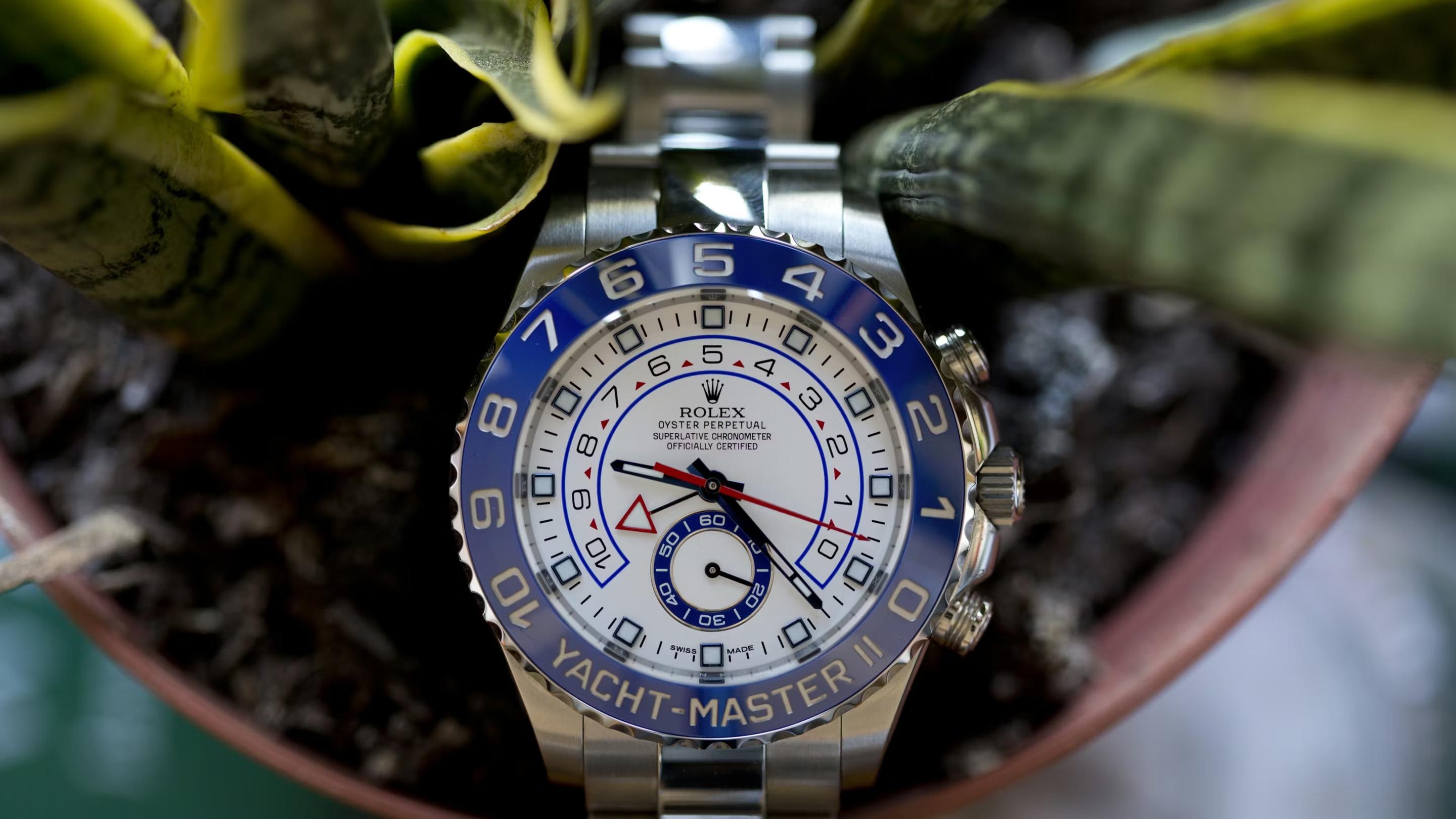
Condition and authenticity are the two pillars that determine whether a pre-owned Rolex Yacht-Master holds value, commands buyer confidence, and resells quickly in the US market. A worn watch with full service history and original papers typically outpaces a pristine case with questionable provenance, while counterfeit or over-polished examples represent total loss risk. This guide walks you through the specific evaluation steps, market mechanics, and intake workflows you’ll need to move forward confidently—whether buying, selling, or appraising.
Quick Decision Snapshot
Before diving into technical detail, here’s what separates a solid Yacht-Master decision from a risky one:
- Materials matter: Verify case, bracelet, and bezel are genuine Rolex 904L stainless steel, Everose, or solid gold—not plating or cheap alloys.
- Sapphire crystal must be clear and scratch-resistant: Inspect for cloudiness, deep scratches, and anti-reflective blue tint under light; fakes often use acrylic or mineral glass.
- Crown should screw down smoothly and tightly: Loose, non-screwing, or misaligned crowns are immediate red flags for counterfeits.
- Water resistance requires proof: Have pressure-tested by a qualified watchmaker if purchased from non-certified channels.
- Service history and papers are critical: Original box, warranty card, and documented maintenance preserve 18–30% more resale value than unpapered watches.
- Pre-owned range spans $9,000–$50,000+: Exact pricing depends on size, material, condition, and model variant; recent pre-owned typically $15,000–$35,000.
- Condition assessment trumps age: A heavily worn but authentic and serviced Yacht-Master holds more value than a light-use model with unknown provenance.
This guidance is educational market intelligence only, not financial or investment advice.
What Actually Drives Value and Demand
The Yacht-Master resale market rewards service records and originality far more than mere cosmetic condition, because Rolex builds durability into the design—a worn but well-maintained watch is seen as proof of reliability, not a liability. Yet rising demand for steel models with specific dial variants (particularly rhodium dial) has driven secondary-market prices to 30% premiums over MSRP.
Reality check: Pre-owned Yacht-Masters in excellent, unworn condition are “almost impossible to find” on secondary markets. Most available stock carries visible use—scratches on the bezel and bracelet, faint marks on the dial. Buyers chasing “mint” examples often overpay or encounter counterfeits. Accept typical use wear as part of the market reality.
The Yacht-Master competes across three distinct buyer segments: nautical professionals seeking functional durability, collectors pursuing specific reference numbers and dial combinations, and secondary-market traders seeking hedge value. Each segment weights condition, service history, and variant preference differently, which creates pricing volatility.
Example: A stainless steel Yacht-Master 40 (Ref. 116621) with full service records and original box typically commands $18,000–$22,000. The same watch without papers but visually identical might trade at $15,000–$17,000—a 15% discount purely for provenance gap. A watch with recent questionable service work, missing crown guard, or refinished dial can drop another 20–30%.
Category-Specific Evaluation Framework
Watches demand reference-level scrutiny: movement integrity, case authenticity, dial consistency, and set completeness drive both security and value retention.
Core Yacht-Master authentication checkpoints:
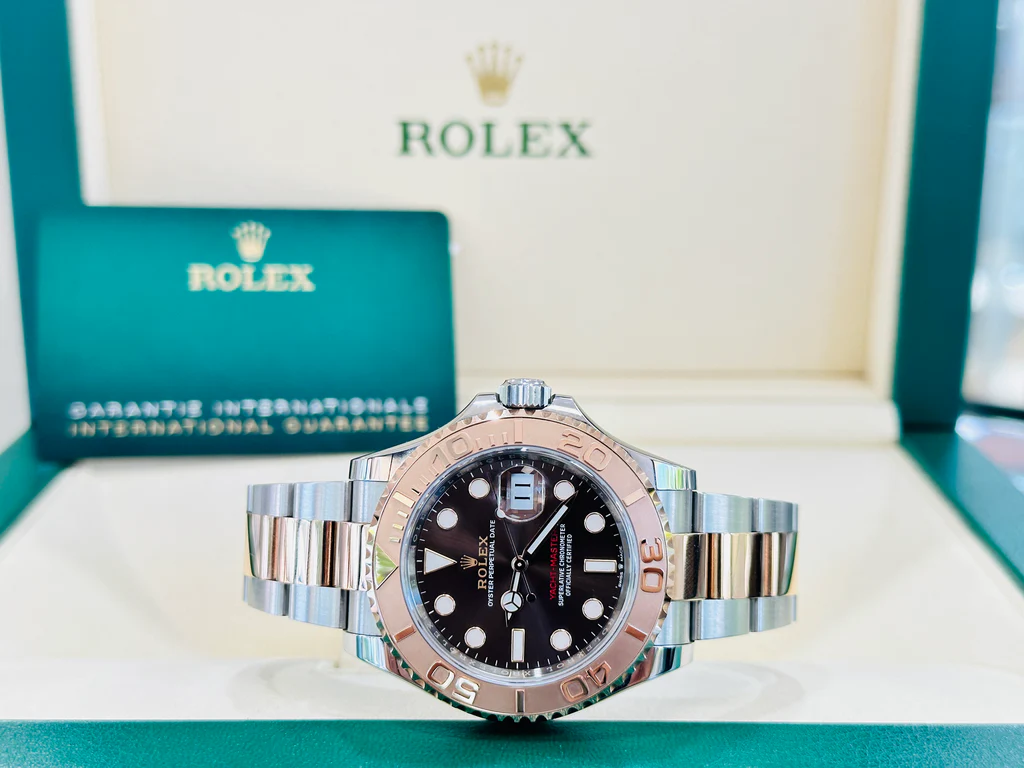
- Case and materials: Rolex Yacht-Masters are produced in stainless steel (904L), Rolesium (steel + platinum), yellow gold, white gold, and rose gold. Case finishing should be flawless with no rough edges. Counterfeits often use inferior alloys or thin plating that discolors within months.
- Bezel construction: The 60-minute timing bezel should be platinum or solid gold (not plated). Weight it in hand—authentic bezels feel substantial; fakes feel hollow or light.
- Sapphire crystal and anti-reflective coating: Real Rolex sapphire is scratch-resistant and displays a subtle blue tint when viewed at specific angles due to the anti-reflective treatment. Fake or mineral glass alternatives lack this tint and scratch easily.
- Crown screw-down mechanism: The crown must screw down smoothly, tightly, and align perfectly with the case lug. This is the watch’s water-integrity seal; loose or non-functioning crowns fail the authenticity test immediately.
- Dial and printing: Font, marker spacing, and printing quality must match reference images from official Rolex documentation. Misaligned text, blurry printing, or incorrect lume color indicate counterfeiting.
- Movement and serial verification: Rolex Yacht-Masters use Caliber 3135 or 3235 automatic movements. Serial numbers must align with production dates; use Rolex serial lookup databases or hire a certified watchmaker for verification.
- Service history and documentation: Original warranty card, service receipts, and box provenance significantly boost authenticity confidence and resale value.
Condition assessment (light to heavy use):
| Condition Grade | Bezel/Crystal | Bracelet/Links | Dial | Typical Age/Use | Est. Value Impact |
|---|---|---|---|---|---|
| Unworn | Pristine, no scratches | All original, perfect seating | Perfect printing, no marks | 0–5 years, minimal wear | +0% (baseline, rare) |
| Light | Minor scratches visible only under direct light | Minor stretch, all links present | Faint marks, lume bright | 3–7 years, occasional use | −5% to −10% |
| Good | Visible scratches, bezel turn smooth | Light stretch, all links tight | Light discoloration, markers sharp | 7–15 years, regular use | −15% to −25% |
| Heavy | Deep scratches, bezel slightly gritty | Moderate stretch, minimal links missing | Visible discoloration, lume faded | 15+ years, hard use | −30% to −50% |
What documentation tells you:
- Original papers (warranty card, instruction manual): Highest provenance signal; watch cost typically increases 15–20%.
- Service records: Documented Rolex or certified watchmaker servicing every 10 years supports authenticity and functionality claims.
- Box and outer packaging: Presence of original box adds 8–12% resale value; outer sleeve or authenticity cards add credibility.
- Missing elements: No papers, no box, no service history triggers deeper authentication review and 20–30% value discount.
Pricing Mechanics and Trade-Offs
Real Yacht-Master pricing reflects three competing forces: material cost (steel vs. gold), variant rarity (dial color, reference number), and condition-plus-provenance bundle.
| Reference | Material | MSRP (Approx.) | Pre-Owned Market Price | Premium Over MSRP | Typical Condition |
|---|---|---|---|---|---|
| Ref. 116621 (40mm) | Steel + Platinum | $12,300 | $16,000–$22,000 | +30% rhodium dial | Good to excellent |
| Ref. 126622 (40mm) | Steel + Platinum | ~$13,500 | $14,500–$18,500 | +18% blue dial | Good to excellent |
| Yacht-Master 42 (Ref. 226659) | White Gold | $31,800 | $28,000–$38,000 | Varies by condition | Light to excellent |
| Older models (2000s–2010s) | Steel/Gold | $8,000–$14,000 | $9,000–$17,000 | Condition-dependent | Heavy use typical |
Reality check: Secondary-market pricing is fluid and depends on demand, inventory levels, and buyer location. A steel Yacht-Master commanding $20,000 in New York might trade at $18,500 in lower-population regions due to local buyer scarcity. Always validate pricing against multiple dealers and platforms before committing.
Example: You source a Ref. 116621 (steel, rhodium dial) in good condition with box and papers. MSRP $12,300; current secondary market $19,000–$21,000. Your cost is $16,500. After a $400 service inspection, you list at $19,200. Buyer demand for rhodium dials is high, so you move it in 6–8 weeks. If you skipped service verification and listed at $18,200 without documentation, it sits 12+ weeks and drops to $17,200—proving that transparency and maintenance investment pay.

Risk Control and Authentication Workflow
Counterfeit Rolex production is sophisticated; visual inspection alone is insufficient. A systematic multi-point verification process reduces fraud exposure by 95%+.
Authentication and risk gatekeeping:
- Purchase only from certified channels or verified dealers: Gray-market platforms and unknown resellers carry highest counterfeit risk. Certified dealer networks, established secondary marketplaces, and watch-specialist forums provide recourse and higher authenticity confidence.
- Request service documentation and provenance: Seller should provide original warranty card, service history, and photographic proof of original packaging. Reluctance or missing paperwork signals risk.
- Hire a certified watchmaker for technical verification: Crown functionality, screw-down mechanics, movement inspection, and water-resistance pressure test cost $75–$150 but eliminate ~99% of counterfeit risk.
- Verify serial number and reference alignment: Use official Rolex databases or a trusted watchmaker to confirm production year and model specifications match the physical watch.
- Pressure-test water resistance: Fakes often fail at 20–30 meters; genuine Yacht-Masters hold 100 meters. Professional testing confirms seal integrity.
- Document all findings in writing: Keep service reports, photos of papers, and authentication notes. This protects resale value and buyer confidence downstream.
Action Plan by Intent (Sell / Buy / Source / Appraise)
Your next steps depend on whether you’re buying, selling, sourcing inventory, or obtaining an appraisal for insurance or estate purposes.
| Buyer Intent | Primary Goal | Key Workflow | Timeline | Success Metrics |
|---|---|---|---|---|
| Buy (personal) | Acquire authentic watch at fair market price | Verify authenticity → negotiate price → service inspection → purchase | 2–4 weeks | Authentication confirmed, warranty/papers secured, clear title |
| Buy (investor) | Acquire promising variant for value retention or appreciation | Market research → reference rarity check → provenance deep-dive → offer | 3–6 weeks | Papers intact, strong service history, documented condition baseline |
| Sell | Move inventory quickly at competitive price | Condition audit → full service → documentation package → listing | 1–3 weeks prep, 6–10 weeks sell | Fast transaction, buyer confidence, minimal price negotiation |
| Source (dealer) | Locate, authenticate, and acquire for resale margin | Market scanning → initial phone/video review → in-person inspection → offer | 1–4 weeks | Authentic, clean title, margin justified, service-ready |
| Appraise | Establish value for insurance, estate, or tax purposes | Authentication + condition documentation + comparable sales research | 1–2 weeks | Written appraisal report, photographic evidence, comparable data |
Numbered workflow for buying a pre-owned Yacht-Master:
- Identify your reference and variant: Decide whether you want a 40mm steel model, a 42mm, or a precious-metal piece. Research the specific reference number and market-typical pricing range ($9,000–$50,000+).
- Conduct vendor due diligence: Source only from authorized dealers, established secondary-market platforms, or verified collector networks. Check dealer history, customer reviews, and return policies.
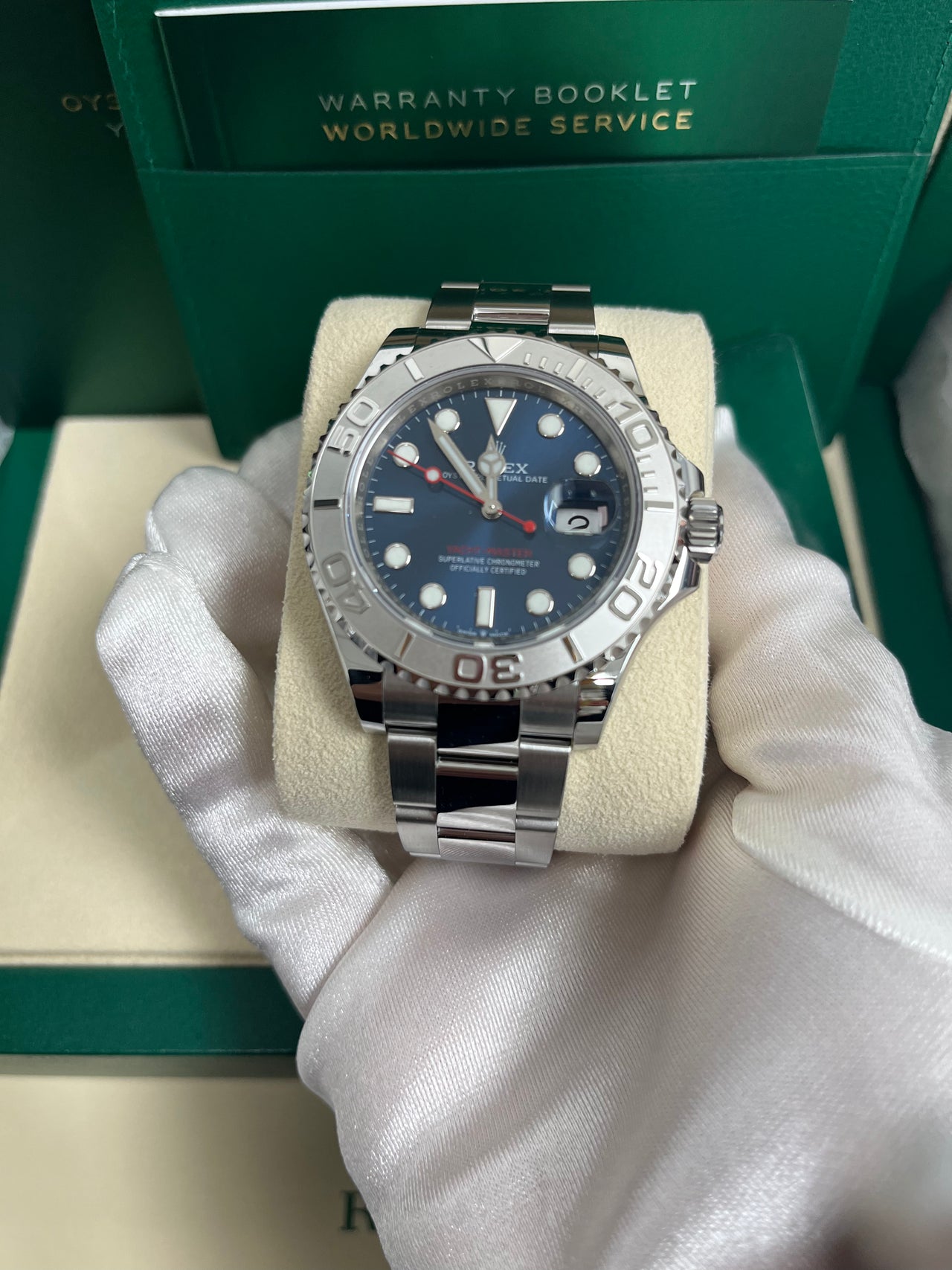
- Request full documentation package: Ask seller to provide original warranty card, box, instruction manual, any service receipts, and high-resolution photos of all sides, the dial, crown, and bracelet.
- Ask critical intake questions: How was the watch acquired? What is its service history? Are there any notable repairs or refinishing? How long has current owner had it? Ask for phone contact if possible.
- Conduct video or phone walkthrough: Request the seller to show the crown screw-down action, sapphire crystal clarity, bezel rotation, and dial printing under good lighting. Listen for mechanical sounds and watch for hesitation.
- Negotiate price and secure terms: Use comparable market data to support an offer. Clarify return policy (7–14 days typical for pre-owned); confirm seller will cover authenticity discrepancies.
- Hire a certified watchmaker for inspection and pressure test: Before finalizing payment, have an independent professional verify authenticity, check movement, test water resistance, and confirm service-readiness. Cost $100–$200; protects you against hidden defects.
- Finalize purchase with clear documentation: Obtain written invoice with model reference, serial number, condition notes, service history summary, and proof of authenticity. Request seller sign a provenance statement.
Numbered workflow for selling a Yacht-Master (appraisal intent):
- Document current condition with photos and notes: Photograph all angles, the dial, crown, and bracelet under natural light. Note visible wear, scratches, and any service marks. Keep photos organized and timestamped.
- Compile full provenance package: Gather original box, warranty card, service receipts, instruction manual, and any documentation from prior owners. Organize chronologically.
- Conduct a service audit: Have a certified watchmaker review movement, test water resistance, and flag any needed maintenance. Budget $300–$800 for full service if not recently done; this investment typically returns 120–140% in resale value.
- Research comparable recent sales: Use secondary-market platforms, dealer sites, and watch forums to identify recent sales of the same reference, material, and condition. Document 3–5 comparable transactions and their prices.
- Establish realistic asking price: Price at the median of recent comparables, adjusted for your watch’s specific condition and provenance strength. Overpricing delays sale; underpricing leaves money on table.
- Prepare a detailed listing or sales summary: Include all authentication details, service history, condition grade, and clear photos. Be transparent about any refinishing, damage history, or notable repairs.
- Respond promptly to buyer inquiries: Be ready to answer questions about age, accuracy, ownership history, and specific condition concerns. Transparency builds buyer confidence and accelerates closing.
- Negotiate with confidence using documentation: When buyers make offers, reference your comparable data and condition audit. If offers are significantly below market, hold firm or adjust expectations.
FAQ
Q: How can I tell if my Yacht-Master’s sapphire crystal is real or fake? A: Authentic Rolex sapphire is scratch-resistant and displays a subtle blue anti-reflective tint when viewed at specific angles under light. Fakes use acrylic or mineral glass that scratch easily and lack the blue tint. Hold the crystal at a 45-degree angle toward a light source; real sapphire shows a distinct blue hue.
Q: What’s the typical cost of servicing a pre-owned Yacht-Master? A: Full Rolex factory service runs $500–$800 and includes cleaning, oiling, and movement inspection; Rolex recommends service every 10 years. Independent certified watchmakers typically charge $300–$600 for equivalent work. Service extends movement life and restores accuracy.
Q: Do I need original papers to sell a Yacht-Master? A: No, but you’ll face a 15–20% resale discount without them. Papers significantly improve buyer confidence and justification for higher pricing. If missing, transparency about the watch’s history and recent service records partially offset the gap.
Q: How much value does a recent service add to a pre-owned Yacht-Master? A: A documented service by a reputable watchmaker or Rolex adds 8–15% to perceived value because buyers gain confidence in functionality and accuracy. The cost typically returns 120–140% in faster sale or higher price realization.
Q: What is “Rolesium” and why does it matter for authenticity? A: Rolesium is Rolex’s proprietary alloy combining stainless steel with platinum, exclusive to Rolex. It’s used for the bezel in select Yacht-Master models. Counterfeits often substitute cheaper alloys or thin platinum plating, which discolors over time. Authentic Rolesium maintains shine and weight.
Q: How do I verify a Yacht-Master’s serial number? A: Rolex serial numbers are located on the case between the lugs at 6 o’clock (inside the case back area on some models). Cross-reference the number against Rolex serial databases or hire a certified watchmaker to confirm production year and model alignment. Serial verification is critical for spotting counterfeits.
Q: Why do some Yacht-Master 40 references trade at higher prices than others? A: Dial variant rarity and collector demand drive pricing differences. The Ref. 116621 with a rhodium dial currently commands ~30% premium over the blue dial variant, reflecting stronger collector preference. Material (steel vs. gold), year of production, and service history also affect price.
Q: Can a pre-owned Yacht-Master ever increase in value after purchase? A: Market demand and material value can push prices upward, but this is not guaranteed. Steel models have historically been more stable than gold; watch-market conditions change. Instead of assuming appreciation, view pre-owned Yacht-Masters as functional luxury items with stable resale value if maintained properly and purchased fairly.
Q: What does “crown screw-down” mean and why is it critical? A: The crown screws down onto the case to create a water-tight seal. Authentic crowns rotate smoothly and seat flush with the case lug; fakes often have loose, misaligned, or non-functioning mechanisms. A faulty crown compromises water resistance and signals counterfeiting.
Q: Should I buy a Yacht-Master with unknown service history? A: Proceed cautiously. Unknown service history increases risk of hidden mechanical issues and raises buyer skepticism (reflected in 20–30% lower offers). Budget an additional $400–$600 for a pre-purchase inspection; if major work is needed, you can renegotiate or walk away before committing.