

The Audemars Piguet Royal Oak exists in watchmaking as an eternal paradox—simultaneously the most iconic luxury sports watch ever created and a watch that defies conventional categorization. Designed by Gerald Genta in 1972, the Royal Oak revolutionized an entire industry by proving that a stainless steel watch could command luxury positioning and command the respect of elite collectors. Today, nearly 55 years later, the Royal Oak family has evolved into multiple distinct lineages, each serving radically different purposes and price points. Understanding the differences between the ultra-thin Jumbo (15202/16202), the practical Mainline (15500/15510), and the aggressive Offshore family is essential for collectors trying to navigate AP’s complex portfolio and justify the staggering price premiums these watches command on secondary markets.
The Genesis: Gerald Genta’s Revolutionary Vision (1972)
In 1971, Audemars Piguet faced an existential crisis. The Quartz Crisis was decimating Swiss mechanical watchmaking as Japanese quartz technology offered superior accuracy at a fraction of the cost. Audemars Piguet’s managing director, Georges Golay, needed something radical—a watch that would prove mechanical horsemanship remained valuable despite quartz’s obvious superiority.
Genta drew inspiration from the porthole of a naval warship, creating an octagonal bezel with eight visible hexagonal screws—a design element that served both aesthetic and functional purposes (the screws secured the bezel to the case). The dial featured a revolutionary guilloché “Tapisserie” pattern (a repetitive geometric dial finishing technique), and the bracelet integrated seamlessly into the case design—revolutionary for a sports watch at the time.
The marketing genius: Rolex advertised the Royal Oak with the tagline “Would you buy a Rembrandt for its canvas?” —challenging the perception that material determined luxury. A luxury watch in stainless steel was literally unprecedented in 1972.
The original Reference 5402, introduced at Basel Fair 1972, measured 39mm in diameter and 7mm in thickness—extraordinary proportions for an automatic watch. Only 6,050 steel units were produced across its production run (1972–1976), with early examples featuring the highly collectible “Logo Down” dial (where the AP logo appears below the 6 o’clock marker rather than above it).
The Jumbo: Ultra-Thin Philosophy (15202/16202)
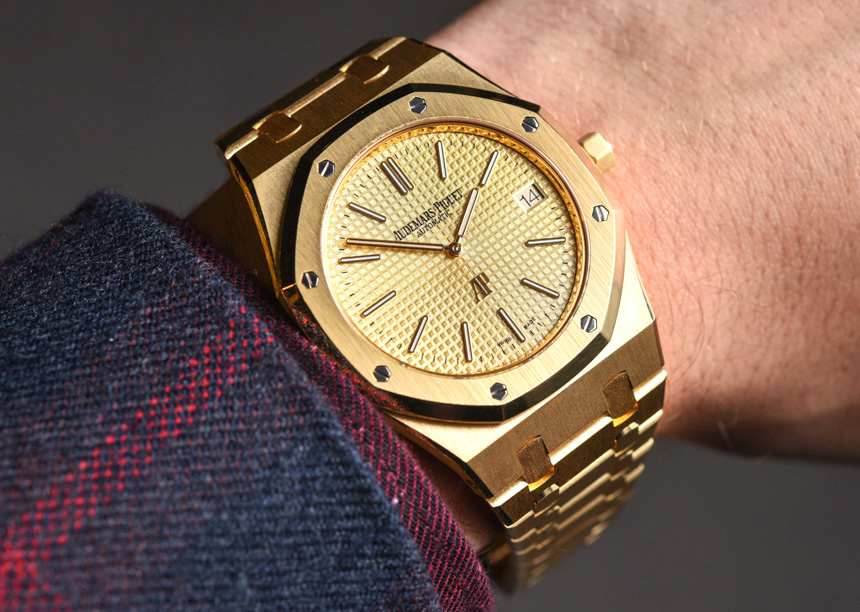
The Jumbo represents AP’s most direct homage to Genta’s original vision. This reference maintains the original 39mm diameter and integrated bracelet while embodying AP’s obsession with ultra-thin complications—representing the brand’s watchmaking philosophy that elegance emerges from material efficiency, not visual bulk.
Reference 15202: The Previous Generation
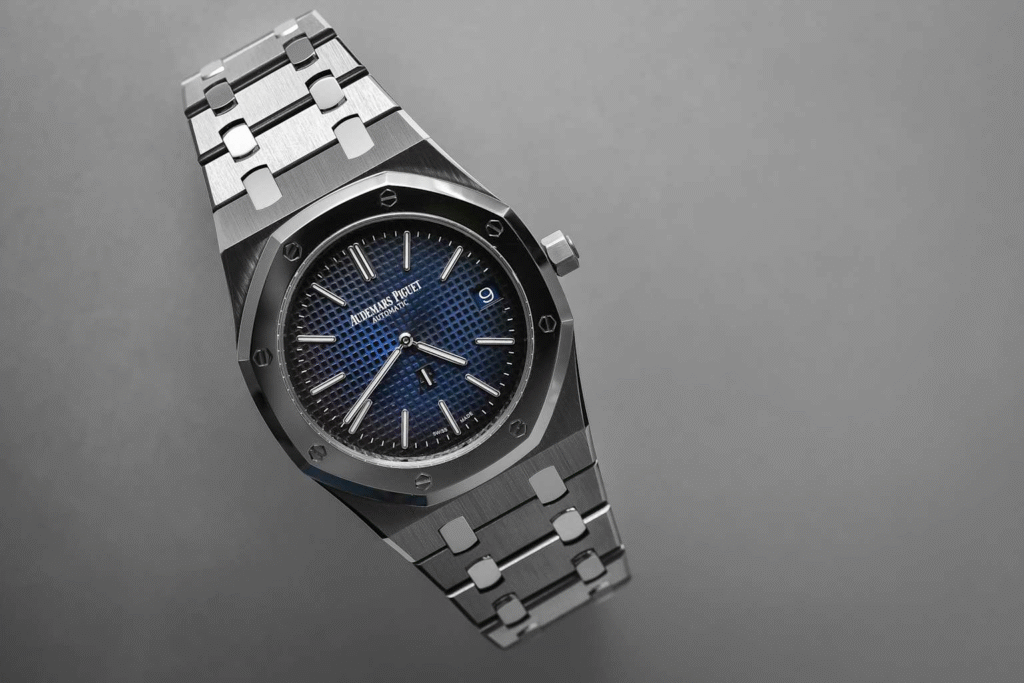
The 15202ST (stainless steel version) embodied a masterclass in minimalist luxury. Measuring exactly 39mm × 8.2mm, this watch achieved extraordinary refinement through the Jaeger-LeCoultre Caliber 2121 movement—a 40-hour power reserve automatic with ultra-thin proportions (3.05mm thickness).
| Feature | Specification |
|---|---|
| Case Diameter | 39mm |
| Case Thickness | 8.2mm |
| Movement | JLC Caliber 2121 |
| Power Reserve | 40 hours |
| Dial | Midnight blue Petite Tapisserie |
| Lug-to-Lug | 48.6mm |
| Water Resistance | 50m |
| MSRP (Discontinued) | $28,700 |
| Grey Market Average | $55,000–$65,000 |
The 15202’s critical limitation was its 40-hour power reserve, considered slightly outdated by contemporary standards. Additionally, the movement required specialized technical knowledge to service, making DIY maintenance essentially impossible.
Reference 16202: The New Standard
In 2021, AP introduced the 16202ST, maintaining external dimensions while engineering a revolutionary in-house movement: the Caliber 7121.
- Power reserve increased: 40 → 55 hours (effectively reaching 2.3 days)
- Frequency upgraded: 19,800 vph (3 Hz) → 28,800 vph (4 Hz)
- Quick-set date function: Previously unavailable on the 2121
- Movement diameter: 29.6mm (vs. 28.0mm for 2121)
- Movement thickness: 3.2mm (vs. 3.05mm for 2121)
- Rotor support: Ball bearing suspension (reduces wear)
The genius execution: Despite the thicker movement (3.2mm vs. 3.05mm), the external case thickness remains 8.1mm—only fractionally different from the 15202’s 8.2mm. AP achieved this through case redesign, demonstrating mastery of micro-engineering.
Why the Jumbo Commands Premium Pricing:
Jumbo references consistently trade at 100%+ premiums over MSRP on secondary markets despite production capacity. The reference 16202ST, with MSRP around $30,000–$32,000, averages $60,000–$75,000 on Chrono24 depending on condition.
This pricing paradox exists because:
- Annual production limits: AP produces approximately 3,000–4,000 Jumbos yearly (versus 15,000+ Mainline 15500/15510 models)
- Ultra-thin obsession: Collectors understand the 7121’s engineering represents cutting-edge micro-horological achievement
- Historical significance: The 39mm size directly echoes Genta’s 1972 original
- Wrist presence without excess: At 39mm, the Jumbo works on small wrists (6–6.5″) where the 41mm feels inappropriate, yet delivers substantial presence
- Entry to complexity: Jumbos transition to perpetual calendars, extra-thin tourbillons, and other complications—the Jumbo foundation serves collectors building comprehensive collections
The investment reality: Jumbo references appreciate approximately 8–12% annually, driven purely by production constraints and collector demand rather than speculative fervor.
The Mainline: Practical Excellence (15500/15510)
If the Jumbo represents ultra-luxury minimalism, the 15500 (replaced by 15510 in 2022) represents pragmatic excellence—AP’s reconciliation between the brand’s watchmaking philosophy and modern practical expectations.
Reference 15500: The Original Mainline
Introduced in 2015, the 15500ST measured 41mm × 10.4mm and housed AP’s Caliber 3120 automatic movement (70-hour power reserve, 28,800 vph).
The case increased in diameter versus the Jumbo precisely because a standard (non-ultra-thin) movement required more generous proportions. This practical acceptance of reality created immediate appeal—the 15500 offered 70-hour power reserve reliability without requiring specialized service protocols.
Reference 15510: The Modern Standard
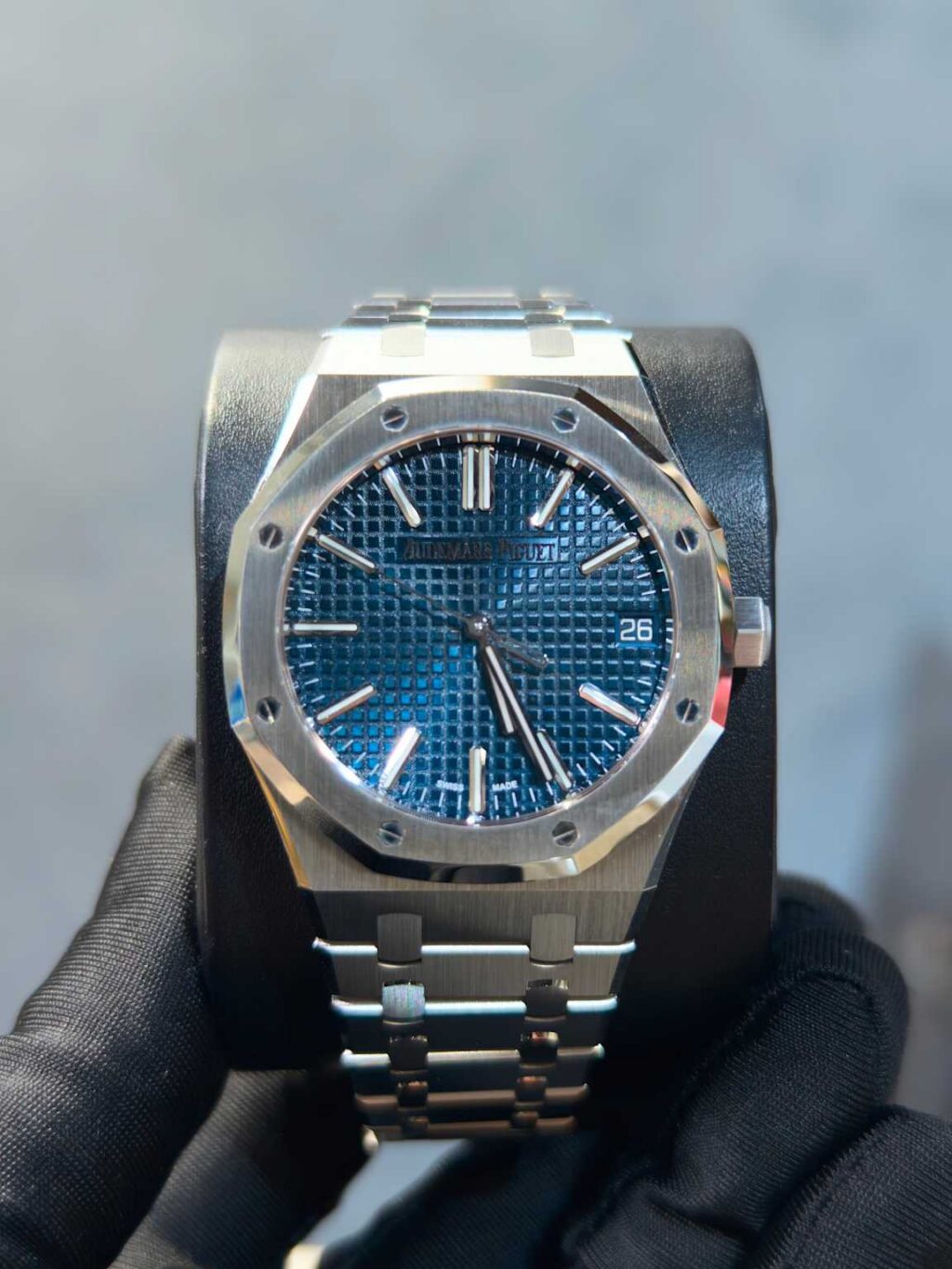
In 2022, AP updated the mainline to the 15510ST, integrating the newer Caliber 4302 movement—the same engine powering modern sports watches across the AP portfolio.
| Feature | Specification |
|---|---|
| Case Diameter | 41mm |
| Case Thickness | 10.5mm |
| Movement | AP Caliber 4302 (in-house) |
| Power Reserve | 70 hours |
| Frequency | 28,800 vph (4 Hz) |
| Jewels | 32 |
| Dial Options | Grey/Blue Grande Tapisserie |
| MSRP | $30,000 |
| Grey Market Average | $43,000–$52,000 |
| Lug-to-Lug | 49mm |
| Water Resistance | 50m |
Why the Mainline Struggles to Achieve Retail:
Despite more generous production volumes (approximately 10,000 units yearly), the mainline experiences 24–40 month waiting lists at authorized dealers. The $30,000 MSRP → $43,000–$52,000 grey market premium (43–73% markup) reflects:
- Accessibility perception: $30k entry point attracts broader demographic than $32k Jumbo
- Practicality: 70-hour power reserve, modern in-house movement appeal to first-time AP buyers
- 41mm size acceptance: Aligns with contemporary sports watch proportions, making it universal across wrist sizes
- Resale confidence: Everyone understands that $30k MSRP watches should be available at retail, creating grey market confusion and inflated premiums
The Offshore: The Beast (1993–Present)
If the Royal Oak represents restrained elegance, the Offshore represents aggressive sports watch maximalism. Debuting in 1993 and instantly dubbed “The Beast,” the Offshore abandoned subtlety in favor of oversized proportions, rubber gaskets, chronograph complications, and pure visual presence.
The Original Beast (Reference 25721ST, 1993)
In 1989, designer Emmanuel Gueit (under AP’s direction) conceptualized a watch that would redefine the Royal Oak Offshore concept. The brief: create an all-terrain sports instrument for extreme environments.
The 1993 Original Specifications:
- Case: 42mm stainless steel, 14.05mm thickness (chunky by 1972 standards)
- Bezel: Octagonal, topped with thick blue Therban rubber gasket
- Crown & Chronograph Pushers: Blue rubber-coated for grip and visibility
- Movement: Jaeger-LeCoultre Caliber 889/1 with Dubois Dépraz chronograph module
- Water Resistance: 100 meters (exceptional for a chronograph)
- Dial: Blue Petite Tapisserie with tachymeter scale, 12-6-9 subdial layout
- Bracelet: Integrated with wider, bolder links than the classic Royal Oak
- Key Innovation: Soft-iron anti-magnetic cage protecting the movement
The Offshore’s genius emerged from rejecting the “less is more” philosophy that defined the classic Royal Oak. Where Genta created elegance through minimalism, Gueit created presence through maximalism.
The Modern Beast (Reference 26238ST)
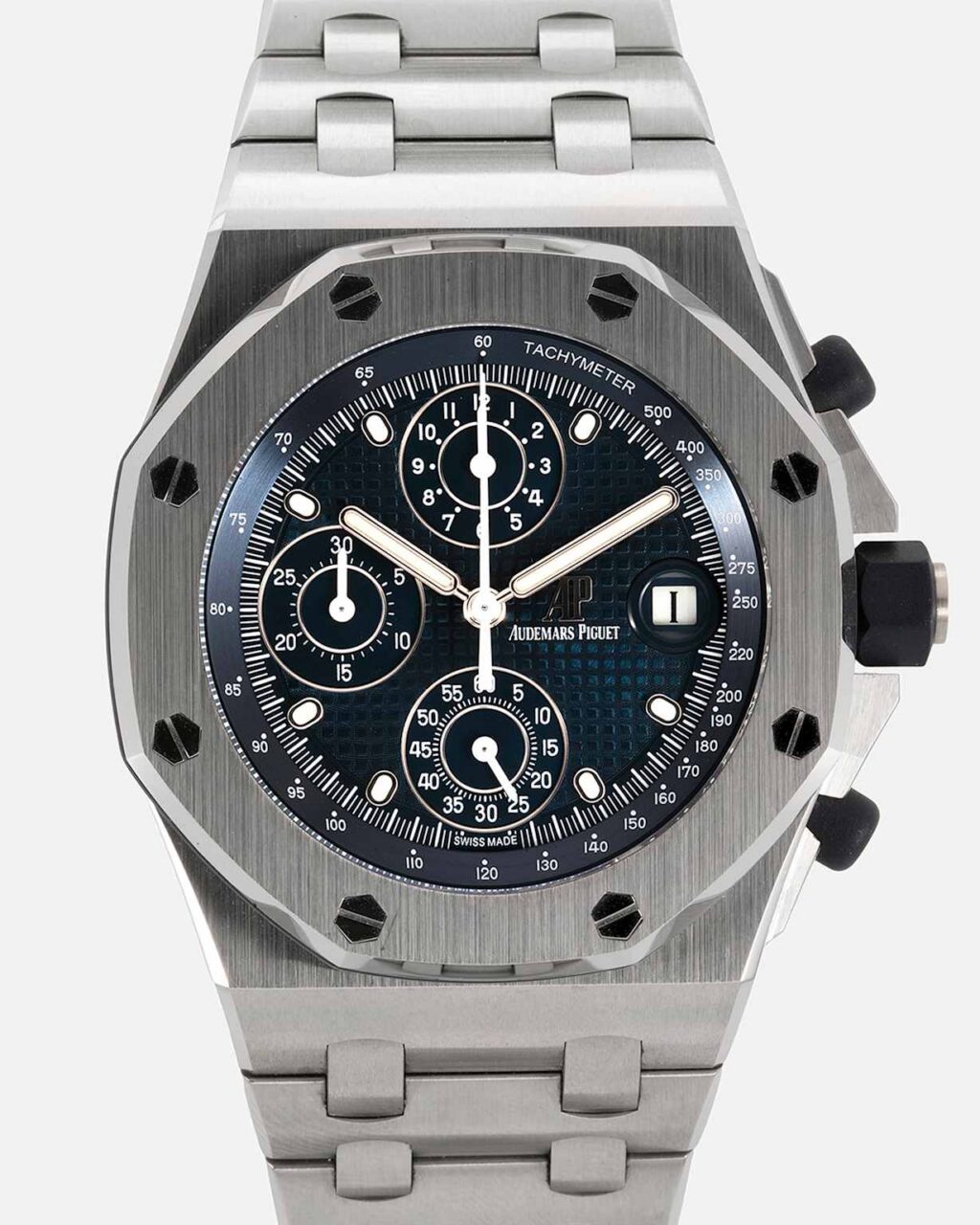
The 26238ST, reintroduced in 2021 to celebrate the Offshore’s 30-year legacy, represents evolution of the original vision while incorporating modern manufacturing and movements.
| Feature | Specification |
|---|---|
| Case | 42mm stainless steel |
| Thickness | 14.35mm |
| Movement | AP Caliber 4308 (in-house chronograph) |
| Power Reserve | 50 hours |
| Chronograph Layout | 6-9-12 subdials |
| Dial | Grande Méga Tapisserie (interlinked squares pattern) |
| Rubber Bezel | Interchangeable quick-release system |
| Bracelet | Integrated steel with rubber options |
| MSRP | $40,500 |
| Grey Market Average | $49,300–$65,000 |
The Offshore’s Modern Positioning:
Unlike the Jumbo (elegance through constraint) or Mainline (balance), the Offshore embraces pure presence and tool-watch functionality. At 42mm × 14.35mm, this watch occupies genuine physical space on your wrist—which is precisely the point.
The 2024 introduction of the 15605SK (time-and-date only Offshore at 43mm × 14.4mm) proved that even without chronograph complications, the Offshore’s design philosophy demands substantial proportions. Removing the chronograph without adjusting the case size would fundamentally undermine the design’s logic.
Offshore Pricing Dynamics:
The 26238ST averages $49,300 grey market versus $40,500 MSRP—a 22% premium that seems modest compared to Jumbo/Mainline ratios. This reflects:
- Stronger availability: Offshore chronographs attract narrower collector demographic than entry-level Mainlines
- Production capacity: Roughly 8,000 Offshores produced annually
- Perception as “fashion watch”: Rubber straps, bold styling attract lifestyle buyers less interested in fine horological details, reducing collector scarcity premium
- Chronograph complexity: The in-house Caliber 4308 requires more manufacturing time, reducing production volumes versus time-and-date movements
Buying Strategy: Retail vs. Grey Market Reality
Current market conditions (November 2025):
Authorized Dealer Wait Times:
- Jumbo 16202ST: 18–36 months (highly selective allocation)
- Mainline 15510ST: 24–40 months (extensive waiting lists)
- Offshore 26238ST: 12–24 months (slightly better availability)
Grey Market Premiums:
- Jumbo 16202ST: +90–110% above MSRP
- Mainline 15510ST: +43–73% above MSRP
- Offshore 26238ST: +22–60% above MSRP
The Practical Reality:
None of these watches are available at MSRP unless you have exceptional dealer relationships, significant purchase history with authorized dealers, or willingness to wait 2–4 years. New AP customers should expect zero allocation probability in the first 12 months of AD relationship.
For collectors wanting Royal Oaks in 2025:
- Establish AD relationships (purchase smaller models, develop purchasing history)
- Build waitlists (register at multiple ADs for different references)
- Accept grey market pricing (expect 40–110% markups depending on reference)
- Consider vintage alternatives (pre-owned 15500, discontinued 15202, or original 1970s–1990s references available at various price points)
Conclusion: Which Royal Oak Belongs on Your Wrist?
Choose the Jumbo if:
- You appreciate ultra-thin engineering and micro-horological achievement
- You value wrist presence on smaller frames (under 6.5″)
- You collect complicated watches and want an elegant foundation piece
- You’re willing to wait 2–3 years and pay $60,000–$75,000 at grey market
Choose the Mainline if:
- You want the “complete” Royal Oak experience—elegance balanced with practicality
- 70-hour power reserve and modern in-house movements appeal to you
- You prefer 41mm contemporary proportions
- You accept 24–40 month waiting lists and $43,000–$52,000 grey market pricing
Choose the Offshore if:
- You prefer bold visual presence over restrained elegance
- Chronograph complications or oversized proportions appeal to you
- You want the most recognizable, conversation-starting AP sports watch
- You accept 12–24 month waits and $49,300–$65,000 grey market pricing
The Royal Oak remains, 55 years after Genta’s original vision, the perfect luxury sports watch—not because it achieves perfect balance (it doesn’t attempt to), but because every variant understands its purpose and executes it masterfully. Whether you choose the refined Jumbo, practical Mainline, or aggressive Offshore, you’re purchasing one of horological history’s greatest design achievements—with the secondary-market pricing to prove it.