
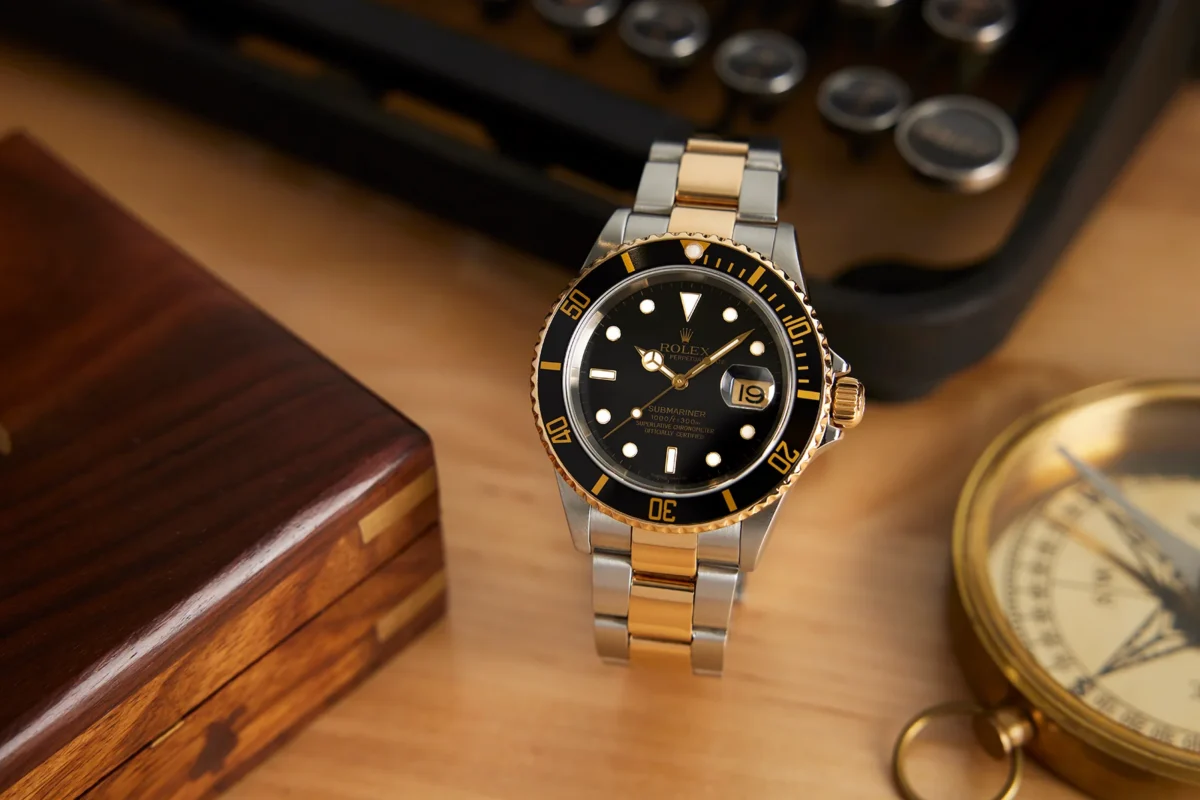
Before purchasing a pre-owned Rolex, you need to verify three things: that the watch is authentic, that it’s mechanically sound, and that its price reflects its actual condition and market demand. This guide walks you through the exact steps US buyers use to avoid costly mistakes and confirm resale confidence. The checklist works whether you’re buying from a dealer, marketplace, or private seller—and helps you understand what documentation and verification methods matter most.
Quick Decision Snapshot
Start here if you’re evaluating a specific pre-owned Rolex:
- Serial and model number match official specs: Verify engraving quality (sharp, even depth) and cross-reference against Rolex records or trusted dealer databases.
- Movement verification by professional: Request a certified inspection showing the correct calibre, rotor engravings, and clean finishing—never rely on visual inspection alone.
- Case, crystal, and bracelet details align: Check for laser-etched coronet on sapphire crystal, crisp rehaut engravings, and solid construction with no signs of replacement.
- Complete service history available: Authentic records—or Rolex Certified Pre-Owned guarantee card—strengthen resale value and lower buyer friction.
- Price matches recent market transactions: If the deal is 20%+ below comparable listings, assume risk factors (damage, service needed, or authenticity concerns).
Educational market guidance only; not financial advice.
What Actually Drives Value and Demand
Authentic, well-documented Rolex watches in good condition typically hold 60–75% of their original retail price on the secondary market. Undocumented or heavily worn examples may command only 40–50%, depending on reference and demand.
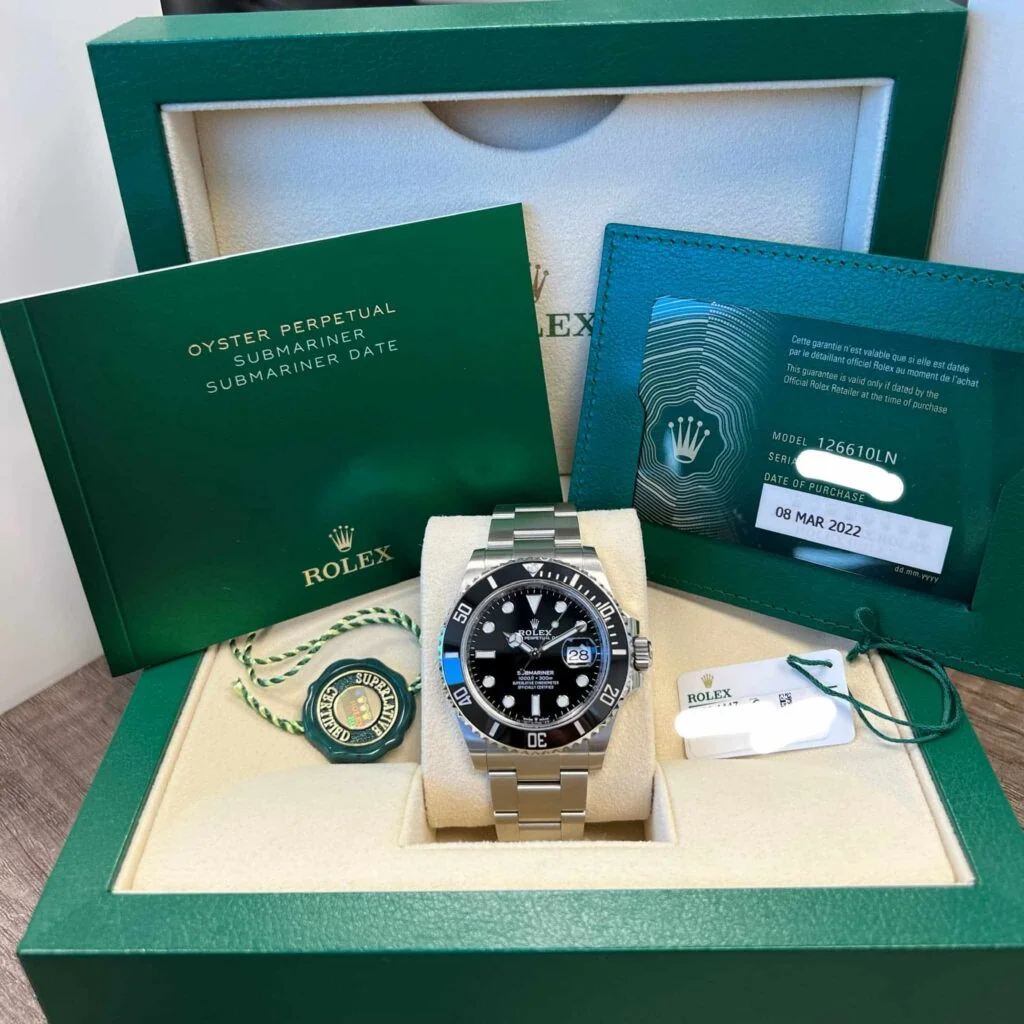
Example: A stainless steel Submariner Date with full papers, recent service record, and light wear may list at $12,500–$13,500 USD. The same model without papers but authenticated by a certified dealer and in identical condition might list at $10,500–$11,500. The $1,000–$2,000 spread reflects documentation premium and perceived risk.
Reality check: Significant price discounts (>25% below market) often signal missing provenance, prior major damage, or upcoming service costs. Rolex watches hold value steadily; dramatic cuts are a warning sign. Conversely, premium pricing doesn’t guarantee authenticity—only professional verification does.
Demand in the US market is strongest for sports models (Submariner, GMT-Master II, Daytona) and classic dress watches with proven service histories. Vintage references with incomplete boxes or faded dials still trade actively but command lower premiums than mint examples.
Category-Specific Evaluation Framework
Pre-owned Rolex watches are assessed across four core dimensions. Your priorities depend on whether you’re buying for personal wear, collectibility, or planned resale.
- Reference (Model) and Configuration: Identify the exact model by reference number (e.g., 16610 Submariner, 16700 GMT-Master II). Check bezel type, dial color, hands, and case material against official specs. Any mismatches—wrong hands, aftermarket dial, or undocumented parts—signal replacement history or inauthenticity.
- Condition and Service History: Assess caseback, crystal clarity, dial printing, and bracelet wear. Light surface scratches and desk diving marks are normal; deep gouges, refinished cases, or replaced parts reduce value. Request documented service records (Rolex, authorized dealer, or certified independent) to confirm movement integrity and warranty eligibility.
- Completeness of Original Set: Full set (watch, box, warranty card, papers, open letter, and hang tag) commands 10–15% premium over the same watch without papers. A missing box might cost 5% resale discount. Papers alone, separated from the watch, hold minimal value.
- Authentication and Documentation: Rolex Certified Pre-Owned (RCPO) watches include a 2-year international guarantee and authentication card issued by Rolex itself. Third-party certification from reputable US dealers carries weight if they document inspection depth. Undocumented watches are still viable but carry higher buyer friction and resale risk.
Pricing Mechanics and Trade-Offs
| Condition Grade | Typical Price Range (% of Original Retail) | Service Needs | Resale Friction | Documentation Impact |
|---|---|---|---|---|
| Unworn, full set (like new) | 80–95% | None | Minimal | +15% premium |
| Light wear, full papers | 65–75% | Optional | Low | +8–10% premium |
| Moderate wear, service history | 55–65% | Likely | Medium | +5% premium |
| Heavy wear, no papers, authenticated dealer | 45–55% | Probable | High | Neutral (dealer verification only) |
| Unknown provenance, no service docs | 35–50% (if authentic) | Unknown | Very high | Discount or pass |
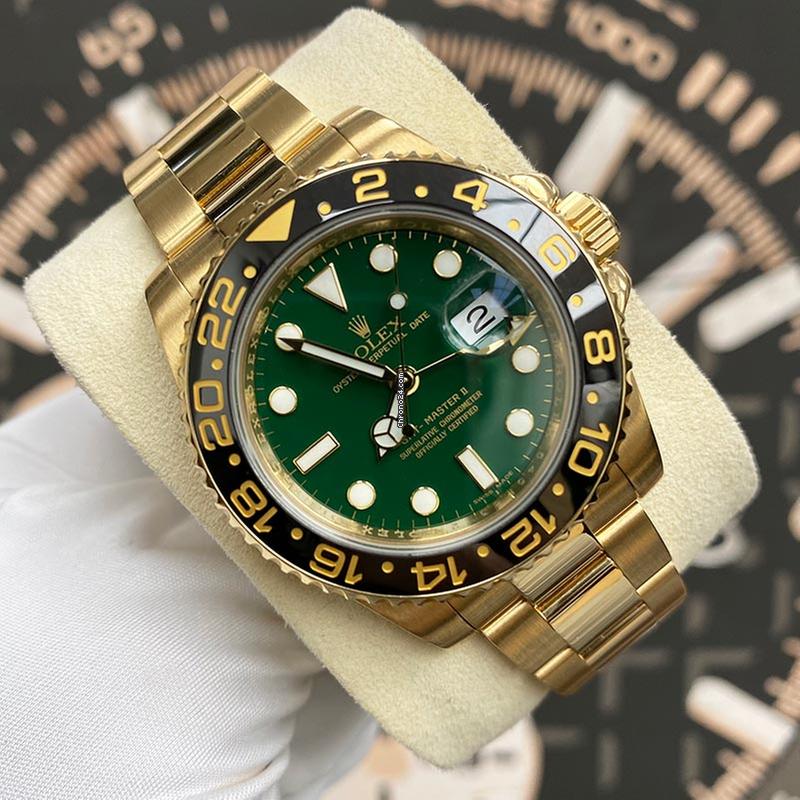
Example: A 2015 GMT-Master II with light wear and full papers might cost $15,500. The same model, identical condition but no original box or papers, typically lists at $13,500–$14,000. If service is pending, deduct another $500–$1,500 depending on what's required.
Reality check: The largest resale friction doesn’t always come from condition—it comes from unanswered questions about service history and ownership transfer. A scratched watch with full documentation sells faster than a pristine watch with an unknown past.
Choosing between speed, margin, and certainty: – Fast sale: Accept lower offer (50–55% retail) with full documentation transparency. – Fair price, moderate timeline: List at 60–65% with honest condition photos and service records; expect 2–6 weeks. – Maximum price, longer wait: Restore to near-mint condition and provide Rolex service cert; accept 6–12 week timeline.
Risk Control and Authentication Workflow
Before committing to purchase, follow this verification sequence:
- Request professional movement inspection: Ask if the dealer has opened the case and verified calibre, rotor engravings, and finishing. Verbal authentication alone ($100 in many cases) is insufficient; you need documented proof.
- Cross-reference serial number: Match the serial engraved on the case (6 o’clock position for older models, rehaut for 2005+) against Rolex production databases or dealer records. Inconsistent engravings or mismatched fonts are red flags.
- Verify crystal and rehaut: Use magnification to confirm the laser-etched coronet (6 o’clock on sapphire crystal) is crisp and nearly invisible without light. Rehaut should show evenly spaced “ROLEX” text with serial precisely aligned.
- Inspect bracelet and clasp: Clasp engravings should be cleanly cut (not laser etched or printed). End links should be solid and secure. Reference codes inside the clasp must match the watch’s model number.
- Request waterproofness test and timekeeping report: Professional dealers should confirm water resistance (especially for dive watches) and provide timing accuracy data. Sealed watches tested at 15+ atmospheres indicate proper service completion.
Example: You find a Submariner at a secondary marketplace. The seller claims it's authentic and has service receipts from a local independent watchmaker. Your next step: request the movement photos from the dealer/seller, confirm serial number format and quality against known authentic examples, and ask for a professional inspection certificate before finalizing purchase. The $150–$300 appraisal fee is cheap insurance compared to a $10,000+ mistake.
Action Plan by Intent (Sell, Buy, Source, Appraise)
| Your Intent | Primary Timeline | Key Action | Typical Response (Atlas Luxury) | Intake Details Needed |
|---|---|---|---|---|
| Buy (Sourcing) | 1–3 weeks | Submit photos, box/papers status, serial, service history | Authenticated appraisal + matched inventory | Brand, reference, condition, location |
| Sell (Liquidation) | 1–4 weeks | Submit watch for condition audit + instant quote | Fair-market offer, no commission | Condition photos, papers, box, service records |
| Appraise (Verification) | 3–7 days | Ship for professional evaluation | Detailed condition report + market range | Serial, reference, last service date, location |
| Source (Wholesale) | 2–6 weeks | Bulk intake form or API feed | Inventory match + standing offers | Volume, references, condition tiers |
Numbered steps for a buy-side workflow:
- Locate the watch: Search by reference number, condition range, and price ceiling across marketplaces and dealer networks.
- Request authentication proof: Ask for movement inspection documentation, serial verification, and waterproofness test—not seller testimonials.
- Verify documentation: Cross-check serial number on papers/cards against the watch itself; any mismatch is disqualifying.
- Arrange professional inspection: If not provided by seller, commission a third-party certified appraisal ($200–$400 typical cost).
- Negotiate based on findings: If service is needed or minor damage is found, adjust offer accordingly or walk away.
- Finalize with guarantees: Confirm return window (typically 5–14 days), warranty coverage, and authentication guarantee in writing.
Reality check: No authentic Rolex should ever require you to take “on faith” its condition or origin. A dealer who resists professional verification or refuses to open the case is signaling risk.
Common intake checklist (“What we need to move fast”):
- Brand and exact reference number (e.g., 116710LN for GMT-Master II steel with ceramic bezel).
- Current condition (unworn, light wear, moderate wear, heavy wear, needs service).
- Box, warranty card, and original papers status (full set, partial, or none).
- Last documented service date and service provider.
- Your location (state or region) and preferred timeline (immediate, 2 weeks, flexible).
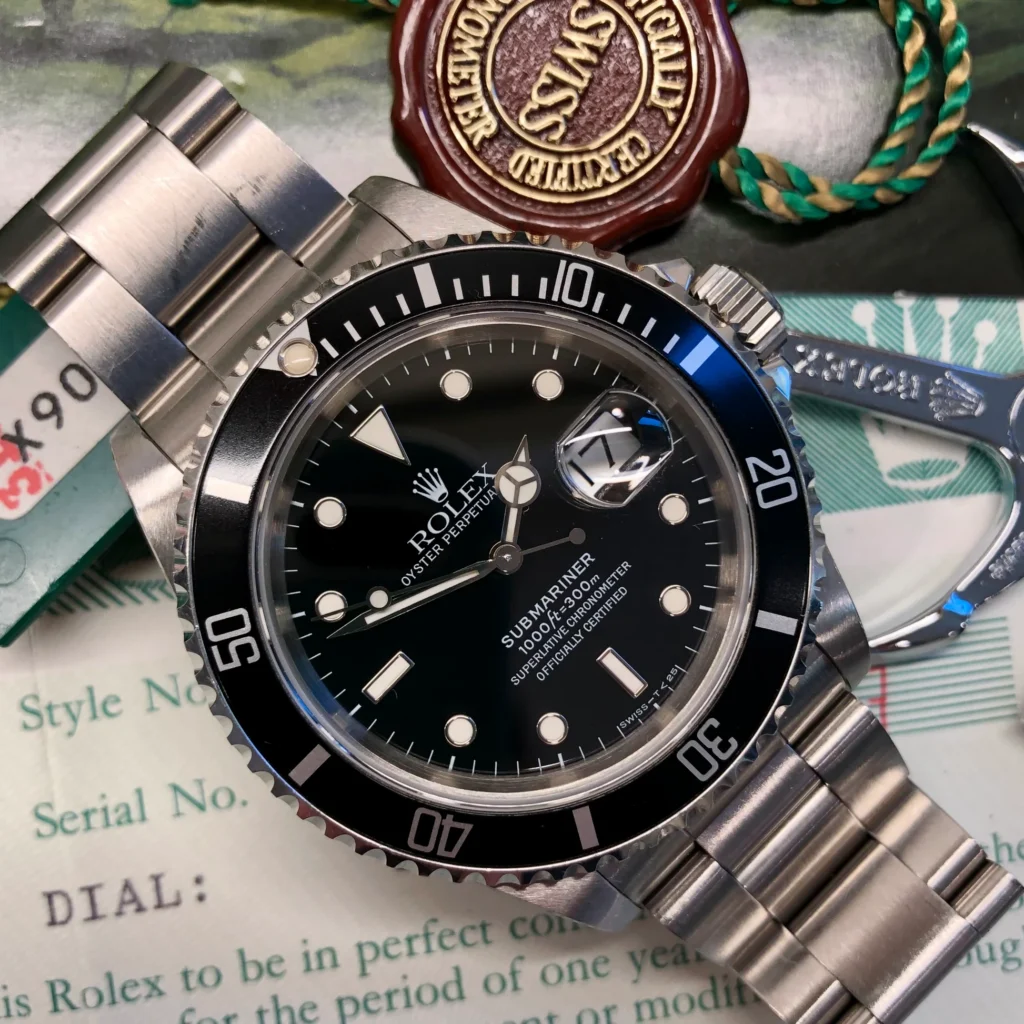
Example: You own a 2010 Submariner Date reference 16610 in stainless steel. You have the original box and warranty card but no service records in the past 5 years. You want to sell within 2 weeks. When you submit your intake form, mention the warranty card (authentication boost), confirm the reference number matches your caseback, and note the service gap (likely $800–$1,200 if buyer requests service). This transparency speeds underwriting and builds confidence.
FAQ
1. Can I buy a pre-owned Rolex without papers and still resell it?
Yes, but with friction. An authenticated watch without original documentation typically sells 5–10% below comparable examples with full papers. A reputable dealer’s authentication guarantee and service records can bridge much of this gap.
2. What does the Rolex Certified Pre-Owned (RCPO) guarantee include?
RCPO watches come with a 2-year international guarantee card and official certificate of authenticity issued by Rolex itself, confirming the watch is genuine and in perfect working condition. This is the highest authentication standard available in the pre-owned market.
3. How do I know if a serial number engraving is fake or real?
Authentic serial engravings are sharp, evenly spaced, and have consistent depth under magnification. Fake engravings often appear shallow, blurred, or unevenly laser-etched. If you can’t assess it yourself, a professional appraisal ($100–$300) provides certainty.
4. Should I avoid watches without service history?
Not automatically. Watches in light wear and perfect mechanical condition can be safe buys even without documented service. However, expect the seller to discount the price by $500–$1,500 to account for upcoming maintenance risk, and budget for a pre-purchase professional inspection.
5. What’s the difference between a Rolex-serviced watch and an independent watchmaker service?
Rolex-serviced watches come with Rolex warranty, parts tracking, and brand-backed authentication. Independent watchmaker service is often cheaper but may not include a warranty or brand recognition. Both are valid if documented, but Rolex service adds resale value.
6. How do I verify a bracelet is original to the watch?
Check that the reference code stamped inside the clasp matches the watch’s reference number and that the bracelet shows wear consistent with the watch’s age. Replacement bracelets can be detected through serial mismatch or inconsistent patina. Professional inspection is the fastest way to confirm.
7. If the Cyclops magnification looks off, is the watch fake?
Not necessarily. Cyclops magnification varies slightly between production years and can shift over decades of wear. However, if the magnification is obviously wrong (not magnifying the date or magnifying too much), it signals a replaced crystal or counterfeit. Ask your appraiser to check.
8. Can I trust a seller who offers a steep discount but refuses professional verification?
No. A legitimate dealer or seller welcomes third-party verification because it protects both parties. Refusal to open the case or provide movement inspection is a major red flag, regardless of price.
9. What happens if I buy a watch through a secondary marketplace and it turns out to be counterfeit?
Buyer recourse depends on the platform’s authentication policy and your payment method. Many marketplaces offer limited protection. This is why purchasing through verified dealers or using escrow services is safer—professional authentication upfront eliminates this risk.
10. How often should a pre-owned Rolex be serviced after I buy it?
Rolex recommends servicing every 5–10 years regardless of condition. If your purchase hasn’t been serviced in more than 5 years, budget $800–$1,500 for professional service within your first year of ownership to ensure accuracy and water resistance.