
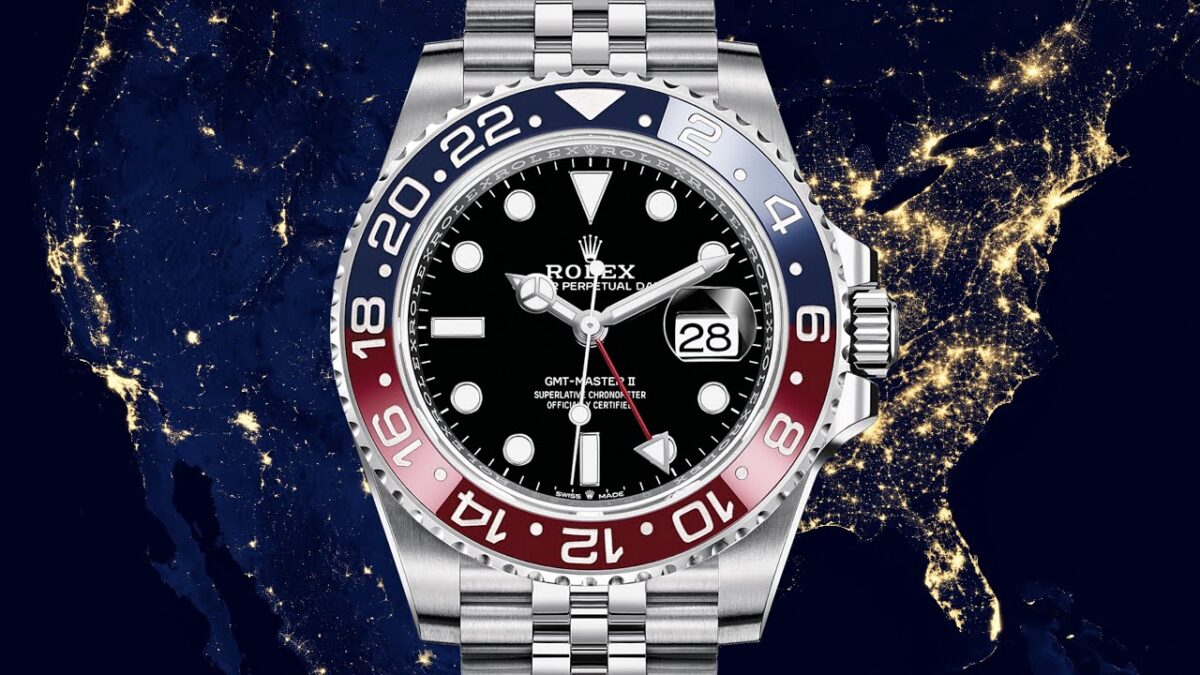
The Rolex GMT-Master II remains one of the most liquid steel sports watches in the US secondary market, but liquidity today depends less on rising prices than on time-to-sale, documentation quality, and realistic positioning. As of early 2026, the watch trades 5–15% below retail MSRP for most configurations—a meaningful shift from 2020–2024 dynamics—which means buyers now have real negotiating power but must understand what “liquid” actually means: the ability to sell cleanly at expected market price within 30–90 days, not a guarantee of price appreciation. This guide walks you through the core metrics, trade-offs, and intake data needed to make an informed buy decision in the current market environment.
Quick Decision Snapshot
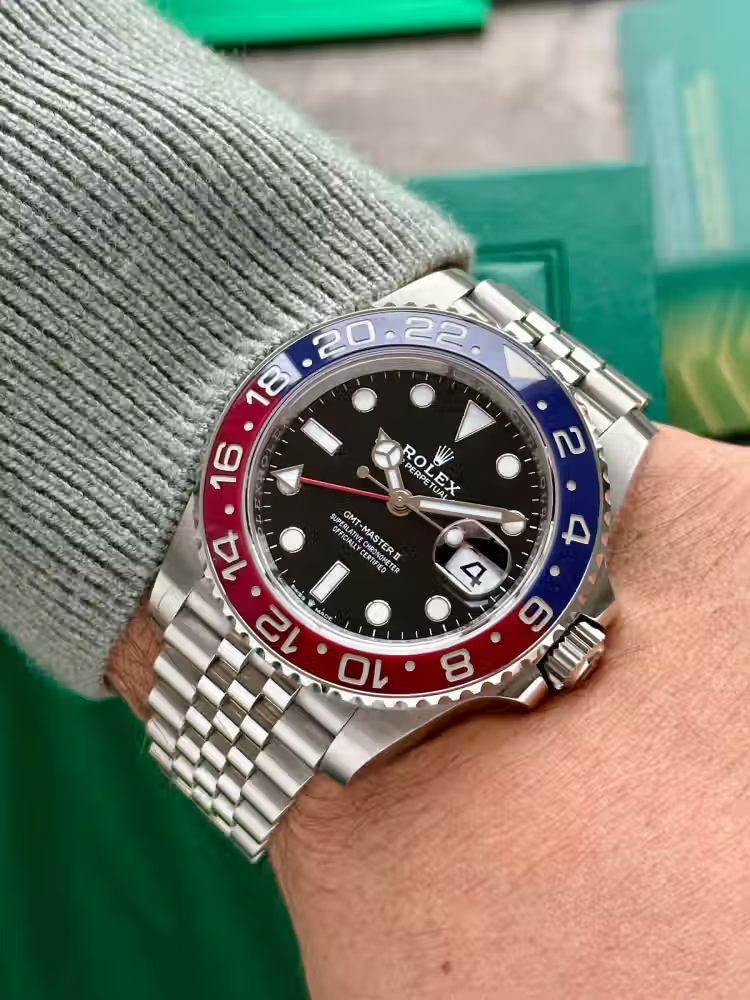
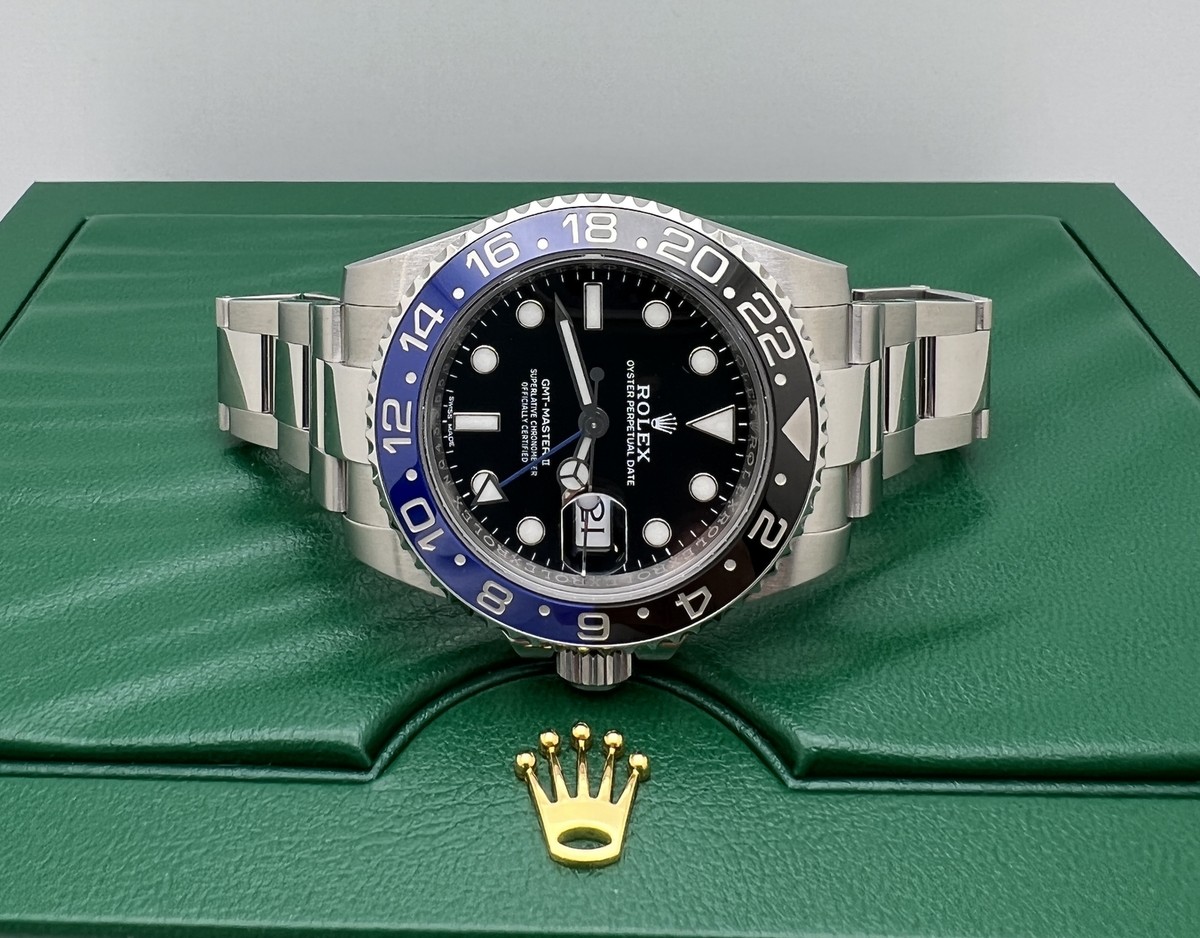
- Current market position: GMT-Master II trades discounted to retail; “Pepsi” (red/blue) and “Batman” (blue/black) versions are more liquid than solid-color bezels.
- Typical hold window for resale: 24–48 months for condition-stable scenarios; liquidity supports 30–90 day exit if needed.
- Key liquidity driver: Condition grade, service history, and box/papers present matter more than reference number alone.
- Secondary market spread: Realistic buy-now prices typically 8–12% below asking; plan for 5–8% markdown if you need to exit within 60 days.
- Market direction: Stabilization (not appreciation) expected through 2026; focus on ownership value, not flipping gain.
Educational market guidance only, not financial advice. Actual prices and timelines depend on condition, configuration, location, and current demand.
What Actually Drives Value and Demand
The difference between a liquid watch and a saleable one is documentation, condition verifiability, and realistic pricing—not the reference number or dial color alone. A GMT-Master II with full set (watch, box, papers, warranty card, links) in excellent condition sells predictably. A GMT-Master II with service history gaps or no original papers faces longer hold times and tighter margins.
Reality check: Mid-2025 data showed many steel sports models rebounding in nominal price (+4.9% overall market index), but secondary prices still trade below retail MSRP, meaning the retail price increase of 4–9% in January 2026 has actually widened the gap between new-watch cost and used-watch value. This is normal post-hype behavior and actually improves buyer negotiating power.
Example: A black-dial GMT-Master II 126710BLNR (Batman) listed at $16,500 in March 2026 may be realistic if it has full set, service records, and excellent condition—reflecting realistic 2–4% annual depreciation from a ~$17,000 retail reference price. A similar watch with no service history or missing papers at the same $16,500 ask is overpriced and will sit for 120+ days.

Category-Specific Evaluation Framework
For pre-owned Rolex sports watches, condition, completeness, and service provenance form the backbone of liquidity assessment. The GMT-Master II’s two-timezone complication and steel sports positioning make it less sensitive to flavor-of-the-month trends than limited editions, but documentation gaps still matter.
Key evaluation checklist for GMT-Master II buying:
- Establish original retail MSRP and date of purchase — Compare asking price to retail baseline from the same year; this reveals whether pricing reflects depreciation or inflation illusion.
- Verify case and bracelet condition — Document scratches, crystal clarity, bezel click integrity; minor wear is normal, heavy polishing (repeated refinishing) reduces value 10–15%.
- Confirm service history and movement condition — Full service records add 5–10% to resale value; unknown service history or signs of hard use reduce buyer pool by 20–30%.
- Check completeness of original set — Box, papers, warranty card, spare links, and documentation cards; each missing item reduces perceived value 2–5% and extends time-to-sale by 2–4 weeks.
- Validate authenticity markers and serial number — Dial printing quality, lume aging, crown logo depth, reference number placement; verification against official Rolex records removes friction from buyers.
Pricing Mechanics and Trade-Offs
| Condition & Set Completeness | Typical Market Range | Time-to-Sale (US) | Buyer Pool Size | Notes |
|---|---|---|---|---|
| Excellent + Full Set (box, papers, all links) | 90–95% of MSRP | 30–60 days | Large | Premium pricing justified; predictable exit |
| Very Good + Full Set | 85–92% of MSRP | 45–90 days | Large | Most common retail buyer profile |
| Good + Partial Set (no papers or box) | 78–88% of MSRP | 60–120 days | Moderate | Dealer/collector interest; slower retail |
| Fair + Missing Set (papers, box, spare links) | 70–82% of MSRP | 90–180 days | Small | Flippers and project buyers; highest risk |
Example: A Pepsi GMT-Master II retailing at $16,950 in excellent condition with full set should price between $15,250–$16,100 on secondary market in March 2026. Same watch in very good condition prices $14,200–$15,550. Same watch with service history gaps and no papers prices $13,350–$14,750—a 15% haircut that reflects buyer risk and liquidity friction.
Risk Control and Authentication Workflow
Before committing to a purchase, verify the watch through independent authentication channels and document condition objectively.
- Request detailed condition photos (dial, caseback, bezel, lume, crown logo, dial feet) under consistent lighting; compare to reference images from Rolex and trusted dealer sites.
- Demand service records or full movement inspection report from a qualified watchmaker; a clean bill of health on movement justifies higher pricing and faster resale.
- Verify serial number against Rolex production records (year of manufacture); mismatches or gaps flag refurbished dials or case replacements.
- Inspect for crystal damage or replacement — Original sapphire should show anti-reflective coating; aftermarket crystals are cheaper but reduce value 3–5%.
- Confirm original box/papers authenticity — Counterfeit documentation exists; compare font, paper stock, and reference accuracy to known examples and dealer databases.
Action Plan by Intent
For Buyers: From Research to Acquisition
| Decision Point | Action | Expected Timeframe | Key Intake Data Needed |
|---|---|---|---|
| 1. Define Budget & Reference | Set max price range (±3%); choose dial/bracelet config | 1–2 weeks | Preferred model, dial color, material (steel only), case size (40mm vs 41mm post-2023) |
| 2. Source Qualified Inventory | Check [Shop Inventory] and [Back-in-Stock Alerts]; cross-ref pricing vs. WatchCharts | 2–4 weeks | Budget, condition preference (excellent/very good), set completeness requirement |
| 3. Verify Condition & Documentation | Request detailed photos, movement inspection, serial verification | 1–2 weeks | Condition acceptance threshold, willingness to fund independent inspection |
| 4. Negotiate & Secure | Counter-offer at 8–12% below ask; lock with deposit; finalize logistics | 3–7 days | Final purchase price, shipping preference, authentication requirements |
Realistic timeline for informed buyer: 6–10 weeks from first research to receipt (including courier time).
Reality check: Not all GMT-Master II references are equally liquid. A steel Pepsi or Batman in excellent condition sells in 30–60 days. A two-tone or older reference with service gaps may take 120+ days. Assume baseline liquidity for iconic steel versions only.
Example: You identify a Batman GMT-Master II priced at $16,200 with full set and stated "excellent condition." You request service records (watch-maker inspection costs $150–300 and takes 5–10 days). Movement checks clean. You counter at $14,950 (8% below ask). Seller negotiates to $15,400. You finalize, wire escrow, and receive the watch in 7 days. Total time: 6 weeks. Outcome: You own a liquid watch that you can exit in 30–90 days if needed without significant loss.
FAQ
Q: Is the GMT-Master II more liquid than other Rolex steel sports models? A: Yes, it ranks alongside the Submariner and Daytona for consistent two-sided demand. Time-to-sale is typically 30–90 days for well-documented examples in excellent condition. Models with service gaps or incomplete sets extend hold times to 120+ days.
Q: What does “trading below retail” mean for my buying decision? A: It means secondary prices are currently 5–15% lower than MSRP for the same reference. This is normal post-2024 market correction and gives buyers better entry pricing—but does not indicate future appreciation. Buy for ownership value, not speculation.
Q: Can I rely on “market conditions will improve” to justify overpaying today? A: No. Historical data shows narrow appreciation cycles in post-hype phases. Plan conservative 2–3% annual appreciation at best; view upside as a bonus, not a guarantee. Focus on entry price relative to condition and documentation.
Q: How much does missing the original box/papers hurt resale value? A: Typically 5–15% markdown in secondary market value and 4–8 weeks longer time-to-sale. Full set commands 2–5% premium. Buyers often accept incomplete sets if condition and service history are documented; dealers and flippers demand steeper discounts.
Q: What’s the difference between a dealer-certified watch and a private sale? A: Dealer sales include authentication warranty (typically 30–60 days); private sales require independent inspection (DIY cost $150–300). Dealer premium is usually 2–5% higher but includes risk transfer. Private sales require more due diligence but offer potential savings.
Q: Should I buy a Pepsi vs. Batman based on liquidity? A: Both are liquid (30–90 day typical sell-through). Pepsi (red/blue) has slightly broader collector base; Batman (blue/black) is more current-production-focused. Buy based on personal preference; either sells reliably if priced fairly and documented well.
Q: How do I know if a price is realistic in the current market? A: Cross-reference against WatchCharts sold data (not asking prices) for your exact reference, compare condition-adjusted comps from the last 30 days, and assume 8–12% discount to current retail MSRP. If asking price is within 88–92% of retail for excellent condition, it’s in the realistic range.
Q: What’s the risk of buying a GMT-Master II right now in March 2026? A: Primary risk is extended hold time if you need to liquidate quickly (60+ day sell cycle in soft demand). Secondary risk is that retail price increases (4–9% in Jan 2026) may reset buyer “fair value” expectations downward, widening the secondary-to-retail gap further. Mitigation: buy below retail, prioritize excellent condition and full documentation.
Q: Does authentication add value or just reduce my buying risk? A: It reduces risk. A watch with independent authentication report (Rolex service center letter, trusted appraiser certification) sells faster and commands 1–3% premium vs. uncertified examples. Cost is $150–300; justified if transaction is $15,000+.
Q: What’s the smartest next step if I find a watch I like but want to negotiate? A: Request high-resolution condition photos, order independent inspection, obtain recent comp sales data, and counter at 8–12% below asking. Most sellers expect 5–10% negotiation range. If seller refuses inspection or comp verification, walk.