
Immediate Answer
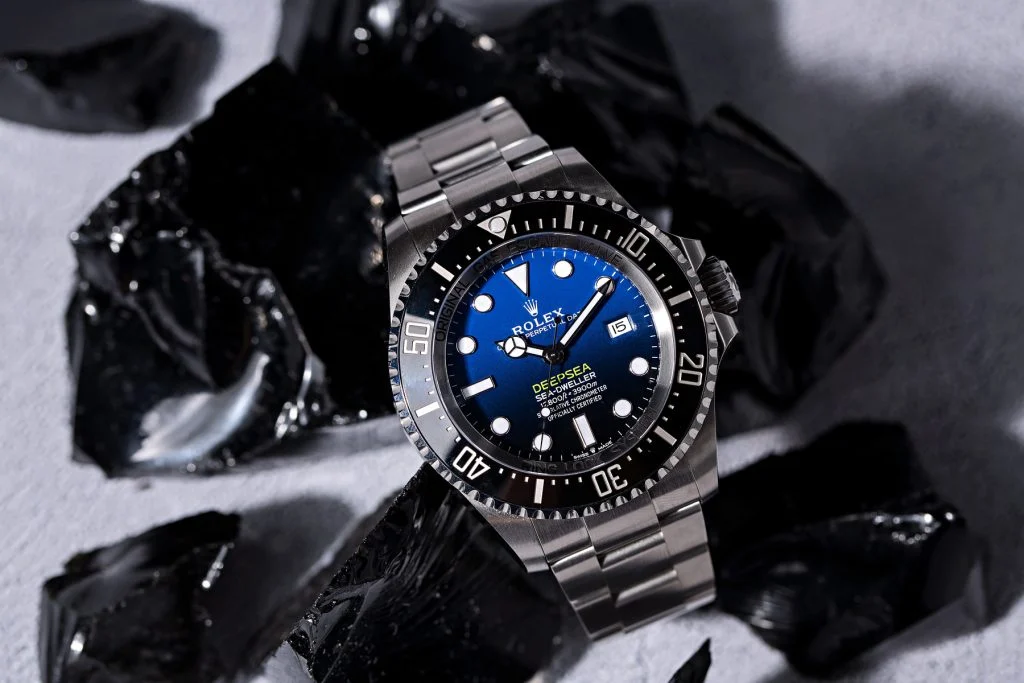
The Sea-Dweller (ref. 126600) and Deepsea (ref. 136660) are fundamentally different engineering approaches to professional dive watches, despite superficial visual similarity. The Sea-Dweller balances extreme depth capability (1,220 m / 4,000 ft) with everyday wearability on a 43 mm case; the Deepsea prioritizes extreme pressure resistance (3,900 m / 12,800 ft) through a specialized Ringlock System on a 44 mm platform. In the US secondary market, the Sea-Dweller typically commands higher liquidity and resale predictability, while the Deepsea trades at lower entry pricing but with more limited buyer demand. Your choice depends on intended use—recreational diving favors Sea-Dweller; technical/commercial specs favor Deepsea. Next step: confirm your wear case and condition tolerance before pricing comparisons.
Quick Decision Snapshot
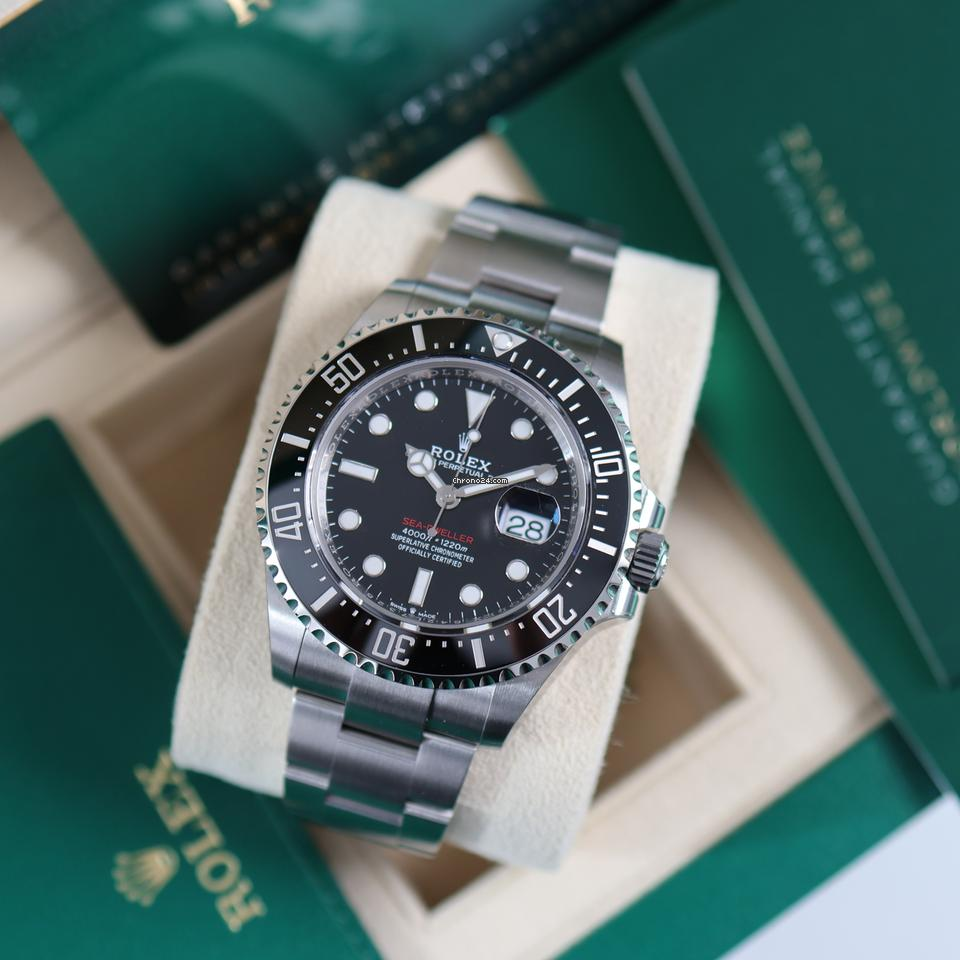
- Sea-Dweller (126600): 43 mm, 1,220 m rated, everyday-friendly proportions, stronger secondary-market liquidity, typically $10,900–$12,500 pre-owned
- Deepsea (136660): 44 mm, 3,900 m rated, Ringlock case system, noticeably taller profile, lower entry market price, typically $10,200–$13,000 pre-owned
- Wrist fit: Sea-Dweller feels balanced; Deepsea feels purposeful and top-heavy due to domed crystal and thickness
- Movement: Both current models use Caliber 3235 with 70-hour power reserve and magnetic resistance
- Helium escape valve: Both feature it—designed for saturation-diving decompression, not recreational need
- Bezel size & visibility: Deepsea bezel is visibly larger and displays “Original Gas Escape Valve” and “Ring Lock System” text; Sea-Dweller uses classic inner bezel
This is educational market guidance based on US secondary-market data, not investment advice or financial direction.
What Actually Drives Value and Demand
The Sea-Dweller holds value through versatility and brand recognition; the Deepsea trades on extreme specification and technical mythology. US buyers overwhelmingly favor the Sea-Dweller for liquidity because it bridges professional credibility with comfortable daily wear, whereas the Deepsea appeals to specialists and collectors seeking technical distinction.
Reality check: Neither watch is necessary for recreational diving. Both exceed human recreational scuba limits (130 ft / 40 m). Resale value depends far more on condition, service history, and box/papers completeness than on which model you own.
Demand drivers in the US market:
- Sea-Dweller: Rolex’s original deep-sea tool watch heritage (introduced 1967); saturation-diving professional credential; 43 mm case fits broader wrist populations; Cyclops date window adds visual familiarity
- Deepsea: Submersible-grade engineering novelty; Ringlock case architecture (patent-protected design); larger presence for collectors; lower MSRP barrier ($13,850 retail vs. $12,950 Sea-Dweller retail)
Example: A Sea-Dweller 126600 in excellent condition with box and papers typically resells 85–92% of retail within 60–90 days on major secondary platforms. A comparable Deepsea 136660 in the same condition may take 120+ days and settle at 78–88% of retail, reflecting lower immediate demand but comparable collector interest over 6–12 months.

Category-Specific Evaluation Framework
Watch evaluation is systematic: reference model → production year → condition grade → service status → set completeness.
Step 1: Confirm exact reference and production year
- Sea-Dweller: ref. 126600 (2017–present), ref. 116600 (2008–2017), older 40 mm versions (16600, 16660)
- Deepsea: ref. 136660 (2022–present), ref. 126660 (2014–2022), original 116660 (2008–2014)
- Production year affects movement (Caliber 3135 vs. 3235), bezel material (aluminum vs. Cerachrom ceramic), and dial finish
Step 2: Assign condition grade (using industry standard)
- Unworn/New Old Stock (NOS): Factory sealed, never worn, full retail box, warranty card, all paperwork; premium 15–25% over typical pre-owned
- Excellent: Light surface wear, crystal clean, bezel sharp, bracelet sits tight, no service needed; baseline pricing
- Very Good: Visible desk-diving marks, minor scratches on case/bracelet, crystal clean, fully operational, no service needed within 6 months; typically -5–10% discount
- Good: Multiple marks, functional wear, crystal may have minor scuff, mechanical function verified; typically -15–25% discount
- Fair: Heavy wear, service likely needed within 6 months, cosmetic restoration required; -30–40% discount
Step 3: Document service and maintenance history
- Last Rolex service date (if known)
- Any non-Rolex servicing (red flag for some buyers; -10–15% discount)
- Warranty card validity (Rolex service warranty typically 2 years)
- Helium escape valve function (critical for Deepsea buyers; requires functional test)
Step 4: Verify set completeness
- Watch only: baseline
- Watch + original bracelet + original box: +$500–$1,200
- Watch + bracelet + box + papers (hang tag, warranty card, service records): +$1,000–$2,000
- Watch + original steel bracelet + original steel endlinks + leather strap + box + full papers: +$1,500–$2,500 (Sea-Dweller); +$1,200–$2,000 (Deepsea)
Example: A Sea-Dweller 126600 in excellent condition, original bracelet, box, and papers sells at ~$12,100–$12,400 US market range. The same watch without box/papers settles $10,900–$11,500. A service history from an authorized Rolex dealer adds $300–$800 credibility premium.
Pricing Mechanics and Trade-Offs
| Model & Reference | Typical Pre-Owned Market Range (US) | Depth Rating | Case Size | Service Status Assumption | Liquidity Window |
|---|---|---|---|---|---|
| Sea-Dweller 126600 | $10,900–$12,500 | 1,220 m / 4,000 ft | 43 mm | Good condition, no recent service needed | 60–90 days |
| Deepsea 136660 (2022+) | $10,200–$13,000 | 3,900 m / 12,800 ft | 44 mm | Good condition, Ringlock verified | 90–150 days |
| Sea-Dweller 116600 (older) | $9,500–$11,200 | 1,220 m / 4,000 ft | 40 mm | Likely needs service within 12 months | 45–75 days |
| Deepsea 126660 (2014–2022) | $9,400–$11,400 | 3,900 m / 12,800 ft | 44 mm | Varies; authenticate Ringlock integrity | 75–120 days |
Key trade-offs
Speed to sell vs. net proceeds: Sea-Dweller moves faster (higher buyer pool) but with tighter margin compression. Deepsea sells slower but at steeper discounts—you may net 5–8% less if speed matters. Assume 8–12% dealer/platform margin either way.
Condition premiums vs. cosmetic risk: A Sea-Dweller in excellent condition commands +$800–$1,500 over a very-good example. Buyers scrutinize closely; small crystal scratches cost $300–$600. Deepsea’s domed crystal is harder to inspect cosmetically—some buyers treat minor dome wear as acceptable; others flag it heavily.
Service cost exposure: Both models use Caliber 3235 (current). Rolex service costs ~$800–$1,200 for mainspring, gaskets, and pressure test. Deepsea Ringlock system inspection adds ~$200–$300. Factor this into “unworn” discounts if the watch has not been serviced in 3+ years.
Example: You source a Deepsea 136660 (2022) in very-good condition at $10,400. Typical holding cost to resale: 90–120 days, platform commission 10%, your margin target 8%. You'd list at $12,100 to hit your margin, knowing it may settle at $11,600–$11,900 after negotiation. By contrast, a Sea-Dweller 126600 in the same condition sources at $11,000, holds 60–75 days, and sells at $12,300–$12,600 with tighter carry-cost risk.

Risk Control and Authentication Workflow
- Serial number verification: Cross-reference case serial with Rolex production database (year-check tools available; mismatches are rare but critical red flags). Request clear dial close-ups and caseback photos.
- Ringlock system integrity (Deepsea only): Request functional pressure-test documentation or willingness to perform depth test with certified technician. Non-functional helium escape valve costs $400–$600 repair.
- Bezel and dial printing: Rolex fonts are precise; look for sharp edges on numerals, consistent spacing. Faded or uneven printing suggests refinishing (major red flag; -20–40% discount).
- Crystal condition and anti-reflective coating: Rolex crystals are sapphire; check for halo scratches under direct light. Blue anti-reflective coating (AR) should be even. Uneven AR is common; deep scratches in AR layer cost $250–$400 to replace at Rolex.
- Bracelet end-link fit: Rolex bracelets should sit flush with case lugs; gaps indicate aftermarket or damaged end-links. Verify original Rolex stamping on end-links and center links.
- Movement verification (if accessible): 3235 caliber should show engraved “3235” on rotor; Chronergy escapement (nickel-phosphorous) is standard. Request service records if movement has been accessed.
Action Plan by Intent (Buy / Sell / Source / Appraise)
| Your Intent | Rolex Sea-Dweller 126600 | Rolex Deepsea 136660 | Best Next Action |
|---|---|---|---|
| Buy for personal use | Strong choice: daily wearable, service track record established, authorized dealers have inventory | Secondary choice unless you prioritize extreme depth specs; larger case may not suit all wrists | Verify condition in-hand, request service history, confirm box/papers authenticity |
| Buy as collection addition | Moderate choice: good entry point, stable resale, strong brand loyalty base | Excellent choice: technical differentiation, lower MSRP, niche collector appeal | Source from reputable dealer; authenticate Ringlock system; budget 90–120 day hold |
| Sell existing watch | Optimal: faster market clearing (60–90 days), broader buyer pool, predictable pricing | Slower: 90–150 days typical, narrower buyer pool, greater negotiation friction | Get formal appraisal; list on 2–3 platforms; expect -8–12% total carry cost |
| Source to resell | Best margins: entry cost $10,900–$11,500 for excellent condition, resale $12,000–$12,400; higher velocity | Tighter margins: entry cost $10,200–$11,200, resale $11,600–$12,800; slower turnover | Calculate carry cost carefully; factor 90+ day hold; margin compress 5–8% vs. Sea-Dweller |
| Appraise for insurance / estate | Establish 2 comparables from last 30 days; typical current value $11,200–$12,200 excellent condition | Establish 2–3 comps due to model variance; typical current value $10,600–$12,000 excellent condition | Use authenticated dealer appraisal; include +/- 5% range for condition ambiguity |
Execution Workflow by Scenario
Scenario A: You want to buy for yourself
- Confirm use case: Will you wear it diving? Answer “no” = Sea-Dweller sufficient; answer “yes (recreational)” = Sea-Dweller better; answer “yes (technical/commercial)” = Deepsea justified.
- Set condition tolerance: Decide whether unworn/NOS, excellent, or very-good is acceptable. Unworn adds 15–25% premium; factor this into total budget.
- Authenticate physically: Request dealer meet-in-person for major US cities (NYC, LA, Miami, Chicago) or third-party inspection service if remote. Never wire funds before inspection.
- Verify service status: Ask for last known service date, any service records, and warranty-card validity. Budget $800–$1,200 for baseline maintenance within 12 months if not recently serviced.
- Negotiate from fair-market comps: Pull 3–5 recent sales (last 30 days) for exact reference, condition, and locale. Use these to make data-driven offer; expect 5–10% negotiation room on listed price.
Scenario B: You want to sell
- Get formal appraisal: Submit clear photos (dial, caseback, bracelet, box/papers) and condition statement to 2–3 reputable dealers. Compare appraisals; expect +/- 3–5% variance.
- Choose sales channel: Authorized dealer buy-back (fast, low price—typically -15–20% from market); direct-to-consumer platform (slower, best net price—-5–10% platform commission); specialized dealer network (30–60 day hold, steady pricing).
- Prepare documentation: Gather original box, papers, warranty card, service records, any certificates. High-quality photography (natural light, macro detail of dial/bezel/crystal). These add $800–$2,000 to resale value.
- Price competitively but not urgently: List 5–8% above your target price to allow negotiation. Plan for 10% commission if using platform. Target holding period: 60–90 days Sea-Dweller; 90–150 days Deepsea.
- Respond quickly to qualified inquiries: Serious buyers will ask detailed condition questions. Provide detailed responses within 12 hours; photos of specific wear or bezel marks accelerate trust.
Scenario C: You want to source and resell
- Build cost-basis model: Determine entry cost (dealer wholesale, trade shows, private sales), projected holding cost (platform fees, insurance, labor), and target exit margin (8–12% typical).
- Scout inventory: Attend regional watch shows, build relationships with authorized dealer inventory overstock contacts, monitor secondary platforms for underpriced lots.
- Perform due diligence: Authenticate serial, Ringlock (if Deepsea), service history, and bezel/dial condition. Budget $300–$500 for third-party inspection if sourcing remotely.
- Price for your market: Consider your customer type (end-user vs. collector) and geography. Deepsea appeals to technical buyers; Sea-Dweller appeals to broader audience. Price accordingly.
- Hold disciplined: Plan for 60–90 day Sea-Dweller hold, 90–150 day Deepsea hold. Track carrying costs (storage, insurance, platform fees). Exit at your margin target, don’t hold for price speculation.
Reality check: Avoid the “perfect sale” fantasy. Market conditions shift monthly. A watch that sells at 90% of list one quarter may sell at 82% the next. Plan exits with 5–10% margin variance built in.
FAQ
Q: Is the Rolex Sea-Dweller a good investment? A: The Sea-Dweller holds value consistently (85–92% of retail after 2–3 years) due to broad demand and established service track records. It’s not an appreciating asset—it’s a stable tool watch. Resale depends on condition, service history, and market timing, not on Rolex’s MSRP changes.
Q: Why is the Deepsea cheaper on the secondary market than the Sea-Dweller? A: The Deepsea has lower immediate demand in the US market because its extreme 3,900 m depth rating is impractical for most buyers. The Sea-Dweller’s 1,220 m rating already exceeds recreational diving needs, making it a more versatile option. Lower demand = lower resale pricing even though Deepsea MSRP is higher at launch.
Q: Can I wear the Deepsea for everyday use? A: Yes, but the 44 mm case, thick domed crystal, and Ringlock system mass make it noticeably larger and heavier than the Sea-Dweller. Some wrists tolerate it comfortably; others find it top-heavy. Try on both in-person before committing.
Q: What’s the difference between the Caliber 3135 and 3235 movements in these watches? A: Caliber 3235 (current Sea-Dweller 126600 and Deepsea 136660) offers 70-hour power reserve, magnetic resistance via Chronergy escapement, and updated anti-shock design. Caliber 3135 (older models) offers 48-hour power reserve and is more vulnerable to magnetic interference. For used buys, 3235 commands +$300–$600 premium and requires less frequent servicing.
Q: How do I verify the Ringlock system on a Deepsea is authentic? A: Request a functional pressure test (helium escape valve should respond; internal compression ring should show no play). Check bezel for “Ring Lock System” text visible under the crystal. If buying remote, hire a certified watch technician ($150–$250) to verify Ringlock integrity before wire transfer.
Q: What’s the cost to service a Sea-Dweller vs. a Deepsea? A: Baseline Rolex service (mainspring, gaskets, pressure test) runs $800–$1,200 for both. Deepsea Ringlock system inspection adds $200–$300 due to specialized case disassembly. Budget $1,000–$1,500 total for Deepsea if service is needed; $800–$1,200 for Sea-Dweller.
Q: Should I buy a watch without its original box and papers? A: You’ll save $1,000–$2,000 immediately, but resale will be 10–15% lower when you sell. If personal use, skip papers. If building for future resale, papers add insurance and buyer confidence worth the entry premium.
Q: How quickly does a Sea-Dweller 126600 sell on the secondary market? A: Excellent condition examples with box/papers typically sell within 60–90 days on major secondary platforms. Very-good condition examples may hold 75–120 days. Dealers buying outright for inventory pay 10–15% below market for speed.
Q: Is a Deepsea worth buying if I only do recreational diving? A: No. Recreational diving limits are ~130 ft / 40 m; both Sea-Dweller (1,220 m rated) and Deepsea (3,900 m rated) far exceed this. Sea-Dweller is sufficient and more versatile for daily wear. Buy Deepsea only if you value the technical specification or collector distinctiveness.
Q: What’s the typical hold time for a Deepsea resale? A: 90–150 days depending on condition, year, and market timing. Lower buyer pool than Sea-Dweller means longer time-to-sale. Factor in 8–12% carrying costs (platform fees, insurance, storage) when calculating margins.
Q: Can I get a Rolex Sea-Dweller or Deepsea on a waiting list from authorized dealers? A: Yes, but wait times are typically 12–24 months at retail MSRP. Alternatively, buy from secondary market (gray market) at current market pricing with no wait. This guide focuses on secondary-market reality, which is the faster path.